
IV & Cannulation
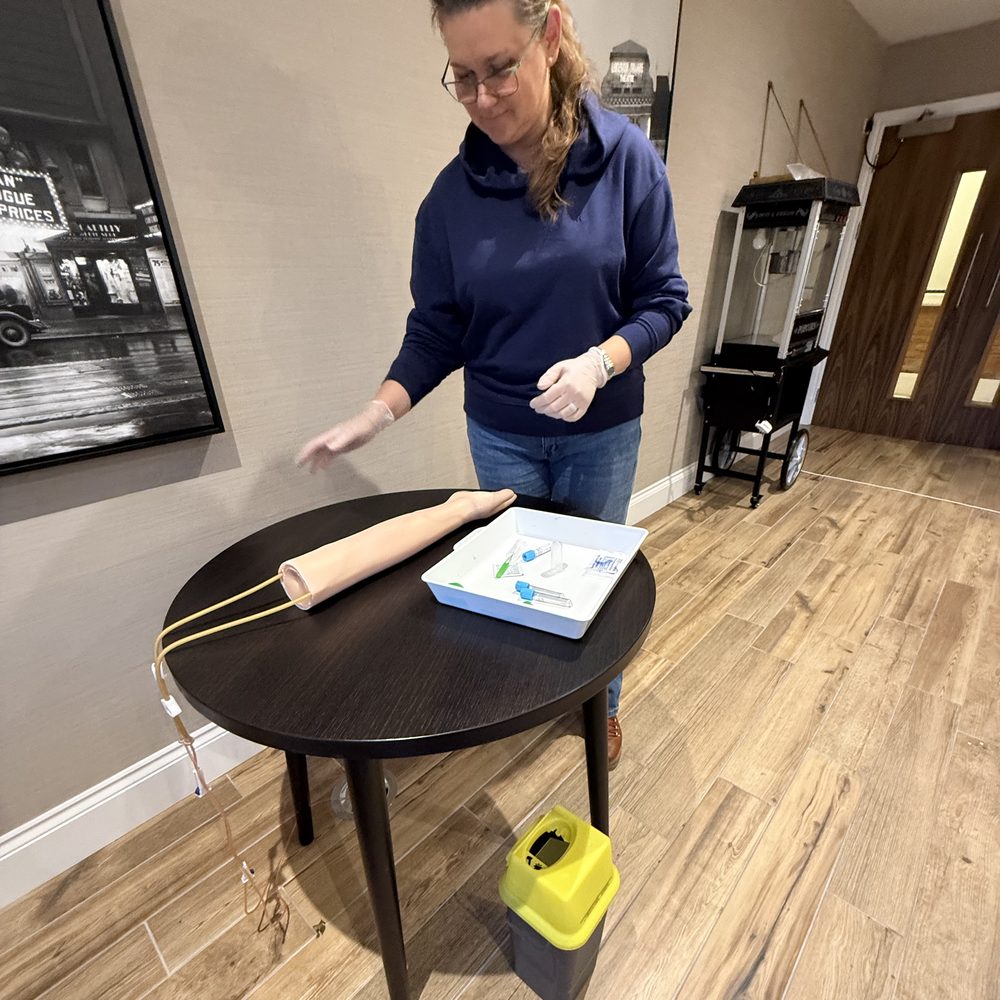
IV and cannulation training helps your team understand the rationale, processes and precautions around cannulation and IV therapy. Delivered on-site by our experienced clinical trainers, with practical work wherever the subject allows.
Why this training matters
Vascular access devices such as cannulas are one of the main causes of healthcare-associated infection, so correct insertion, aseptic technique and prompt removal are essential to patient safety.
Source: NICE Quality Standard QS61 · 2014
About the course
Understand the rationale, processes and precautions
By the end of the course, delegates will:
- Know the NMC Code of Conduct and how it relates to cannulation
- Be able to accurately identify a patient
- Know different ways to gain consent
- Know some initial checks to undertake to aid patient safety
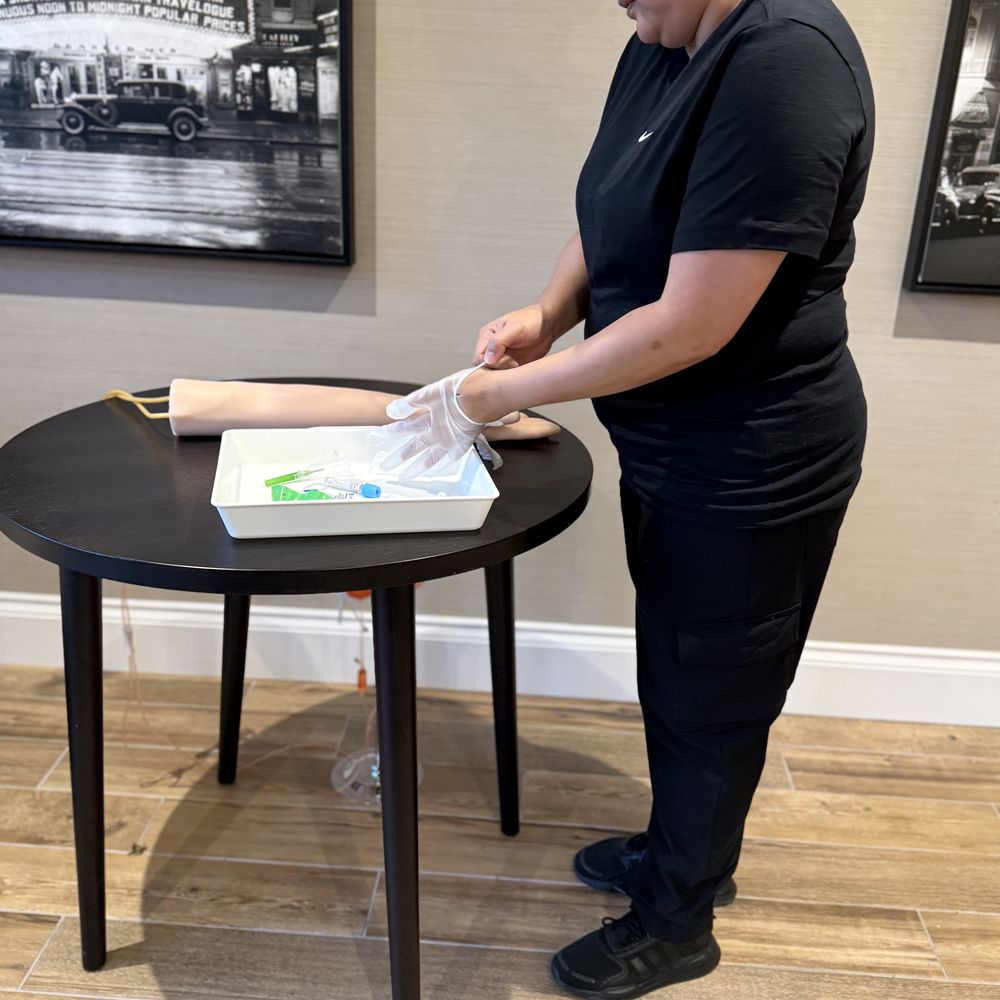
- Be able to undertake basic universal precautions
- Know the vascular system
- Understand the differences between veins and arteries
- Know some indications for cannulation
- Know some contraindications for cannulation
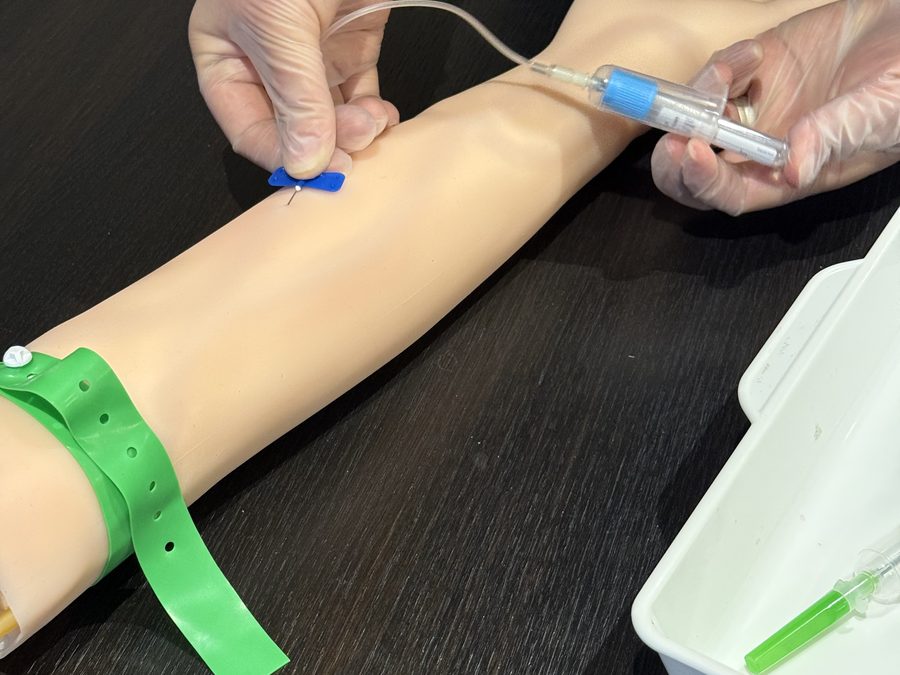
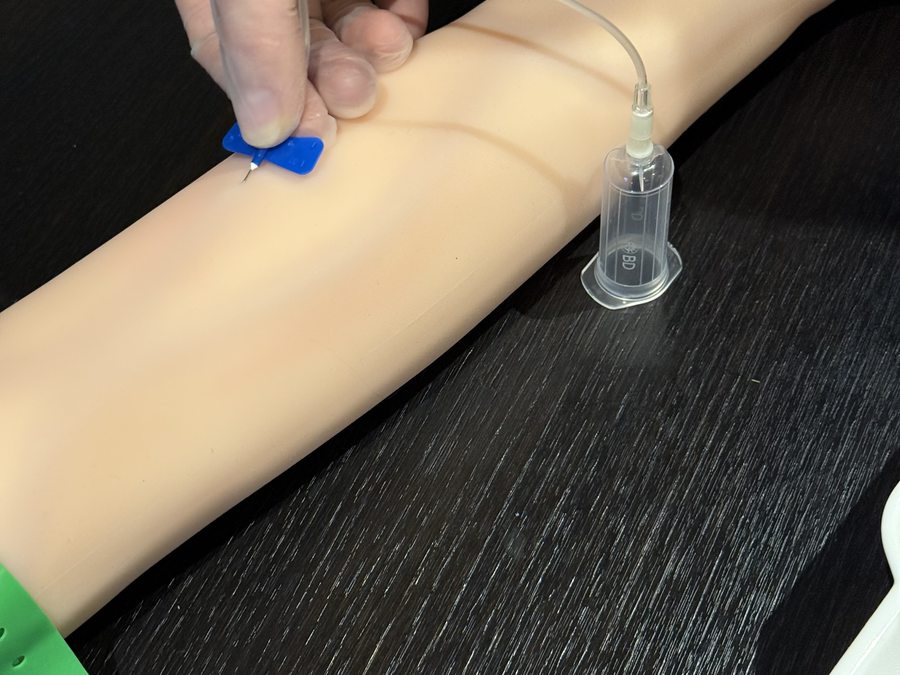
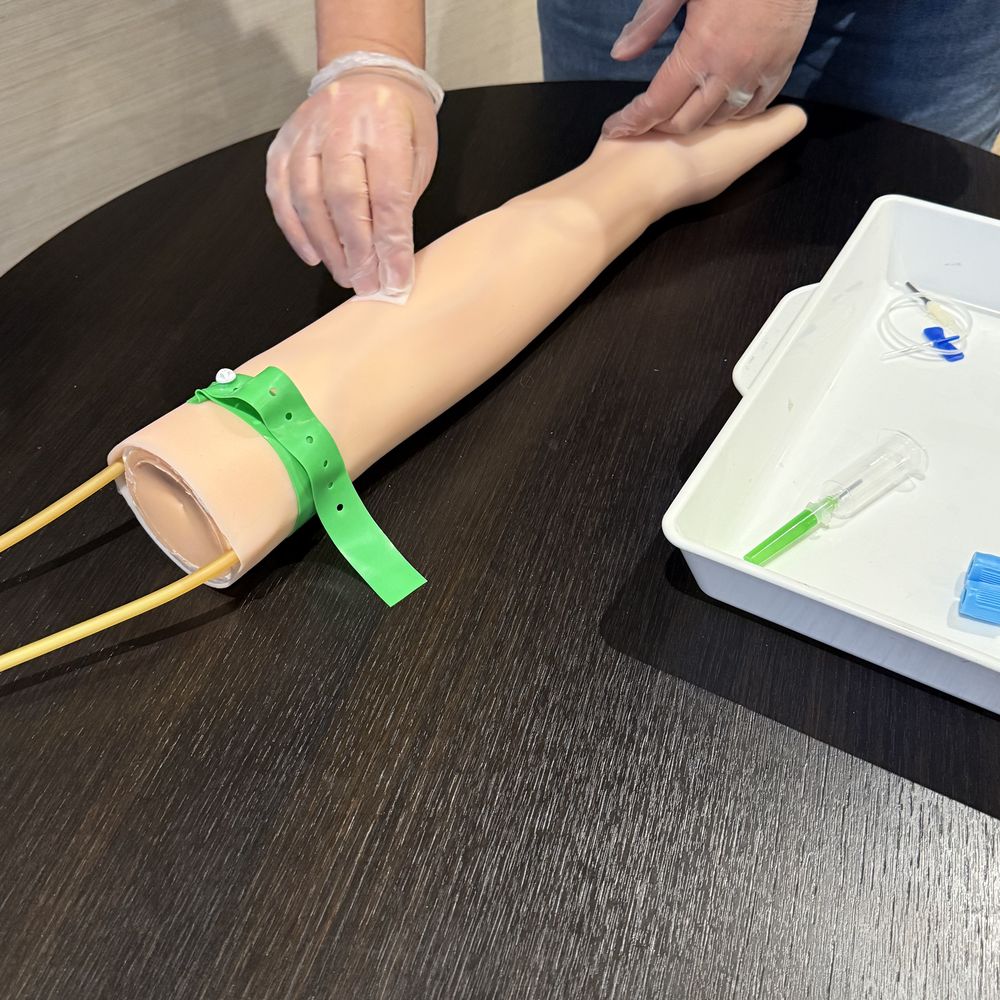
- Understand the procedure for cannulation
- Identify potential problems with the cannulation process
- Be aware of possible complications
- Know how to safely remove a cannula
- Be able to calculate different flow rates
What you’ll cover
Full course content
Everything the course covers, exactly as our trainers deliver it:
NMC Code of Conduct
- About the Code
- Prioritise people
- Practise effectively
- Preserve safety
- Promote professionalism and trust
Patient Identification and Consent
- Patient identification
- The unconscious patient
- Patient consent
- Capacity in law
- Voluntary consent
Legal and Professional Approach
- Competence
- Practical competences
- Theoretical competences
Basic Universal Precautions
- Background
- Infection
- Sources of infection
- Initial procedures
- Pre-insertion
- Site selection (not midlines)
- Equipment
- Extra items
- Peripheral IV cannula choice
The Vascular System
- Basic anatomy
- Differences between arteries and veins
- Vein location and characteristics
Reasons to Cannulate
- Indications
- Contra-indications
The Procedure
- Site selection
- Veins to avoid
- Cannulation procedure:
- Care of cannulae
- Complications and prevention
Removal of Cannula
- Equipment
- Procedure
Calculating Drip Rates
- Responsibilities
- Plan
- Approach
- Calculate
- Drop rate
- Evaluate
Please note: successful completion of this course certifies that delegates have demonstrated an appropriate level of competency within a training-room environment only. This is not the same as being competent to perform the procedure on a person. Competency must still be demonstrated in the working environment and signed off by a relevant and competent person in line with your company policies.
Keep exploring
Related clinical courses
These subjects sit naturally alongside this course — and we can combine courses into one visit.
Good to know
Frequently asked questions
Where is the training delivered?
All of our training is delivered on-site at your service, anywhere in the UK — we come to you, so there are no travel costs or venue hire for your team.
How long is the IV & Cannulation course?
It runs as a half day – 3 hours course, delivered in one visit unless stated otherwise.
How many delegates can attend?
Up to 12 delegates per session — we keep practical groups smaller so everyone gets hands-on time.
Is there a practical element?
Yes — delegates practise the techniques hands-on during the course, guided by the trainer. Please note that completion certifies competency within a training-room environment only; competency must still be signed off in the workplace in line with your company policies.
Do delegates receive a certificate?
Yes — every delegate receives a certificate on completion. Certificates are valid for 1 year, so plan refresher training before they expire.
How much does the course cost?
We price every course on application, based on your dates, location and delegate numbers. Use the contact buttons below — we reply quickly with a quote.
Can we combine courses into one visit?
Yes. Many clients build a full training day from shorter courses, and we can deliver several subjects in one visit — just tell us what your team needs.
Do you only train care providers?
No. This course suits care & nursing homes, home care (complex packages), hospices, hospitals & clinics, supported living. If your sector isn’t listed, ask — we’ll tailor the course to your setting.
Book this course
We bring IV & Cannulation training to your service
Delivered on-site at your service, nationwide, with pricing on application. Tell us your dates and delegate numbers and we’ll reply quickly with a quote.
Part of our clinical training range. Also explore mandatory training and first aid courses.