
Supported living training
Supported living training for support workers in supported living, learning disability, autism and day services. Practical courses that help your team understand each person.
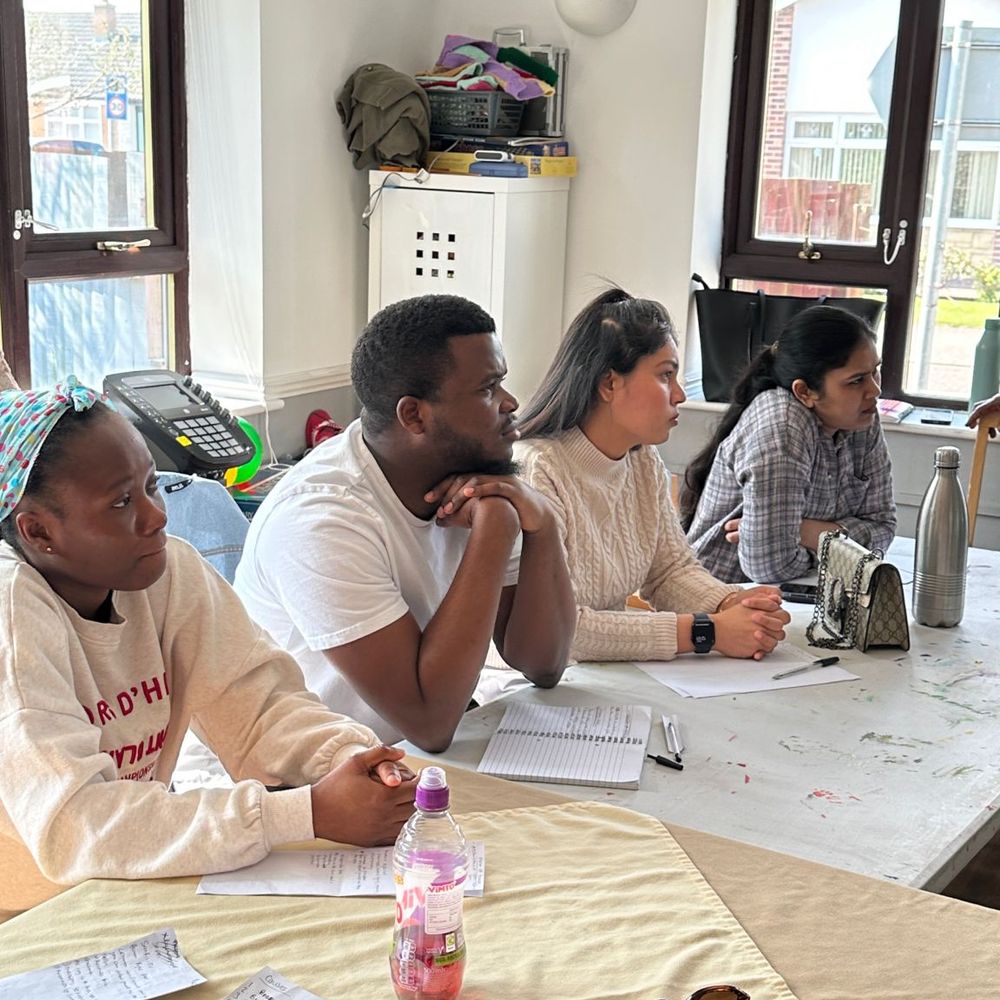

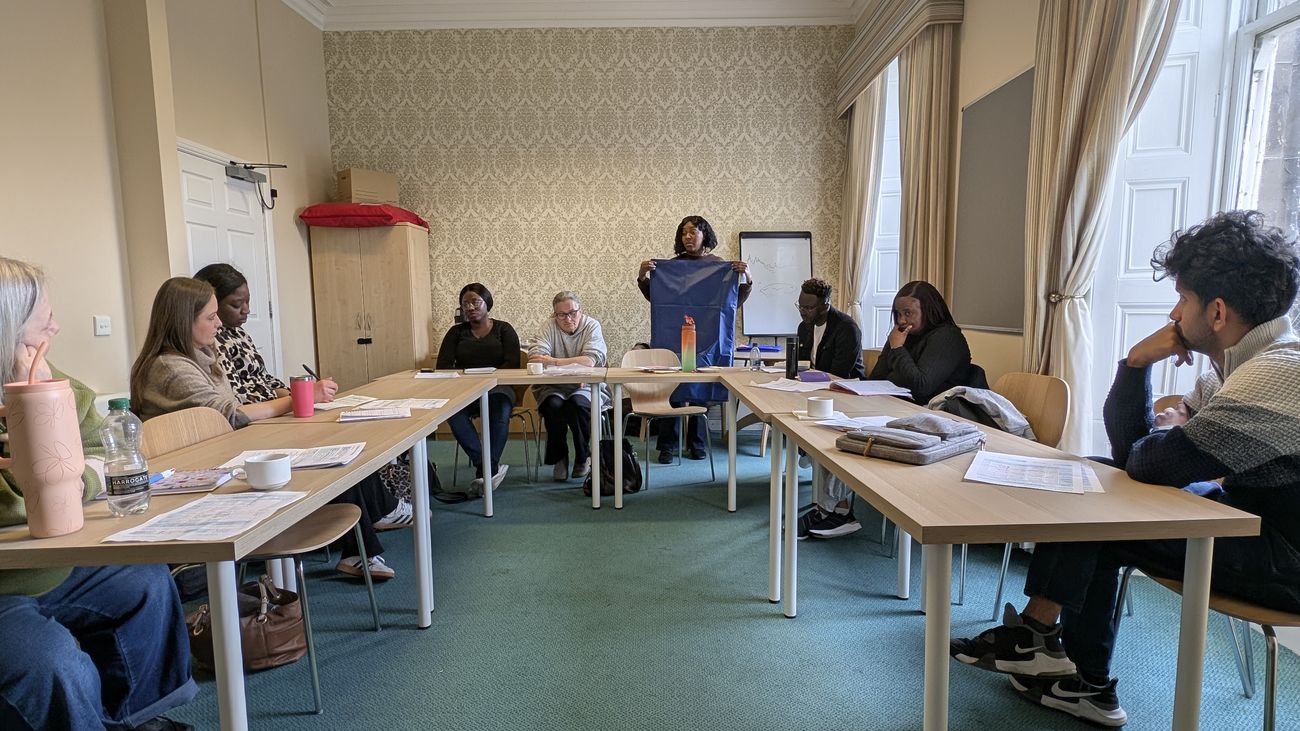
Training for supported living
What training does a supported living team need?
Support workers help people live as independently as possible, often in their own tenancies. That calls for a good understanding of each person, their communication and their rights. So, alongside the core subjects, most teams focus on the four areas below.
- Understanding the people you support
- Positive behaviour support
- Mental health
- Rights and everyday life
Understanding the people you support
Conditions, communication and health needs your team is likely to meet.
Learning Disabilities
Supporting people with learning disabilities, including capacity and communication.
Half day — 3 hoursView courseAutism Awareness
Recognising autistic traits and making person-centred adjustments.
Half day — 3 hoursView coursePathological Demand Avoidance
Adapting support so everyday demands feel manageable.
Half day — 3 hoursView coursePECS
Supporting communication with the Picture Exchange Communication System.
Half day — 3 hoursView courseDown’s Syndrome
Person-centred support, communication and health needs.
Half day — 3 hoursView courseEpilepsy & Buccal
Managing seizures and giving buccal rescue medication.
Full day — 6 hoursView coursePositive behaviour support
Understanding behaviour of concern and reducing restrictive practice.
Positive Behaviour Support
Supporting behaviour of concern positively, safely and effectively.
Half day — 3 hoursView coursePBS & Breakaways
Positive behaviour support with breakaway techniques.
Full day — 6 hoursView courseRestrictive Intervention
Practical ways to reduce the use of restrictive intervention.
Half day — 3 hoursView courseStress & Distress
Responding to stress and distress with de-escalation.
Full day — 6 hoursView courseMental health
Supporting people living with mental health conditions, addiction or trauma.
Mental Health Awareness
Types of mental health conditions and how to support people.
Half day — 3 hoursView coursePersonality Disorders
Understanding personality disorders and interacting safely.
Half day — 3 hoursView courseSubstance Misuse
Supporting people with a drug or alcohol addiction.
Half day — 3 hoursView courseTrauma Informed Care
Creating a safe environment and avoiding re-traumatisation.
Half day — 3 hoursView courseSelf Harm & Suicide Prevention
Supporting people who self-harm or are at risk of suicide.
Half day — 3 hoursView courseEating Disorders
Understanding eating disorders and how to support recovery.
Half day — 3 hoursView courseRights and everyday life
Capacity, inclusion and the practical parts of the job.
MCA & DoLS
Making lawful decisions when someone may lack capacity.
Half day — 3 hoursView courseActivity & Inclusion
Tackling isolation with activities people enjoy.
Half day — 3 hoursView courseMeaningful Activity
Planning activity that reflects each person’s history and interests.
Half day — 3 hoursView courseLGBTQ+ Awareness
Understanding LGBTQ+ identities and challenging discrimination.
Half day — 3 hoursView courseLone Worker
Safe working practices for staff who work alone.
Half day — 3 hoursView courseMedication Administration
Administering and recording medication safely.
Full day — 6 hoursView courseSupported living
Support that puts the person first
Good support starts with understanding the person in front of you.
Understanding behaviour
Behaviour often communicates a need. Positive behaviour support helps your team look for the cause and respond in ways that reduce restriction.
Communication
Many people communicate in their own way. PECS and autism training give your team practical ways to adapt how they communicate.
Rights and independence
Choice and inclusion sit at the heart of supported living. Meanwhile, MCA and DoLS training helps your team make lawful decisions when someone may lack capacity.
How we deliver
We bring the training to you
- On-site, anywhere in the UKOur trainers come to your premises, so your team doesn’t travel.
- Up to 15 delegatesPer session, or up to 12 on practical courses.
- Several subjects, one visitShorter courses can be combined into a full training day.
- A certificate for every delegateEach course page shows how long it stays valid.
Theory-based courses can also run live over Zoom. For example, Pathological Demand Avoidance, Personality Disorders and Trauma Informed Care have all been delivered this way.
Pricing is on application, based on your dates, location and delegate numbers.
Free guides
Free resources for your team
Practical guides and printable resources you can use straight away.
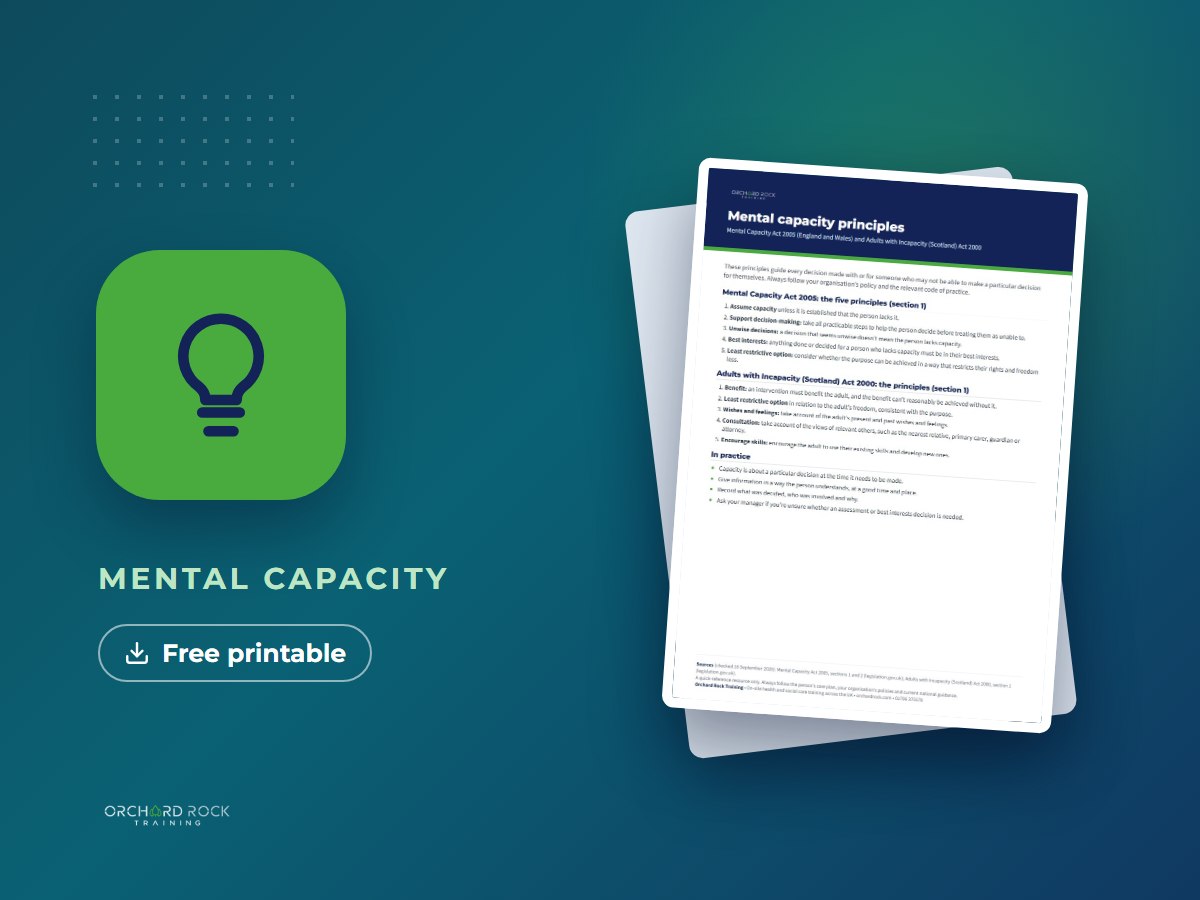
Mental capacity principles
The five principles of the Mental Capacity Act 2005 and the Adults with Incapacity (Scotland) Act 2000, in plain English.
Mental capacityRead the guide →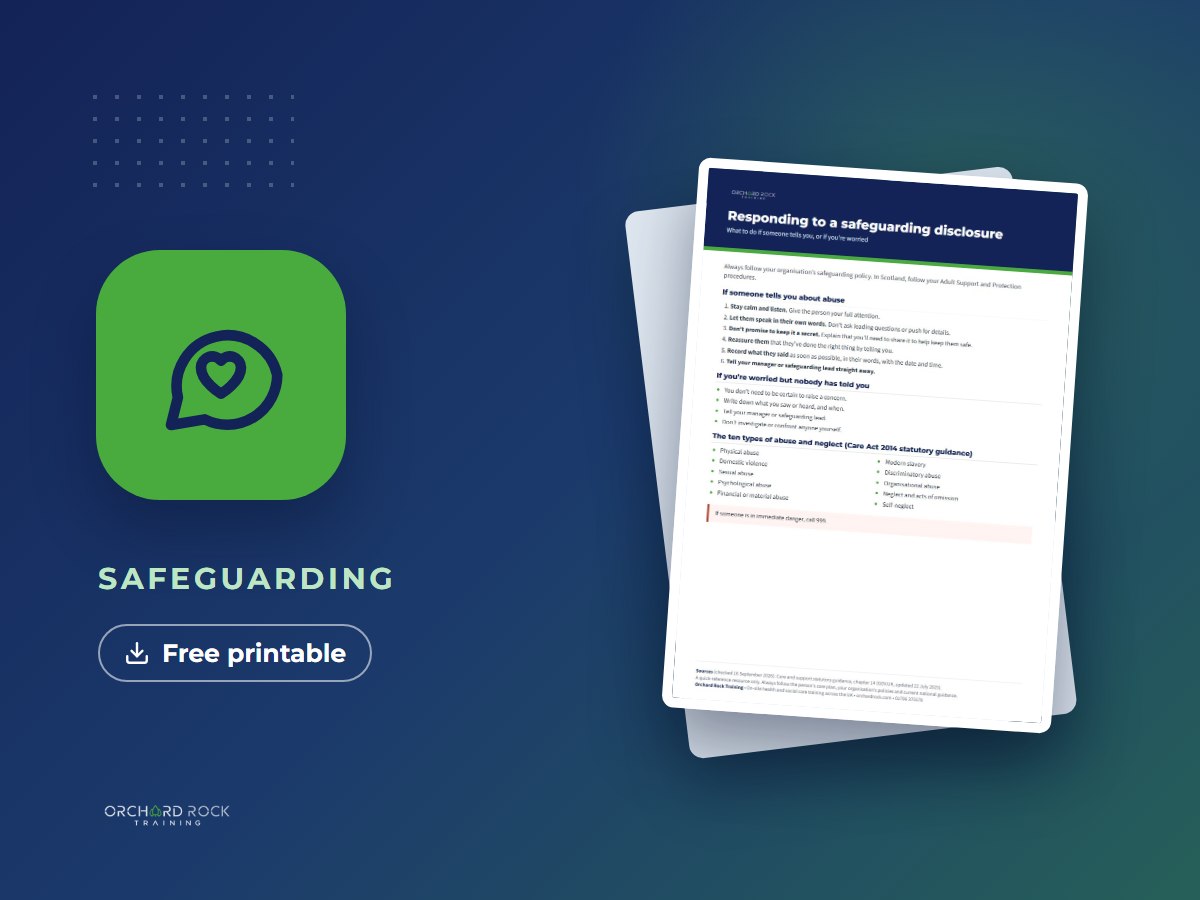
Responding to a safeguarding disclosure
What to do if an adult tells you about abuse, what to do if you’re worried, and the ten types of abuse and neglect.
SafeguardingRead the guide →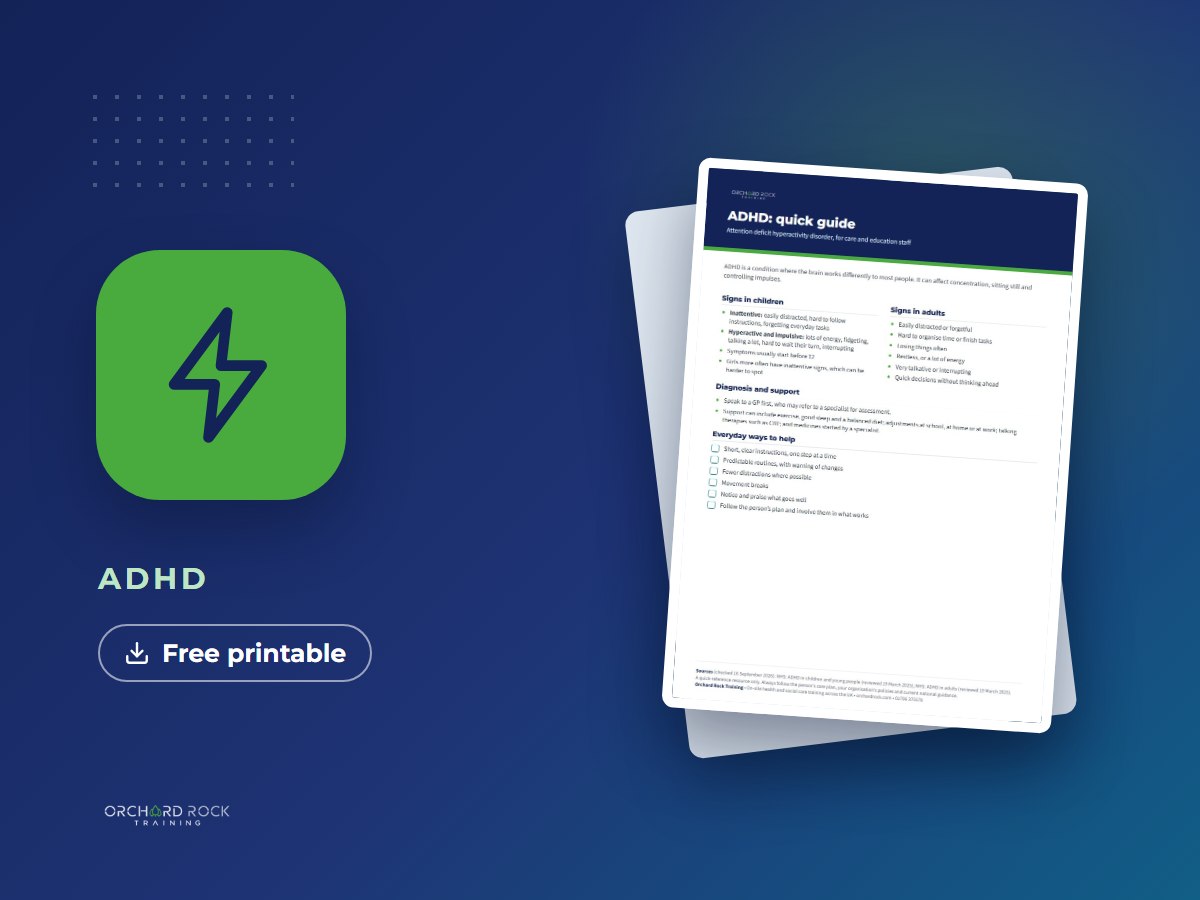
ADHD quick guide
The signs of ADHD in children and adults, how it is diagnosed and treated, and where to find support, based on NHS information.
ADHDRead the guide →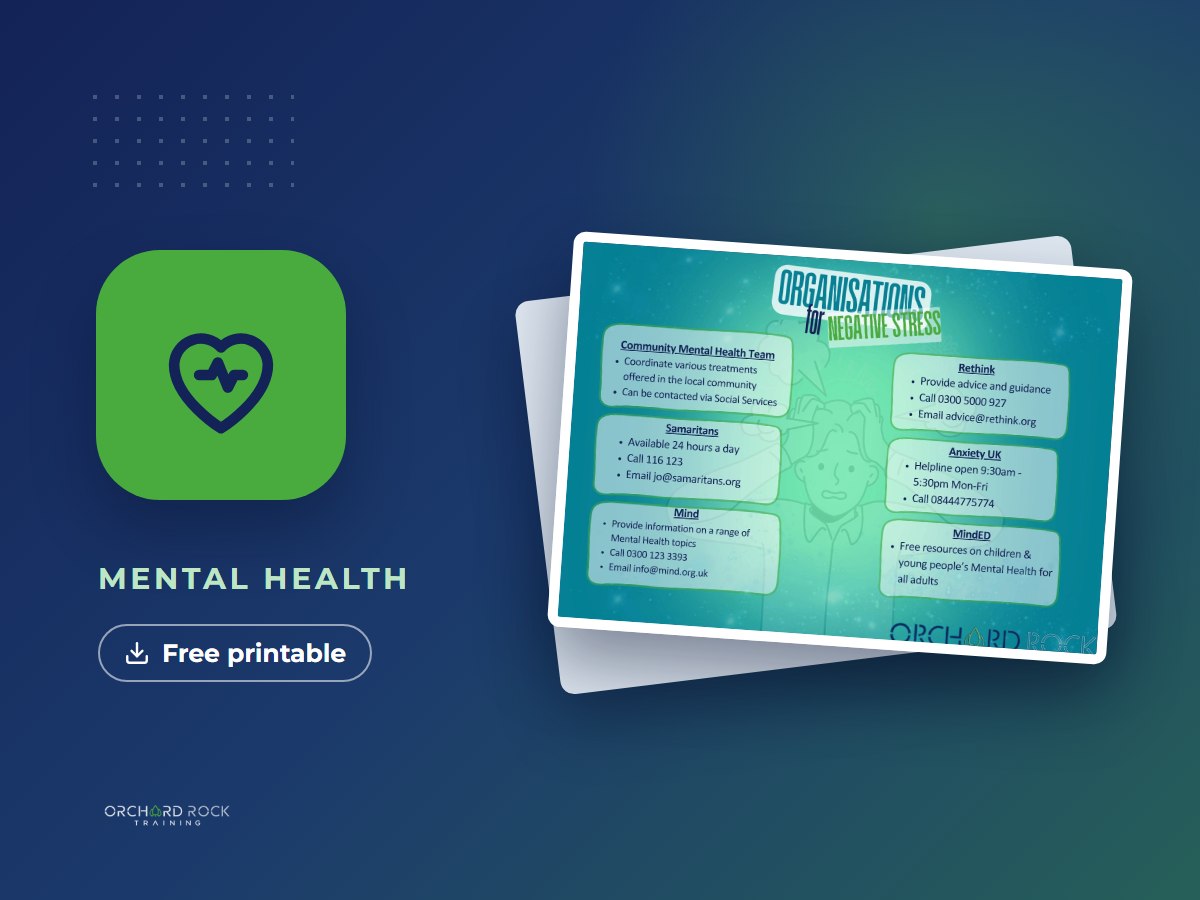
Mental health support organisations
Where staff and the people you support can turn for help, with contact details for national services.
Mental healthRead the guide →Good to know
Frequently asked questions
What training do supported living staff need?
Most teams start with core subjects such as safeguarding, medication and moving and handling. Then they add training that matches the people they support, such as learning disabilities, autism, positive behaviour support and epilepsy.
Do you offer positive behaviour support training?
Yes. We offer Positive Behaviour Support, PBS & Breakaways, Restrictive Intervention and Stress & Distress. Our behaviour management courses page lists the full range.
Is there training for day services?
Many of our courses also suit day services, for example Activity & Inclusion and Meaningful Activity.
Can you tailor training to the people we support?
Yes. Tell us about the people you support and your team’s roles, and we’ll tailor the course to your setting.
Where does the training take place?
On-site at your service or office, anywhere in the UK. Theory-based courses can also run live over Zoom.
Plan your supported living team’s training
Tell us about your service, the people you support and your team. We’ll suggest the right courses and send you a free quote.
Looking for a different setting? Care homes and nursing homes · Domiciliary and home care · All organisation types