
Venepuncture Training
A practical, full-day course that gives your staff the skills and confidence to safely perform venepuncture and draw blood for testing, from anatomy and site selection through to the procedure itself, practised in a supportive training-room environment.
About the course
Draw blood safely and confidently
Our venepuncture training equips staff to perform venepuncture and collect blood samples correctly and safely. It combines the underpinning theory with hands-on practice on training arms, so your team leaves able to demonstrate competency within a training-room environment. By the end of the course, delegates will:
- Understand legal and professional responsibilities, including relevant UK legislation
- Communicate effectively and obtain informed consent from patients
- Select an appropriate venepuncture site using inspection and palpation
- Apply a tourniquet correctly and within the 1-minute time limit
- Prepare the skin correctly using the CHG/IPA technique
- Verify patient identity using the three-identifier check
- Perform venepuncture safely, collecting samples in the correct order of draw
- Recognise and respond appropriately to common complications
- Disposes of sharps and clinical waste safely and in line with legislation
- Know the correct immediate response to a needlestick injury
Training in action
Venepuncture, hands-on
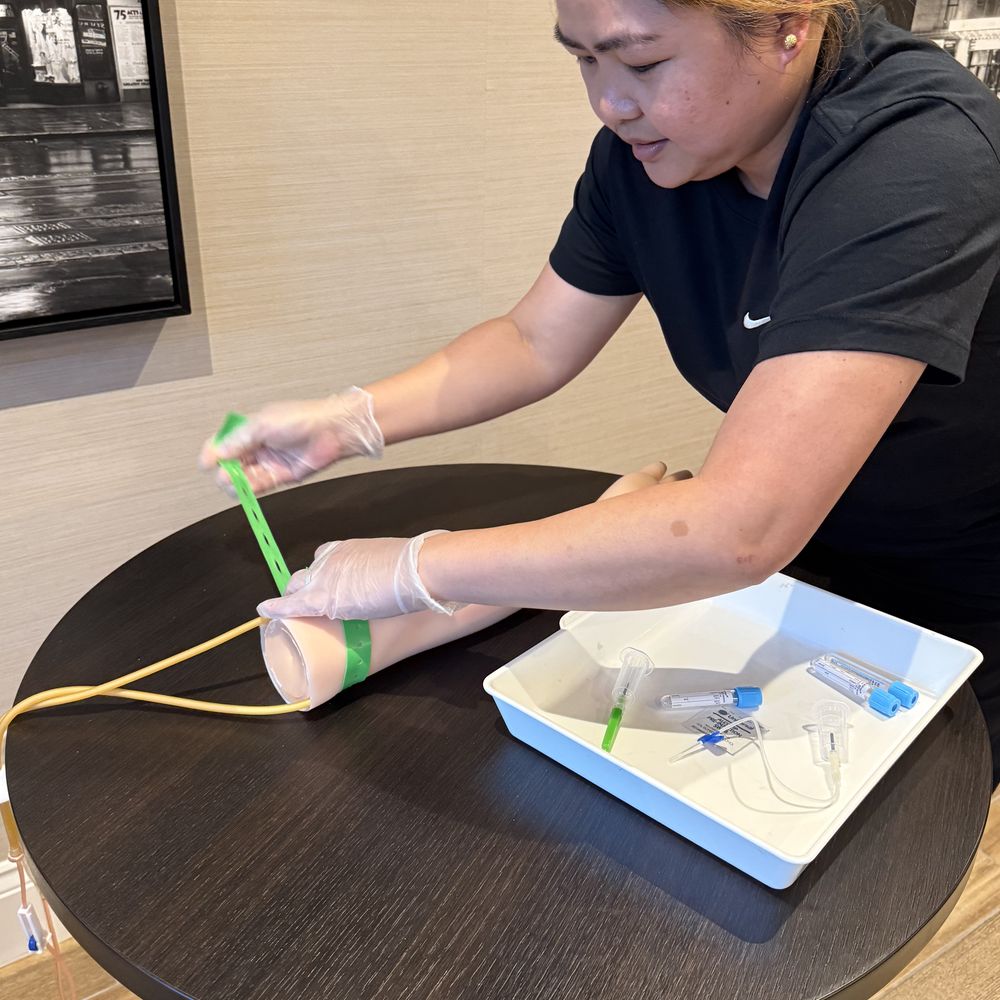
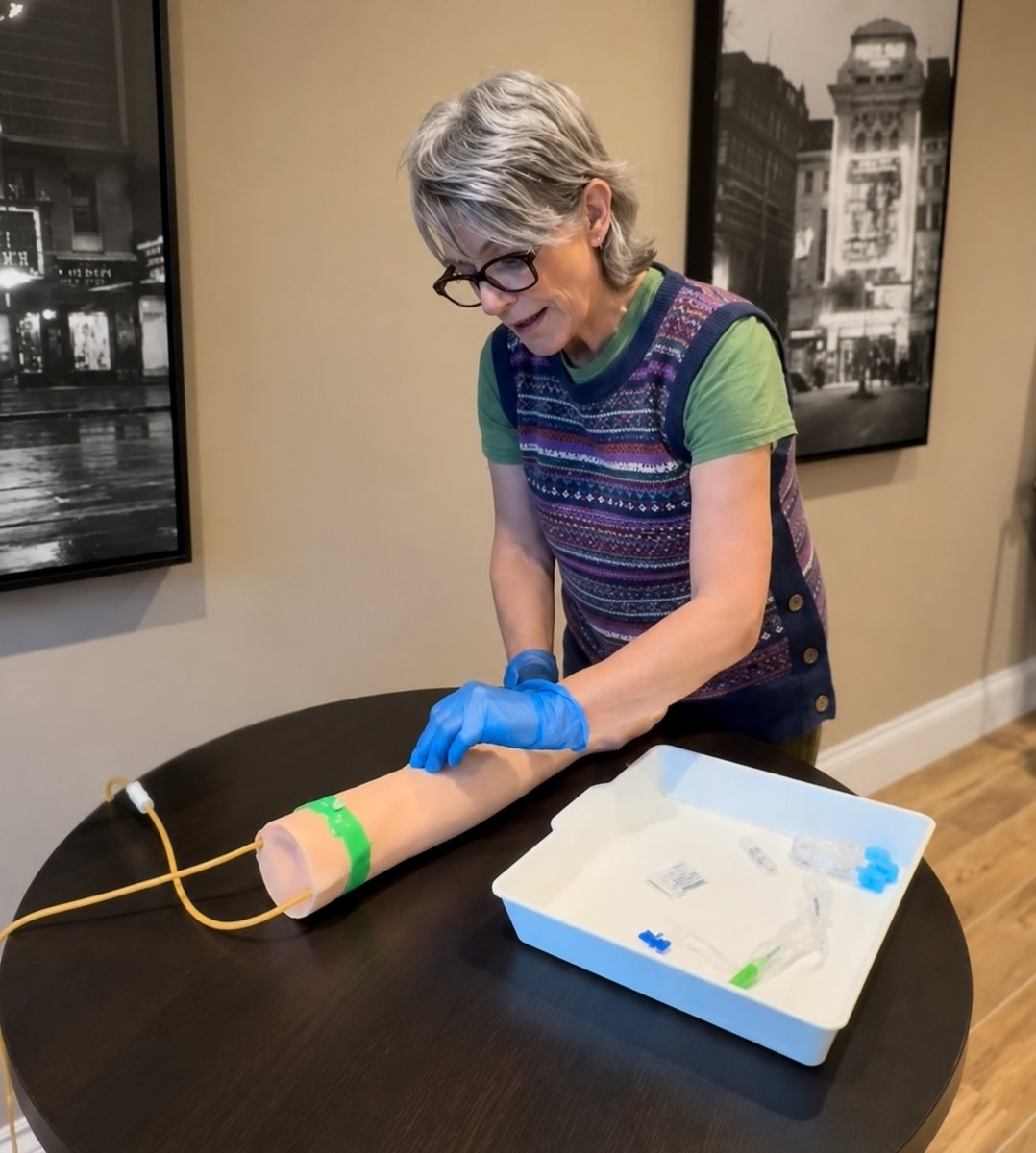
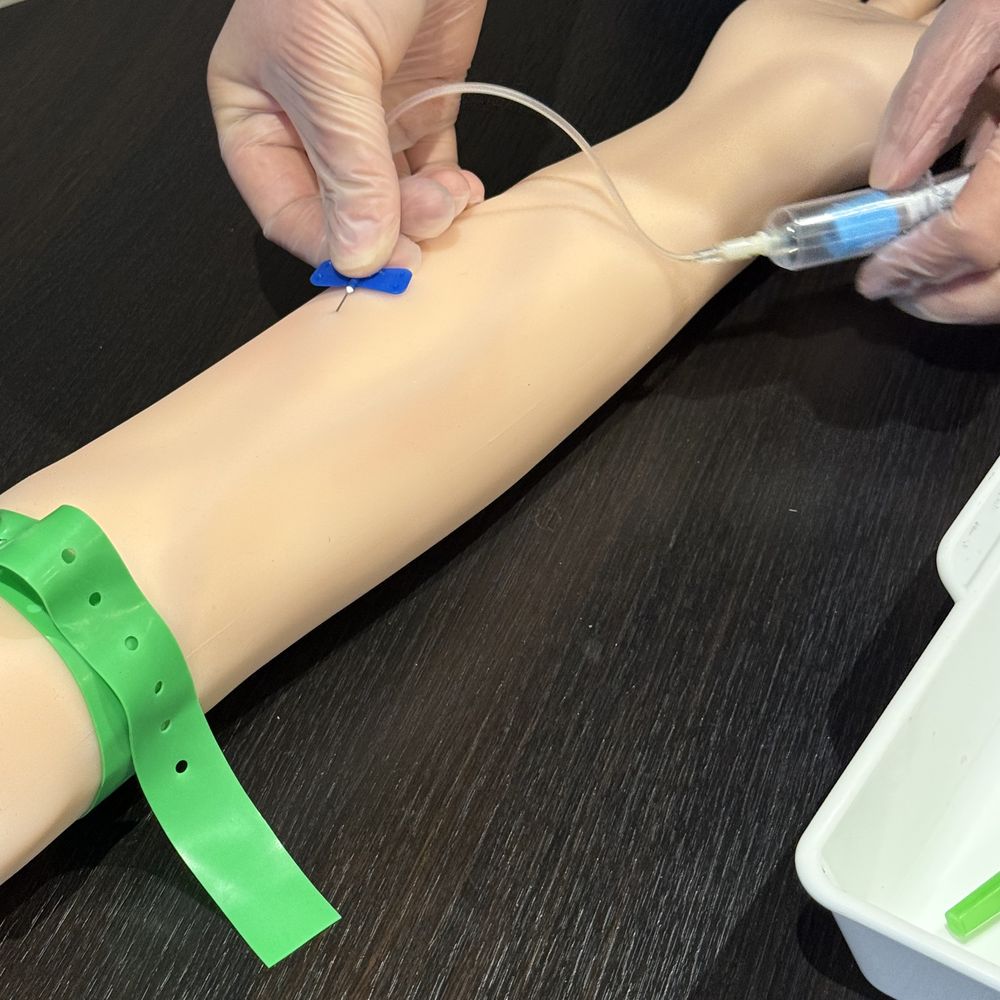
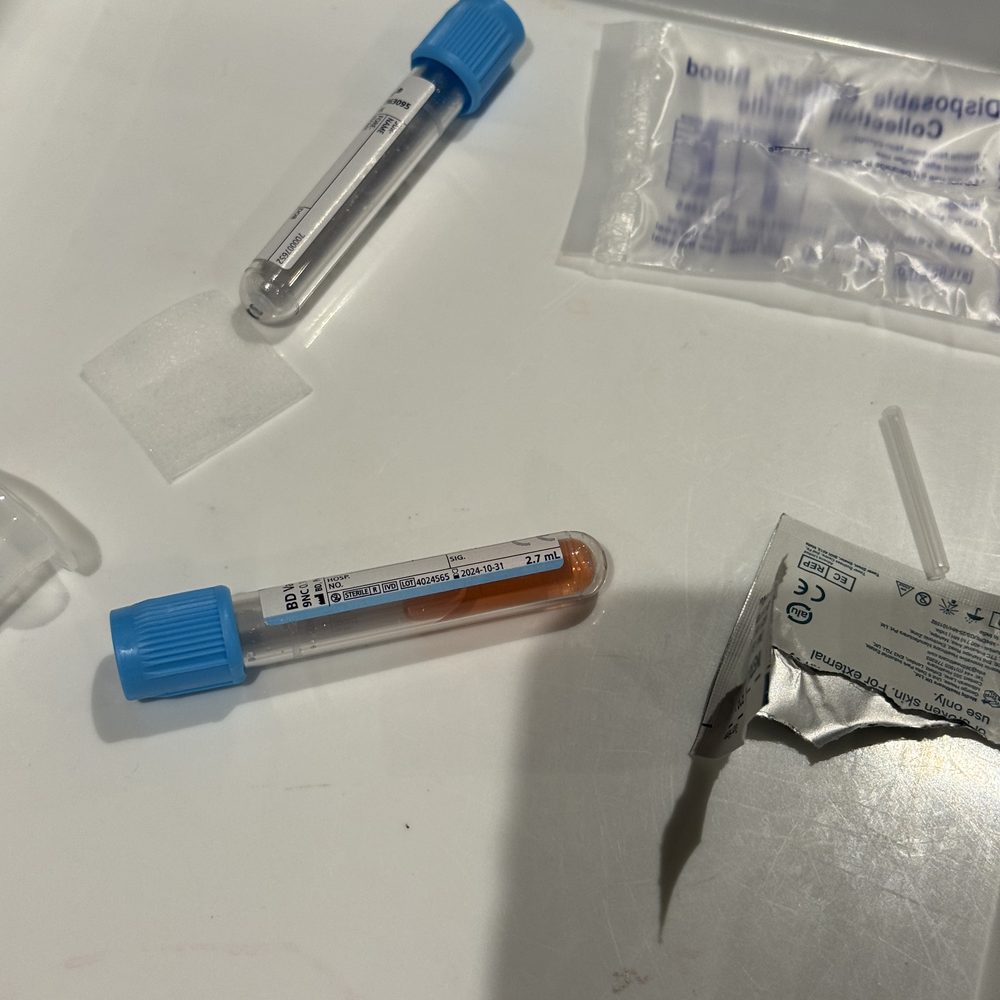
Delegates practise the full procedure on training arms, from selecting a site and applying the tourniquet to drawing samples and using the devices.
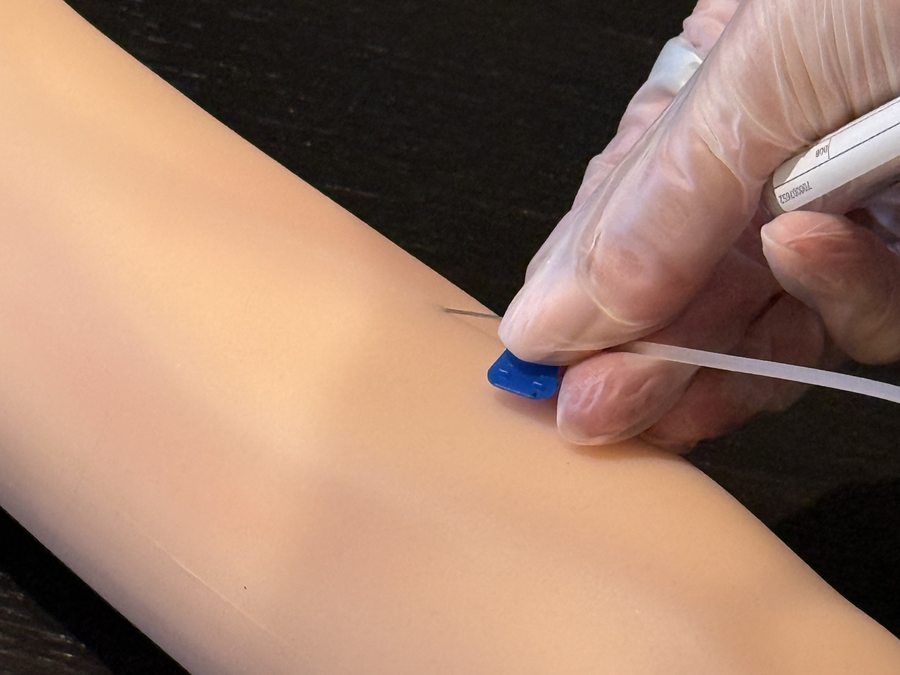
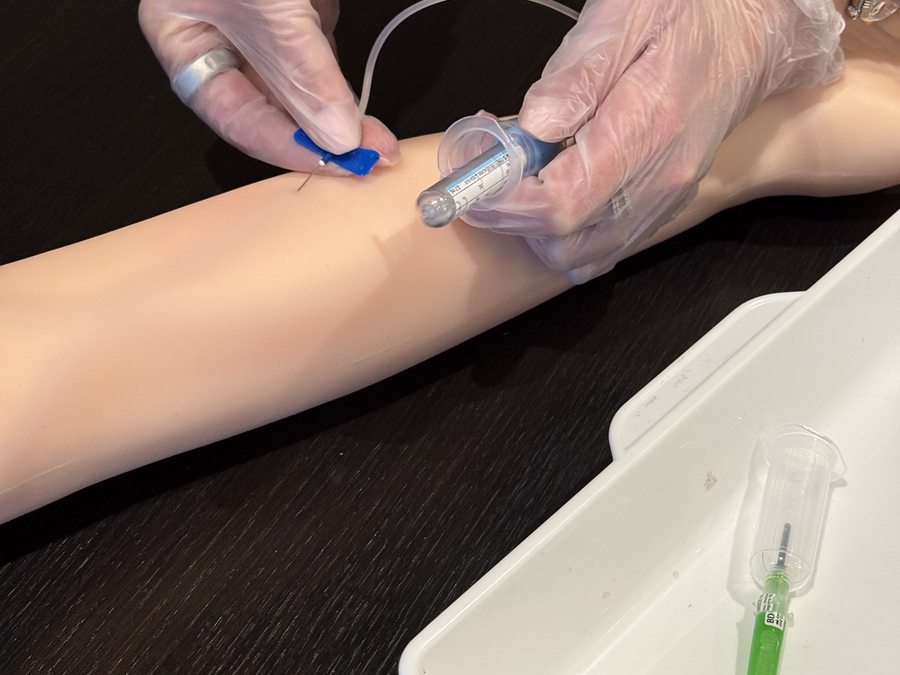
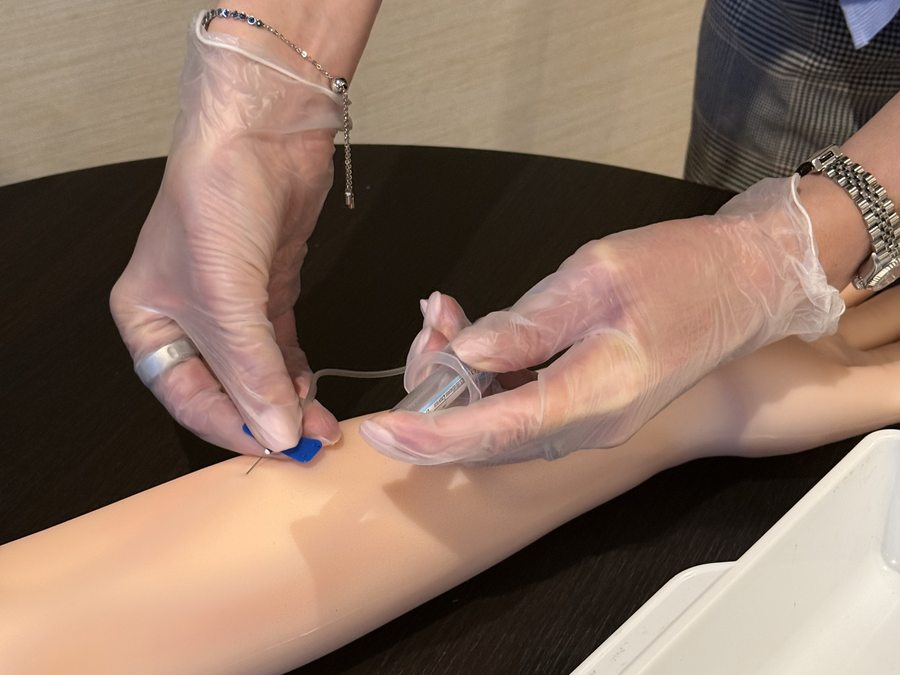
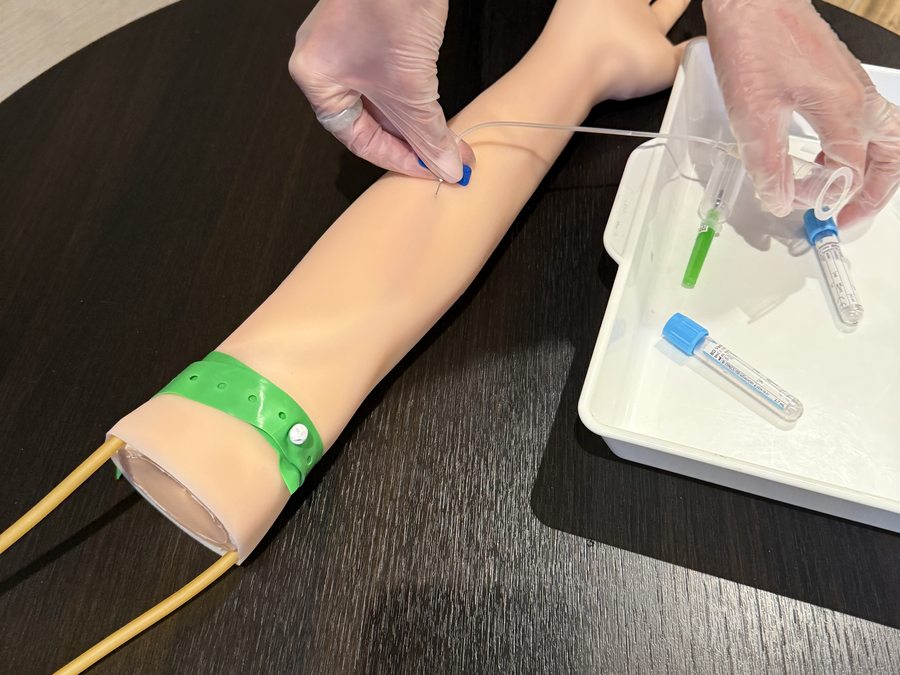
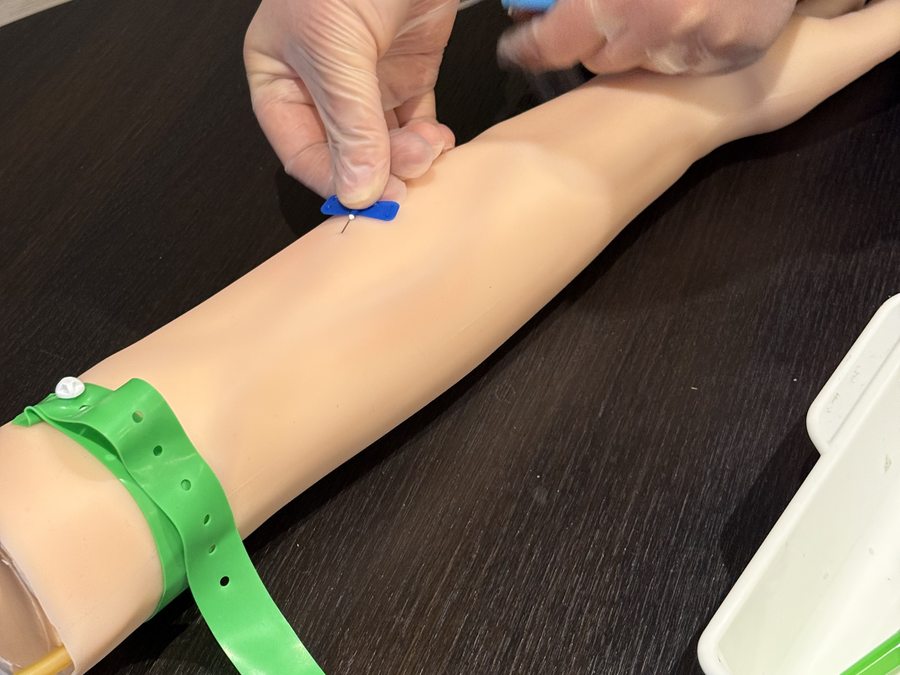
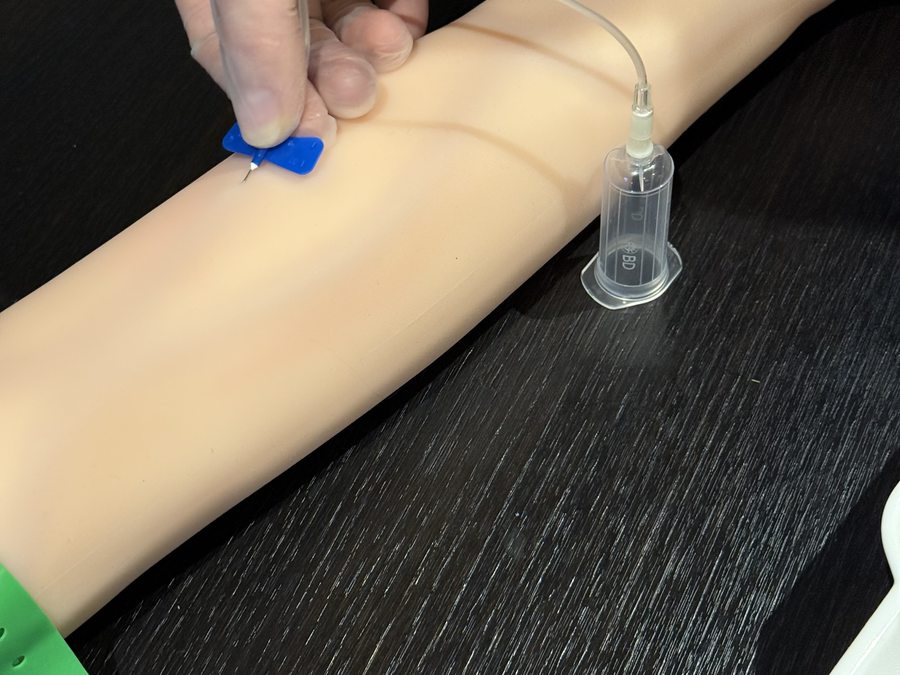
Maxine delivered the venepuncture training exceptionally well. She explained each step clearly, demonstrated the techniques with confidence, and created a supportive learning environment that encouraged questions and participation.
C.O. • VenepunctureWhat you’ll cover
Full course content
Thirteen areas take your team from roles and legislation through to the procedure itself, aftercare and safety.
Roles & Responsibilities
- Providing a safe, efficient service
- Confidentiality & organisational values
- Record keeping & specimen transfer
- Reporting incidents promptly
Key Legislation & Limitations
- Sharps Regulations 2013
- RIDDOR
- Mental Capacity Act / Adults With Incapacity Act
- COSHH Regulations
- Limitations of your duties
Becoming Competent
- Competency
- Accountability
- Communication
The Laboratory
- Haematology
- Biochemistry
- Microbiology
- Histopathology / immunology
- Specimen reception
Blood Tests
- Diagnostic value of blood tests
- Preparing patients
- HbA1c
- Cholesterol
- Blood culture
- Coagulation (PT/APTT/INR)
- Electrolytes (U&E)
- Full blood count (FBC)
- Blood typing
- Order of draw
Physiological Factors
- Veins & sites to avoid
- Vasoconstriction
- Dilation
- Dehydration & poor circulation
Equipment & Tourniquet
- Equipment checklist
- Applying the tourniquet
- Time limit
The Procedure
- Introduction & consent
- Confirm identification
- Allergies & phobias
- Right to refuse
- Skin preparation
- Insertion angle & technique
- Flashback confirmation
- Order of draw
- Releasing the tourniquet
- Number of attempts
Aftercare & Care of Samples
- Discarding the needle & device
- Categorising waste (HTM 07-01)
- Hand hygiene & label checks
- Care of samples
Troubleshooting
- Excessive pain
- Missed vein
- Spurt of blood on entry
- Blood flow stops
- Haematoma
- Fainting (vasovagal)
Monovette System
- Dual system (aspiration or vacuum)
- Aspiration method
- Vacuum method
- Order of draw for multiple samples
Vacutainer & Legal Requirements
- BD Vacutainer system
- Selecting tube size & additive
- Citrate tube fill line
- Checking expiry dates
- Safety-Engineered Devices (Sharps Regulations 2013)
Safety
- Standard precautions
- Needlestick injuries
Please note: successful completion of this course certifies that delegates have demonstrated an appropriate level of competency within a training-room environment only. This is not the same as being competent to perform the procedure on a person. Competency must still be demonstrated in the working environment and signed off by a relevant and competent person in line with your company policies.
Very insightful session. Having never taken bloods, I feel I have a good foundation of knowledge and the confidence to give it a go under supervision.
J.M. • VenepunctureBook this course
We bring venepuncture training to your service
Delivered on-site at your service, nationwide, with pricing on application. Tell us your dates and delegate numbers and we’ll reply quickly with a quote.
Part of our clinical training range. Also explore mandatory training and first aid courses.