Safeguarding Adults Week runs from Monday 16 to Sunday 22 November 2026. It is led by the Ann Craft Trust, and this year’s theme is “Every Voice. Every Choice.” The focus is on co-production and Making Safeguarding Personal.
Making Safeguarding Personal means safeguarding is led by the person and focused on the outcomes they want, as the Care Act statutory guidance describes. Here is how that looks in everyday care.
Listening and person-centred conversations
People often share worries in small ways first. Give them time, listen without judging and use their words when you record what they say. If someone tells you about abuse, stay calm, don’t promise to keep it secret and follow your safeguarding procedure.
Strengths, choice and control
Ask the person what matters to them and what they want to happen. Build on what they can do, and involve them in decisions about their own safety. Where someone may lack capacity to make a particular decision, follow the Mental Capacity Act and involve the right people.
Shared decision-making
Good safeguarding is done with people, not to them. Involve the person, and those who know them well, in planning. Share information in the right way, on a need-to-know basis, so that everyone works together.

Professional curiosity
Professional curiosity means noticing when something doesn’t feel right and asking gentle questions, rather than taking things at face value. Look for patterns, such as unexplained injuries, changes in mood or money going missing, and record what you see.
Learning and reflection
Take time as a team to reflect. What went well? What would you do differently? Regular supervision and training keep everyone confident about what to do.
How training helps
The right training helps your team spot concerns early and respond in the right way. Courses that help include:
- Safeguarding Adults at Risk (half day): recognising and responding to abuse and neglect
- Safeguarding Adults at Risk Advanced (full day): legislation, referrals, enquiries and investigations
- MCA & DoLS (half day): the Mental Capacity Act in everyday care
- Whistleblowing (half day): raising concerns with confidence
You may also find our guide The hardest safeguarding cases rarely begin with evidence helpful.
Free resources
Download, print and share these with your team.
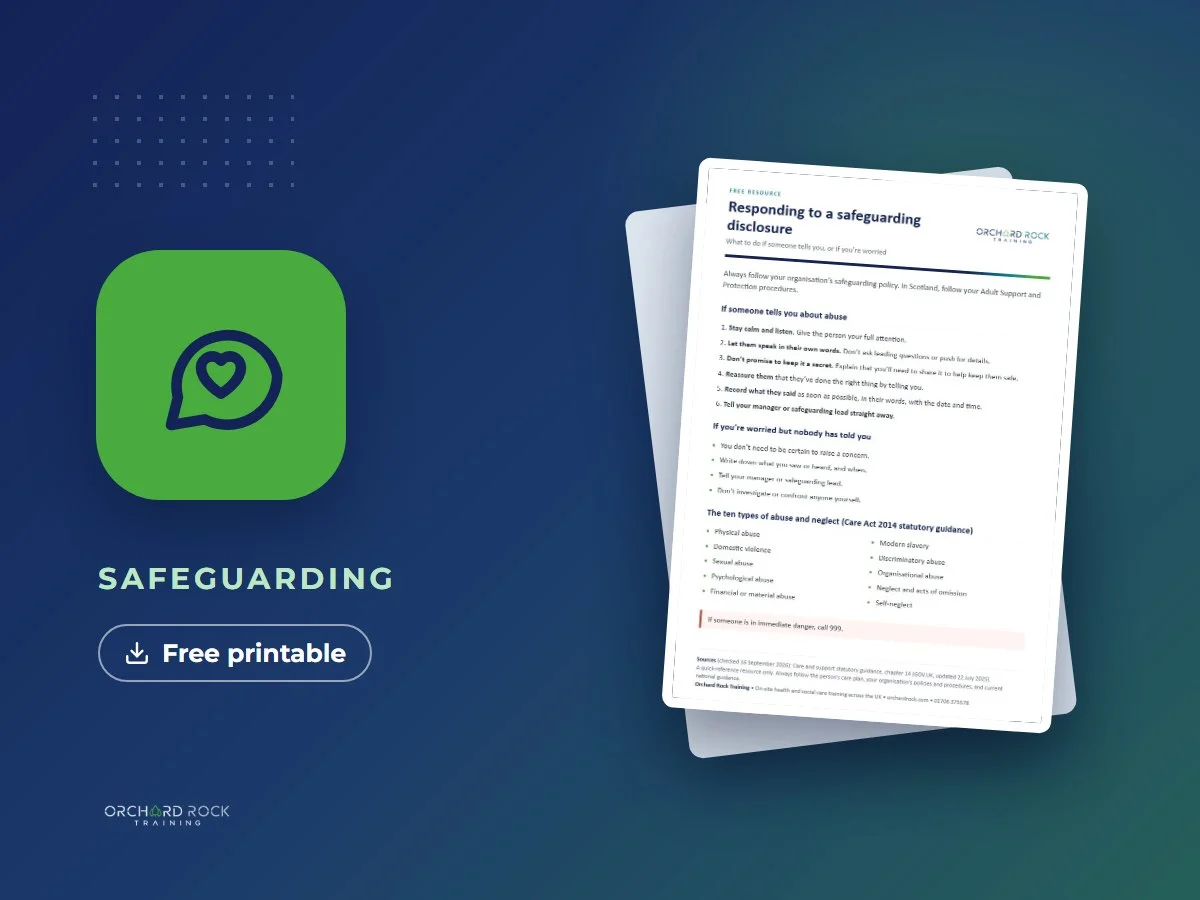 Free resourceResponding to a safeguarding disclosureWhat to do if an adult tells you about abuse, what to do if you’re worried, and the ten types of abuse and neglect.
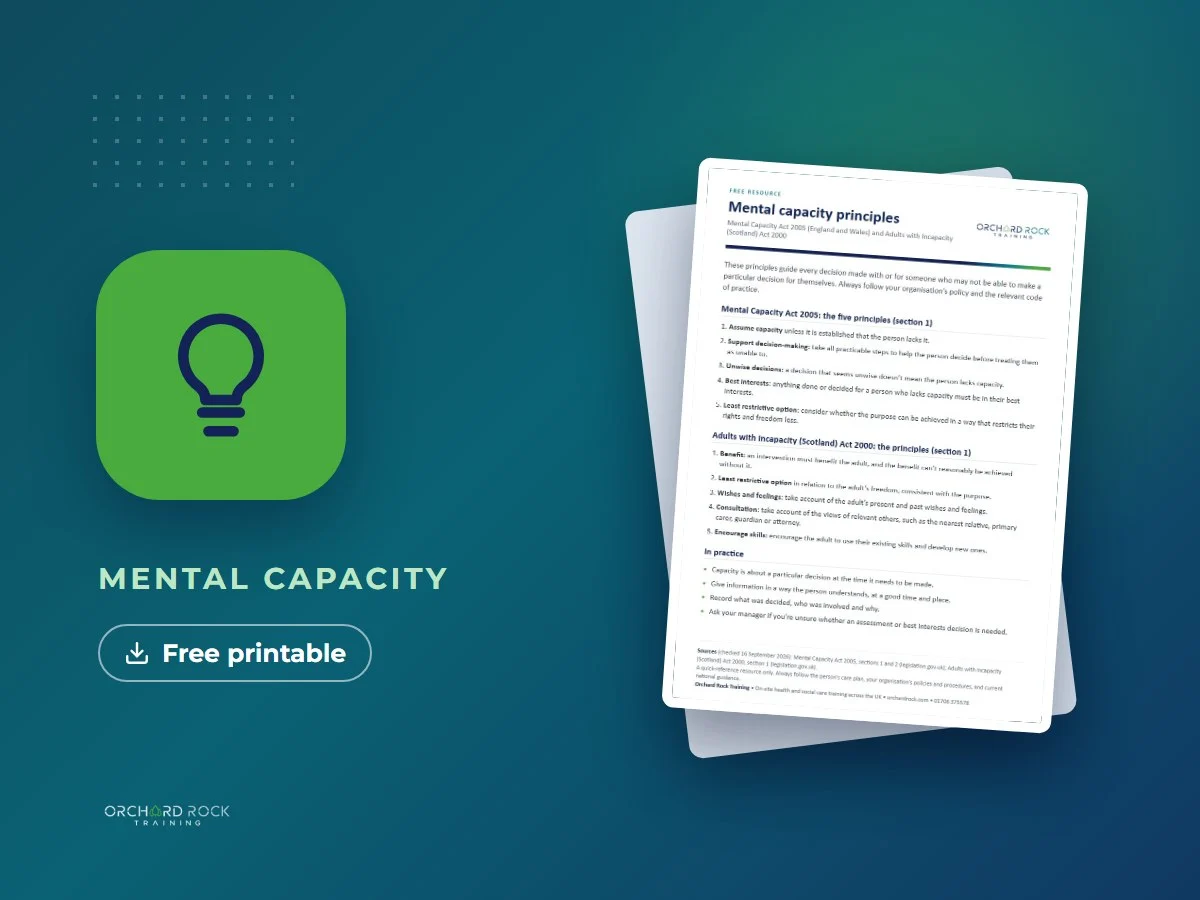 Free resourceMental capacity principlesThe five principles of the Mental Capacity Act 2005 and the Adults with Incapacity (Scotland) Act 2000, in plain English.
Sources: Ann Craft Trust, Safeguarding Adults Week 2026; Department of Health and Social Care, Care and support statutory guidance. Correct as of 21 September 2026.