If someone is in immediate danger, call 999.
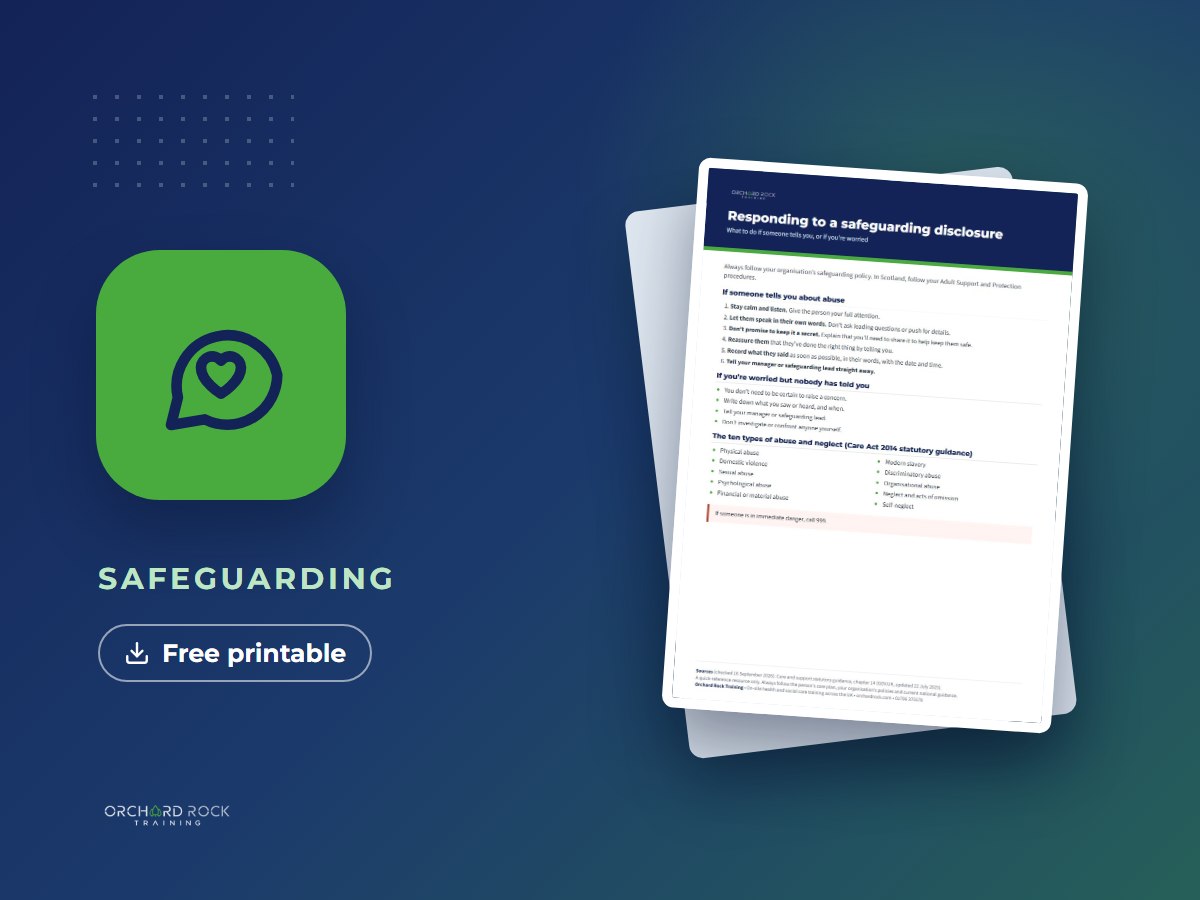
If someone tells you about abuse
- Stay calm and listen. Give the person your full attention.
- Let them speak in their own words. Don’t ask leading questions or push for details.
- Don’t promise to keep it a secret. Explain that you’ll need to share it to help keep them safe.
- Reassure them that they’ve done the right thing by telling you.
- Record what they said as soon as possible, using their words, with the date and time.
- Tell your manager or safeguarding lead straight away, and follow your organisation’s safeguarding policy.
If you’re worried but nobody has told you
You don’t need to be certain abuse is happening to raise a concern. Proving it isn’t your job. Noticing it and passing it on is.
- Write down what you saw or heard, including when it happened.
- Tell your manager or safeguarding lead, and follow your policy.
- Don’t investigate or confront anyone yourself. It could put the person at greater risk and affect any enquiry later.
- If you can’t raise it inside your organisation, you can contact your local authority’s safeguarding team.
The ten types of abuse and neglect
The statutory guidance for the Care Act 2014 lists these types of abuse and neglect:
- physical abuse
- domestic violence
- sexual abuse
- psychological abuse
- financial or material abuse
- modern slavery
- discriminatory abuse
- organisational abuse
- neglect and acts of omission
- self-neglect
Abuse can be a one-off or happen many times, so look for patterns as well as single incidents. Keep the person at the centre: the guidance calls this Making Safeguarding Personal.
In Scotland, follow your Adult Support and Protection procedures. For more on spotting the early signs, read our guide The hardest safeguarding cases rarely begin with evidence.
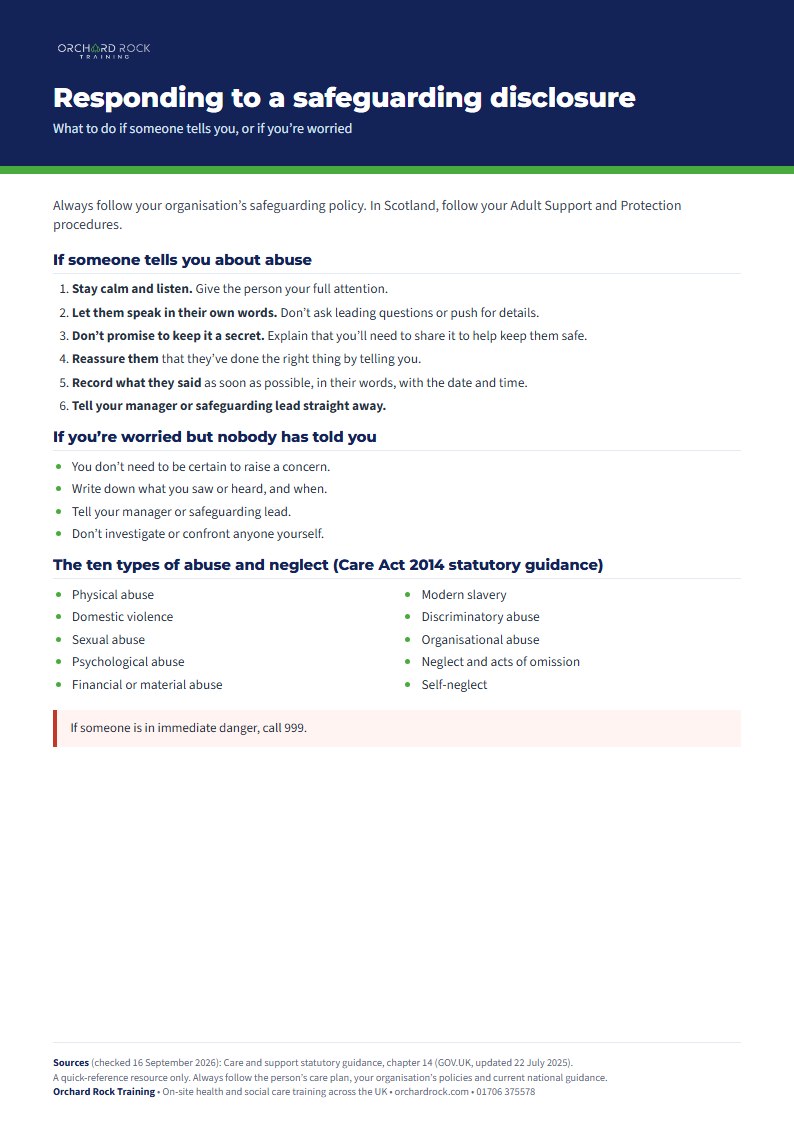
Download and printQuick guide (PDF, 1 page). Free to use in your service.
This is a quick-reference resource. Always follow the person’s care plan, your organisation’s policies and procedures, and current national guidance.
Sources (checked 16 September 2026): Care and support statutory guidance, chapter 14 (GOV.UK, updated 22 July 2025).