What is ADHD?
The NHS describes attention deficit hyperactivity disorder (ADHD) as a condition where the brain works differently to most people. It can affect how someone concentrates, sits still and controls their impulses. The cause isn’t always known, but it may run in families.
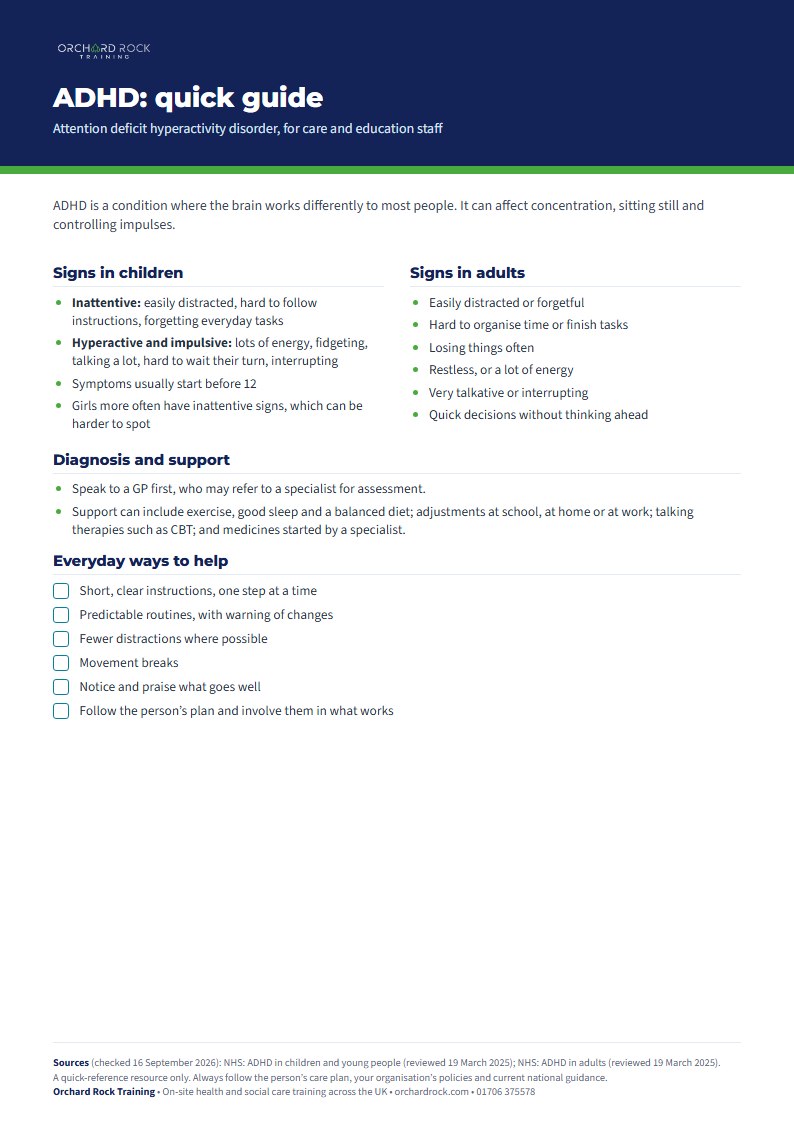
Signs in children
Symptoms usually start before the age of 12. Many young children show some of these signs without having ADHD.
- Inattentiveness: being easily distracted, finding it hard to follow instructions, and forgetting everyday tasks.
- Hyperactivity and impulsiveness: having lots of energy, fidgeting, talking a lot, finding it hard to wait their turn, and interrupting.
Most children have signs of both types. The NHS notes that girls more commonly have inattentive symptoms, which can be harder to recognise.
Signs in adults
- being easily distracted or forgetful
- finding it hard to organise time, follow instructions or finish tasks
- losing things often, such as a wallet, phone or keys
- having a lot of energy or feeling restless
- being very talkative or interrupting conversations
- making quick decisions without thinking about what might happen
Diagnosis and support
If symptoms are affecting someone’s life, the first step is usually to speak to a GP, who may refer them to a specialist for an assessment.
The NHS lists support such as regular exercise, good sleep and a balanced diet, adjustments at school, at home or at work, talking therapies such as cognitive behavioural therapy, and medicines started by a specialist.
Everyday ways to help
- Give short, clear instructions, one step at a time.
- Keep routines predictable and prepare the person for changes.
- Reduce distractions where you can.
- Build in movement breaks.
- Notice and praise what goes well.
- Follow the person’s care, support or education plan, and involve them in what works for them.
Download and printQuick guide (PDF, 1 page). Free to use in your service.
Download the PDFThis is a quick-reference resource. Always follow the person’s care plan, your organisation’s policies and procedures, and current national guidance.
Sources (checked 16 September 2026): NHS: ADHD in children and young people (reviewed 19 March 2025); NHS: ADHD in adults (reviewed 19 March 2025).