Only give a depot injection if you are trained, assessed as competent and authorised to do so under your organisation’s policy.
What is a depot injection?
A depot injection is a slow-release form of medication. The injection uses a liquid that releases the medicine slowly, so it lasts much longer than a tablet. The medicine is the same as other forms of the drug, such as tablets or liquid. Depot injections are used for various types of medicine, including some antipsychotics.
Why might someone have a depot injection?
Mind explains that a depot injection might suit someone who:
- finds it difficult to swallow medication
- finds it difficult to remember to take medication regularly
- prefers not to think about taking medication every day.
It is usually only offered once someone has been on the medicine for a while, it is working well for them, and they expect to keep taking it for a long time.
How is it given?
- By a healthcare professional, often in a clinic, medical centre or the person’s home. People aren’t given depot injections to use on themselves.
- Into a large muscle, usually the buttock or the shoulder. Using different sites can help prevent problems.
- Usually every two, three or four weeks, depending on the medicine. Some last longer.
What care staff should look out for and report
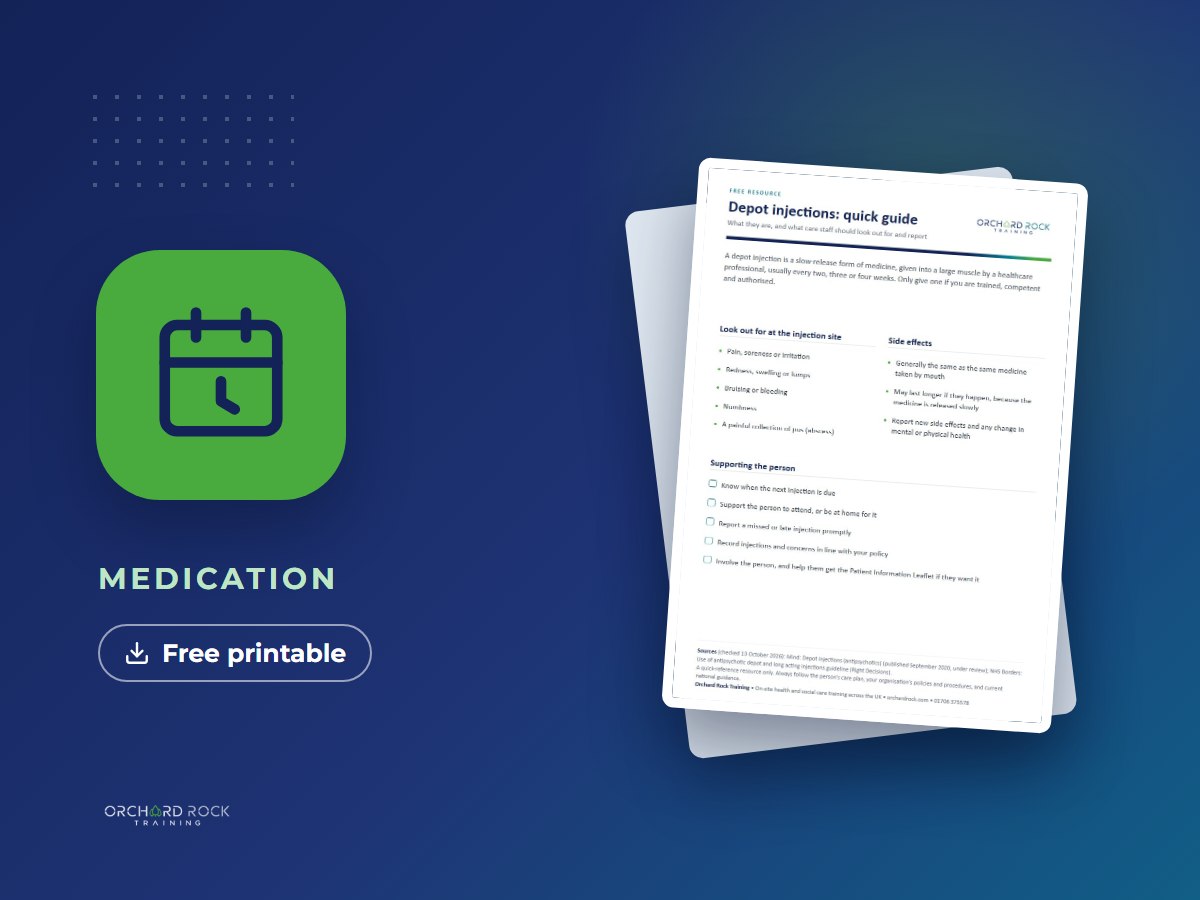
Problems at the injection site
- pain, soreness or irritation
- redness, swelling or lumps
- bruising or bleeding
- numbness
- a painful collection of pus (an abscess)
Side effects and changes in the person
The side effects of a depot injection are generally the same as for the same medicine taken by mouth. NHS guidance notes that, because the medicine is released slowly, side effects may last longer if they happen. Report any new side effects, and any changes in the person’s mental or physical health, to the nurse, prescriber or mental health team.
Supporting the person
- Know when the next injection is due, and support the person to attend or be at home for it.
- Report a missed or late injection promptly, in line with your policy.
- Record injections and any concerns in line with your policy.
- Involve the person in decisions about their care. People can ask the person giving the injection, their doctor or pharmacist for the Patient Information Leaflet for their medicine.
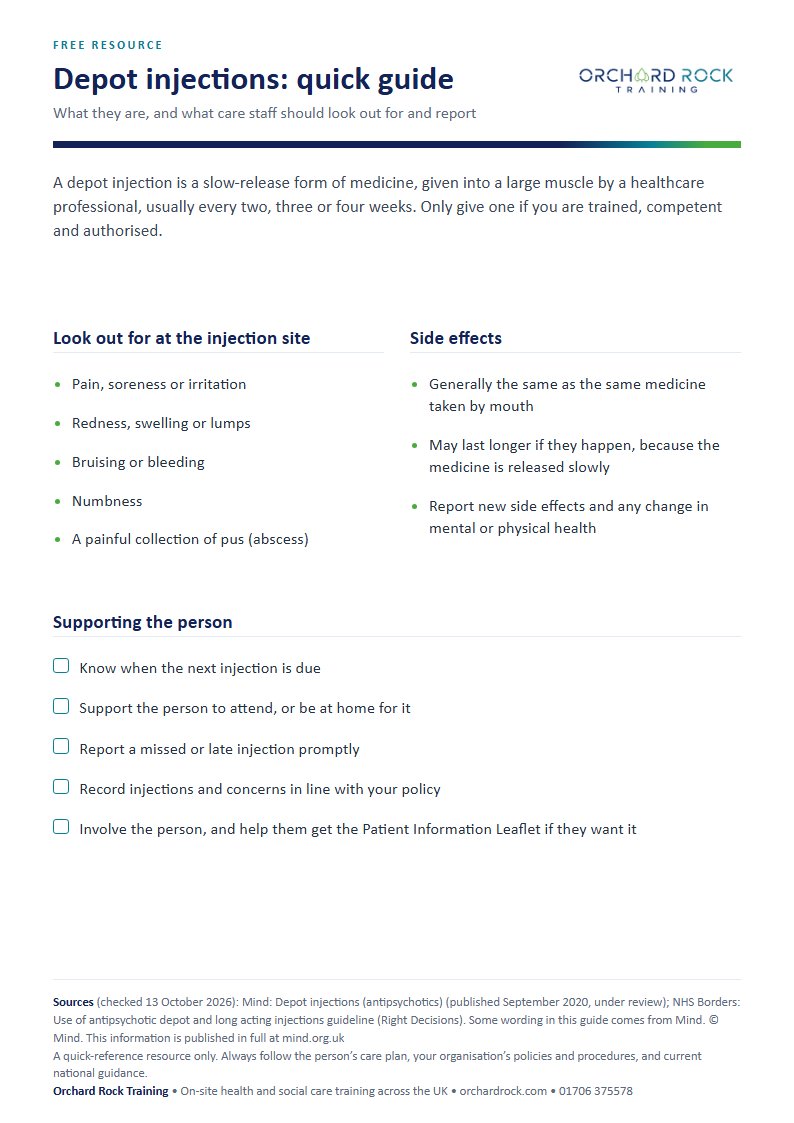
Download and printQuick guide (PDF, 1 page). Free to use in your service.
This is a quick-reference resource. Always follow the person’s care plan, your organisation’s policies and procedures, and current national guidance.
Sources (checked 13 October 2026): Mind: Depot injections (antipsychotics) (published September 2020, under review); NHS Borders: Use of antipsychotic depot and long acting injections guideline (Right Decisions).
Some wording in this guide comes from Mind. © Mind. This information is published in full at mind.org.uk