Eight steps to a healthy week
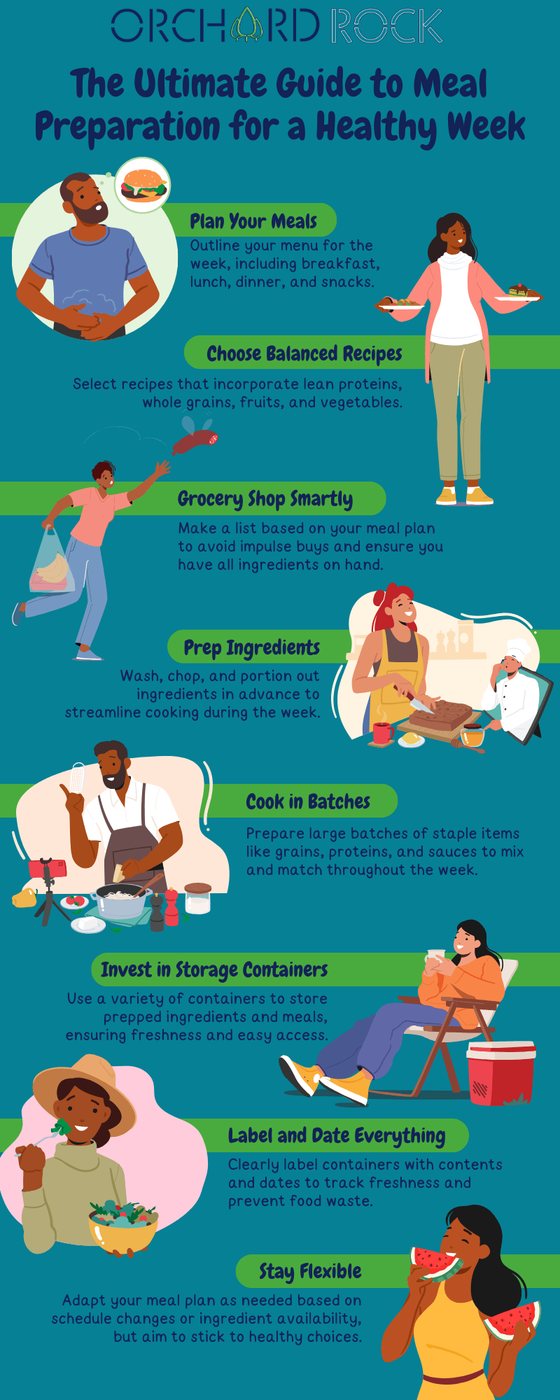
- Plan your meals. Outline the week’s breakfasts, lunches, dinners and snacks.
- Choose balanced recipes with lean proteins, whole grains, fruit and vegetables.
- Shop smartly. Make a list from your plan so you have everything you need.
- Prep ingredients in advance: wash, chop and portion to save time later.
- Cook in batches. Make staples such as grains, proteins and sauces to mix and match.
- Use good storage containers to keep food fresh and easy to find.
- Label and date everything to track freshness and cut waste.
- Stay flexible and adapt the plan when you need to, while sticking to healthy choices.
The Eatwell Guide basics
The NHS Eatwell Guide shows how to get a healthy, balanced diet:
- Eat at least 5 portions of a variety of fruit and vegetables a day.
- Base meals on potatoes, bread, rice, pasta or other starchy carbohydrates, choosing wholegrain where possible.
- Have some dairy or dairy alternatives.
- Eat some beans, pulses, fish, eggs, meat and other protein.
- Choose unsaturated oils and spreads, in small amounts.
- Drink 6 to 8 cups or glasses of fluid a day.
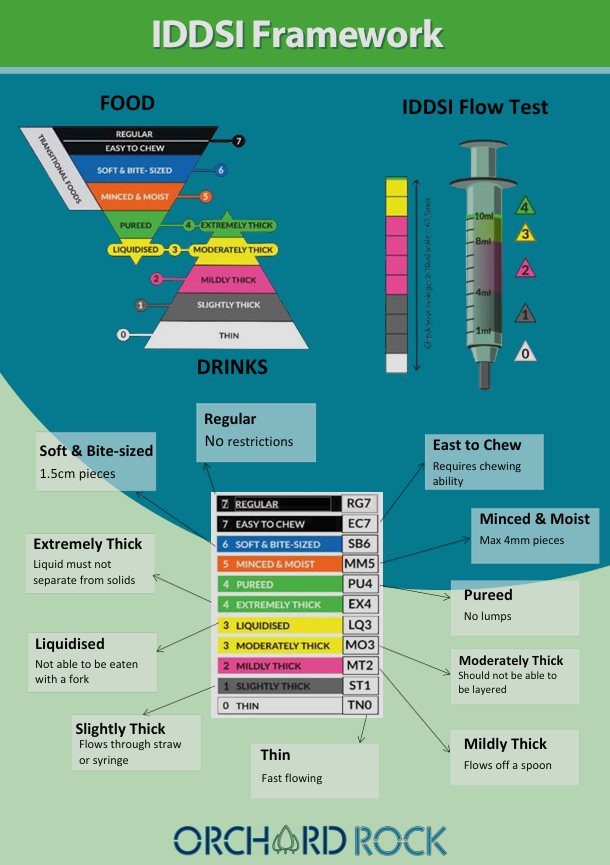
The Eatwell Guide doesn’t apply to children under 2. People with specific dietary needs or medical conditions, including anyone on an IDDSI texture-modified diet, should follow their care plan and the advice of their dietitian or speech and language therapist.
Download and printPoster (PDF). Free to use in your service.
Download the PDFThis is a quick-reference resource. Always follow the person’s care plan, your organisation’s policies and procedures, and current national guidance.
Sources (checked 16 September 2026): NHS: The Eatwell Guide.