World COPD Day is on Wednesday 18 November 2026. It is organised each year by the Global Initiative for Chronic Obstructive Lung Disease (GOLD) to raise awareness of the condition.
What is COPD?
The NHS describes chronic obstructive pulmonary disease (COPD) as a group of lung conditions that cause breathing difficulties, including emphysema and chronic bronchitis. The main cause is smoking. Common symptoms include:
- shortness of breath, particularly when active
- a persistent chesty cough with phlegm
- frequent chest infections
- persistent wheezing
Symptoms can suddenly get worse, which is known as a flare-up. The NHS notes that a few flare-ups a year are common, particularly in winter.

Everyday support
- Medicines and inhalers: the NHS says taking prescribed medicines, including inhalers, can help prevent bad flare-ups. Support people to use inhalers the way their doctor or nurse has shown them.
- Vaccinations: everyone with COPD is encouraged to have the annual flu jab and the one-off pneumococcal vaccination.
- Staying active: regular exercise can improve symptoms, and some people may be offered pulmonary rehabilitation.
- Breathing techniques: the NHS describes breathing control and breathing through pursed lips. Give people time, and pace activities so they don’t get too breathless.
Oxygen safety
Some people with COPD use oxygen at home. The NHS is clear: do not smoke when using oxygen, because the increased level of oxygen is highly flammable. Keep flames and heat sources away, and make sure the whole team knows the risks.
Spotting a flare-up
Know what is normal for each person, follow their care plan and report changes early, such as more breathlessness, more coughing or a change in phlegm. If someone is seriously struggling to breathe, call 999.
How training helps
Training helps your team support people with breathing conditions safely. Courses that help include:
- COPD (half day): understanding COPD and supporting people to manage it
- Oxygen Therapy (half day): using and managing oxygen safely
- Nebuliser Awareness (half day): supporting people who use a nebuliser
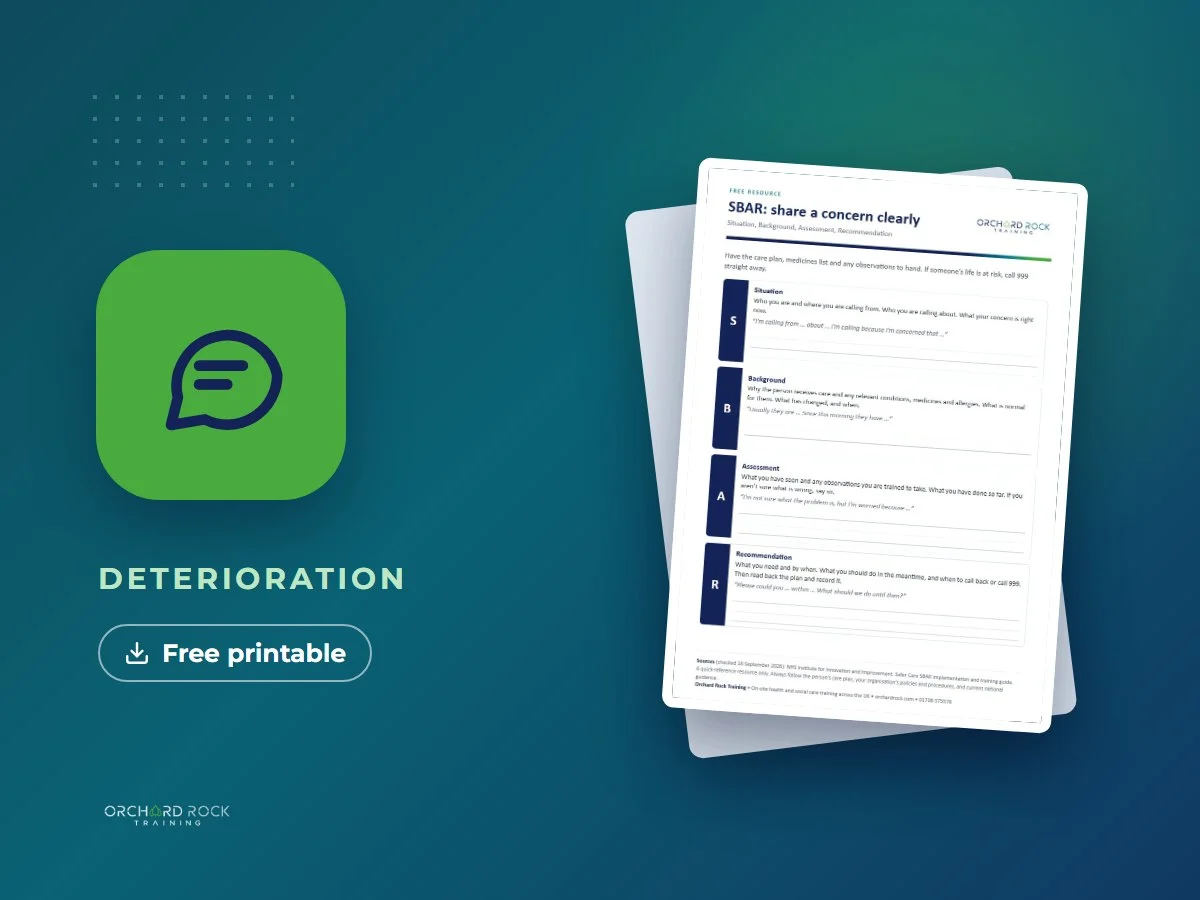
- Recognising Deterioration (half day): spotting when someone is becoming unwell
Free resources
Download, print and share these with your team.
Sources: NHS, COPD, COPD treatment and Living with COPD. Correct as of 21 September 2026.