If someone is seriously ill or injured and their life is at risk, call 999 straight away.
What is SBAR?
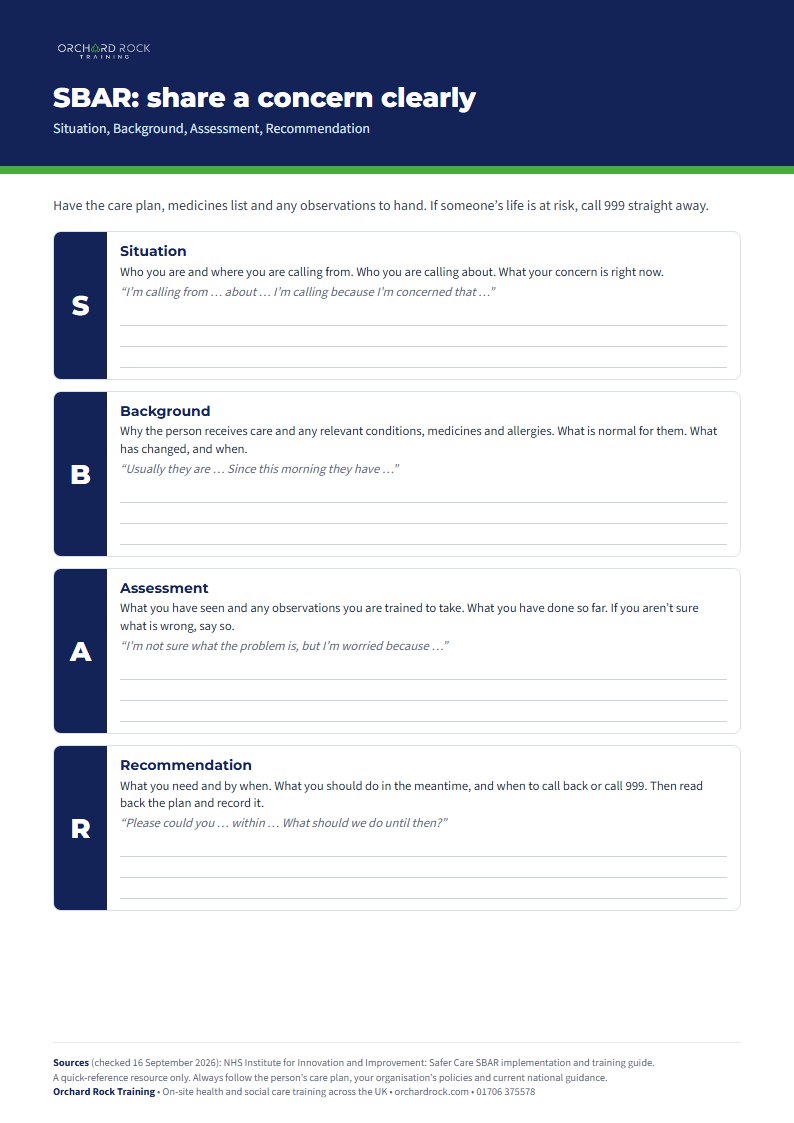
SBAR stands for Situation, Background, Assessment and Recommendation. It is a simple, structured way to pass on important information, so the person you speak to gets what they need to know, in a logical order.
The NHS Institute for Innovation and Improvement’s Safer Care guide explains that SBAR came from the US Navy and was adapted for healthcare by Dr M Leonard and colleagues at Kaiser Permanente. It also recommends asking the person you speak to to repeat back the key information, so you both know it has been understood.
When to use it
- calling a GP, district or community nurse, or NHS 111 about someone you support
- handing over to the next shift
- raising a concern with a senior colleague or manager
The four steps
Tips for using SBAR well
- Have the person’s care plan, medicines list and any recent observations to hand before you call.
- Keep it short and factual. Say clearly what worries you.
- Use the template to jot notes before you call, then record the advice you are given.
- If the person gets worse while you wait, escalate again. In an emergency, call 999.
Download and printTemplate (PDF, 1 page). Free to use in your service.
Download the PDFThis is a quick-reference resource. Always follow the person’s care plan, your organisation’s policies and procedures, and current national guidance.
Sources (checked 16 September 2026): NHS Institute for Innovation and Improvement: Safer Care SBAR implementation and training guide.