What is a stoma?
A stoma is an opening made in the tummy (abdomen) during surgery. Stool (poo) or urine leaves the body through the stoma into a pouch, usually called a stoma bag. A stoma can be temporary or permanent.
The NHS describes a healthy stoma as soft, slippery and pink, like the inside of the mouth. It should not hurt, but it can bleed easily if it is scratched or wiped. That’s because it has no nerve endings for pain but does have delicate blood vessels.
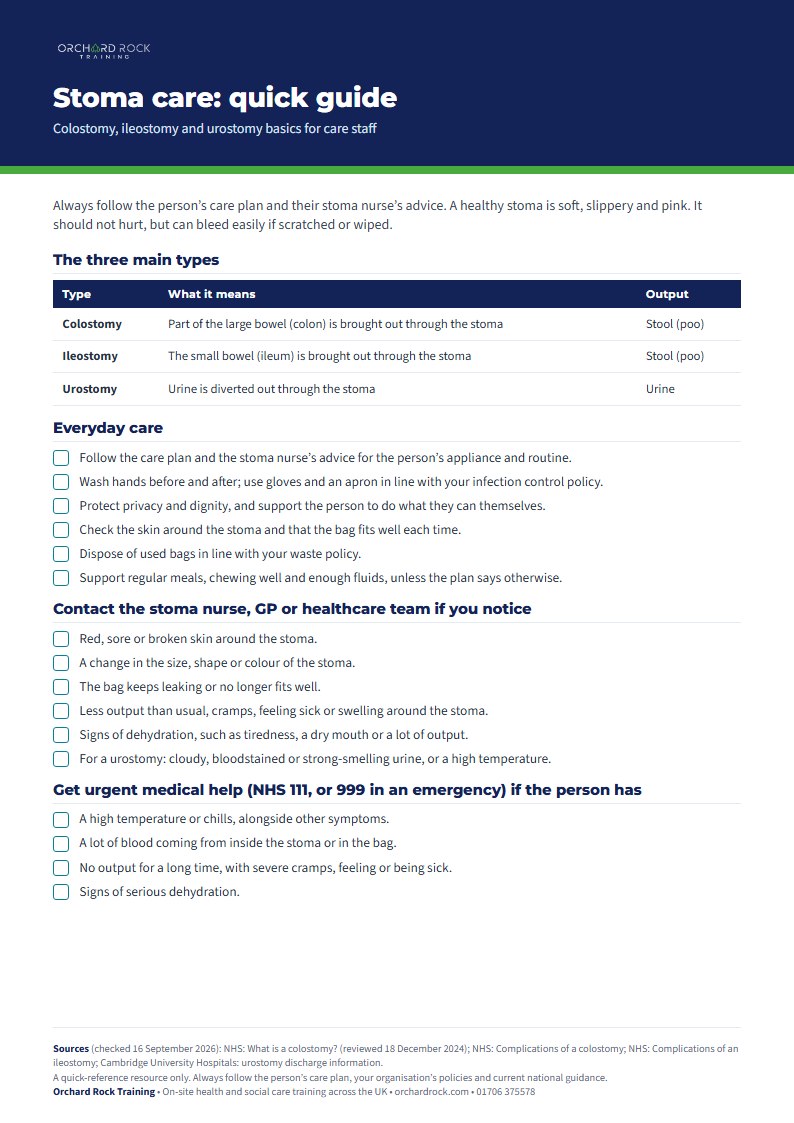
The three main types
| Type | What it means | What goes into the bag |
|---|---|---|
| Colostomy | Part of the large bowel (colon) is brought out through the stoma | Stool (poo) |
| Ileostomy | The small bowel (ileum) is brought out through the stoma | Stool (poo) |
| Urostomy | Urine is diverted out through the stoma | Urine |
Everyday stoma care
- Follow the person’s care plan and the advice of their stoma nurse. Appliances, products and routines differ from person to person.
- Wash your hands before and after, and use gloves and an apron in line with your infection prevention and control policy.
- Protect privacy and dignity, and support the person to do as much as they can for themselves.
- Know the appliance. Bags can be one-piece or two-piece, and some are drainable. How often a bag is emptied or changed varies between people.
- Check the skin around the stoma each time, and check the bag still fits well.
- Dispose of used bags in line with your service’s waste policy.
- Support eating and drinking. The NHS advises eating regularly, chewing food well and drinking enough fluids, unless the person’s plan says otherwise.
When to get advice
Contact the stoma nurse, GP or healthcare team if you notice
- Red, sore or broken skin around the stoma.
- A change in the size, shape or colour of the stoma.
- The bag keeps leaking or no longer fits well.
- Less output than usual, cramps, feeling sick or swelling around the stoma.
- Signs of dehydration, such as tiredness, a dry mouth or a lot of output.
- For a urostomy: cloudy, bloodstained or strong-smelling urine, or a high temperature.
Get urgent medical help (NHS 111, or 999 in an emergency) if the person has
- A high temperature or chills, alongside other symptoms.
- A lot of blood coming from inside the stoma or in the bag.
- No output for a long time, with severe cramps, feeling or being sick.
- Signs of serious dehydration.
Download and printQuick guide (PDF, 1 page). Free to use in your service.
Download the PDFThis is a quick-reference resource. Always follow the person’s care plan, your organisation’s policies and procedures, and current national guidance.
Sources (checked 16 September 2026): NHS: What is a colostomy? (reviewed 18 December 2024); NHS: Complications of a colostomy; NHS: Complications of an ileostomy; Cambridge University Hospitals: urostomy discharge information.