Avoid, assess, reduce
Under the Manual Handling Operations Regulations 1992, HSE says employers must:
- avoid hazardous manual handling, so far as reasonably practicable
- assess the risk of injury from any hazardous manual handling that can’t be avoided
- reduce the risk of injury to as low as reasonably practicable
The TILE approach
HSE guidance says a manual handling assessment should look at four things: the task, the individual doing it, the load and the working environment. It also encourages you to involve the staff who do the task, because they understand the risks and often have practical solutions.
Moving and handling people
In health and social care, the “load” is often a person. HSE says individual moving and handling risk assessments should be person-centred and, where possible, involve the person or their family. They should cover what the person can and can’t do independently, their ability to support their own weight, things like pain or disability, the equipment and number of staff needed, repositioning, and arrangements if the person is at risk of falling. HSE also says they should be reviewed periodically and whenever circumstances change.
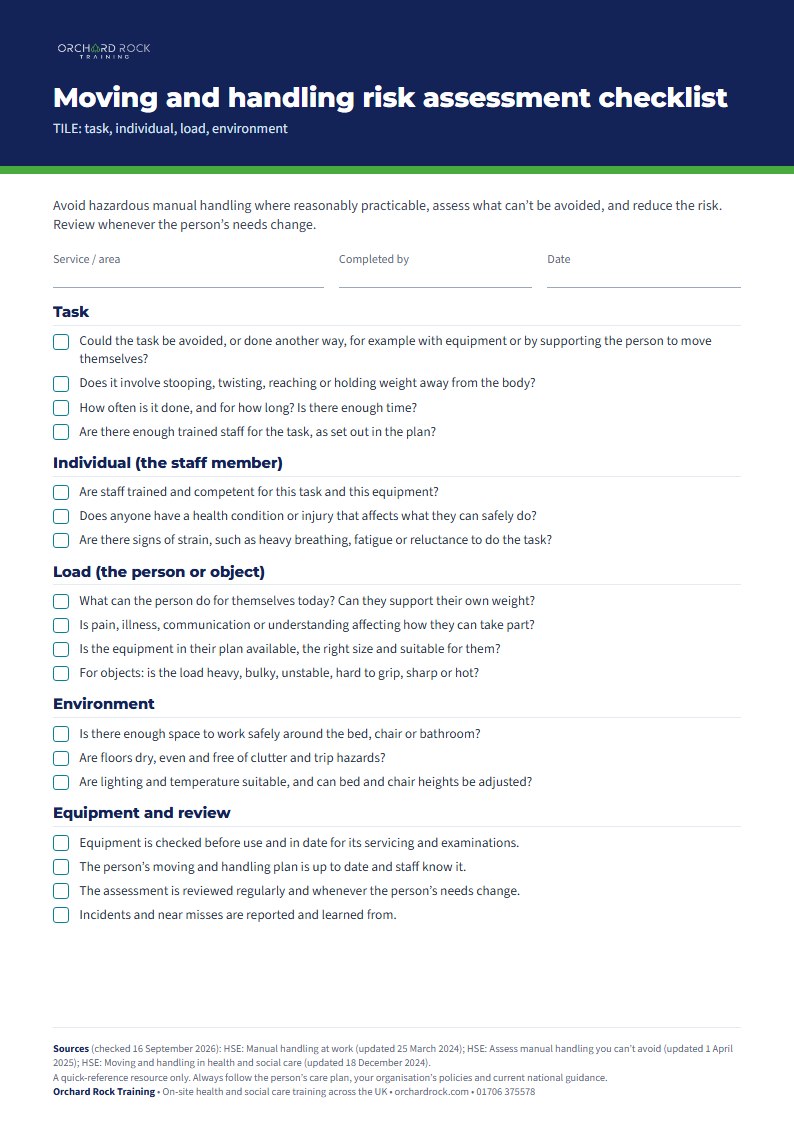
The checklist
Task
- Could the task be avoided, or done another way, for example with equipment or by supporting the person to move themselves?
- Does it involve stooping, twisting, reaching or holding weight away from the body?
- How often is it done, and for how long? Is there enough time?
- Are there enough trained staff for the task, as set out in the plan?
Individual (the staff member)
- Are staff trained and competent for this task and this equipment?
- Does anyone have a health condition or injury that affects what they can safely do?
- Are there signs of strain, such as heavy breathing, fatigue or reluctance to do the task?
Load (the person or object)
- What can the person do for themselves today? Can they support their own weight?
- Is pain, illness, communication or understanding affecting how they can take part?
- Is the equipment in their plan available, the right size and suitable for them?
- For objects: is the load heavy, bulky, unstable, hard to grip, sharp or hot?
Environment
- Is there enough space to work safely around the bed, chair or bathroom?
- Are floors dry, even and free of clutter and trip hazards?
- Are lighting and temperature suitable, and can bed and chair heights be adjusted?
Equipment and review
- Equipment is checked before use and in date for its servicing and examinations.
- The person’s moving and handling plan is up to date and staff know it.
- The assessment is reviewed regularly and whenever the person’s needs change.
- Incidents and near misses are reported and learned from.
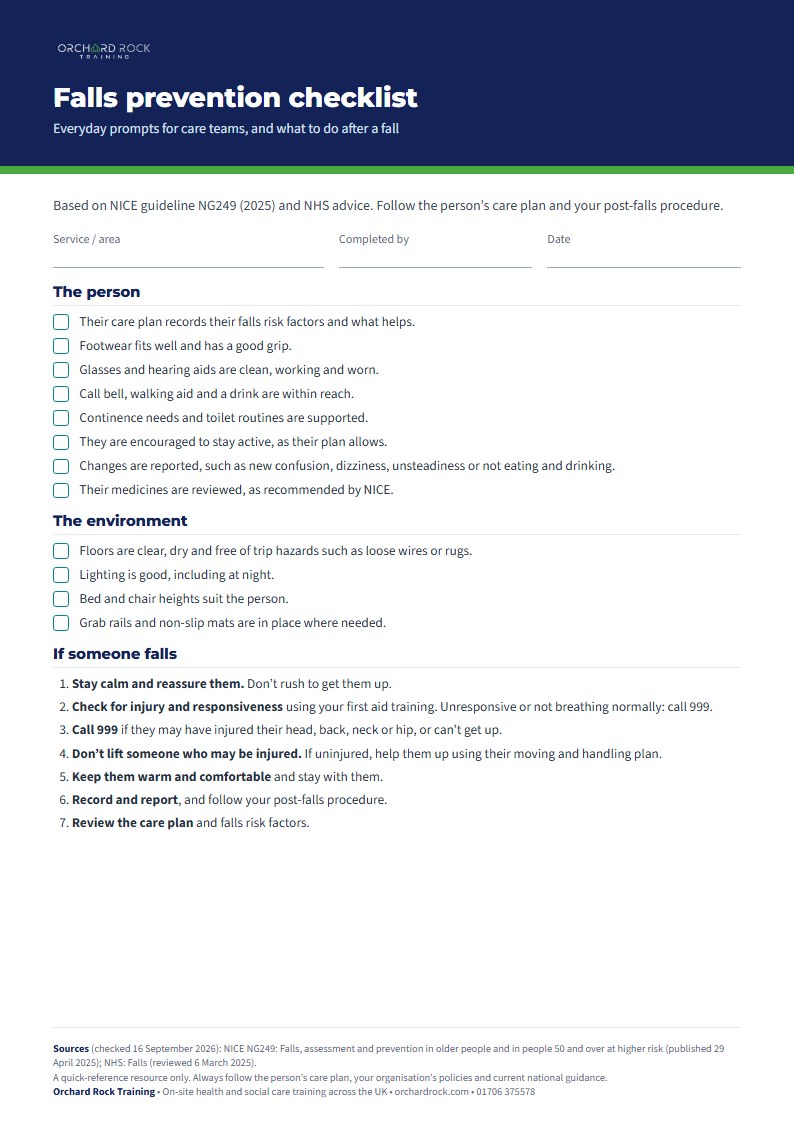
Download and printChecklist (PDF, 1 page). Free to use in your service.
Download the PDFThis is a quick-reference resource. Always follow the person’s care plan, your organisation’s policies and procedures, and current national guidance.
Sources (checked 16 September 2026): HSE: Manual handling at work (updated 25 March 2024); HSE: Assess manual handling you can’t avoid (updated 1 April 2025); HSE: Moving and handling in health and social care (updated 18 December 2024).