
Medical Conditions
Medical conditions training gives your team two days on the conditions they meet most: diabetes, epilepsy, dementia, Parkinson’s and delirium, with accurate observations and early escalation. Delivered on-site by our experienced trainers.
About the course
Care safely for residents with common medical conditions
By the end of the course, delegates will:
- Explain what diabetes is and recognise the types
- Know a resident’s targets, and why they are relaxed
- Monitor blood glucose safely, and read a sensor
- Recognise and treat a hypo correctly
- Respond to high glucose without adjusting any dose
- Handle insulin and diabetes medicines safely
- Check feet daily and report changes the same day
- Identify the main types of seizure
- Support someone through a seizure and record it
- Know when rescue medication may lawfully be given
- Measure all six observations accurately
- Recognise soft signs and escalate using SBARD
- Explain what dementia is and recognise the types
- Describe how dementia progresses, and plan for it
- Put the person, not the diagnosis, at the centre
- Read distress as communication and check for pain
- De-escalate safely and prevent repeat incidents
- Know the limits on antipsychotics and restriction
- Explain what Parkinson’s does and why
- Recognise motor and non-motor symptoms
- Distinguish the types of parkinsonism
- Give Parkinson’s medicines on time, every time
- Support independence, eating and planning ahead
- Recognise delirium and escalate it the same day
What you’ll cover
Full course content
Everything the course covers, exactly as our trainers deliver it:
Day 1
What diabetes is
- Glucose and insulin
- The main types
- How common it is
Care plans and targets
- Know your resident
- Individual targets
- The sugar question
Monitoring glucose
- When to check
- Competency first
- Sensors and their lag
Hypoglycaemia
- Four is the floor
- Spotting it early
- Treating it properly
High glucose
- What you never do
- Ketoacidosis
- HHS and sick day rules
Diabetes medicines
- Insulin and injecting
- Tablets and injectables
- Storage and safety
Complications
- Feet above all
- Nerves, kidneys, eyes
- The routine checks
Seizure types
- Focal seizures
- Generalised seizures
- Afterwards
Supporting a seizure
- What to do
- What never to do
- When to call 999
Rescue medication
- Status epilepticus
- Buccal midazolam
- Protocol and competency
Resuscitation
- Recovery position
- CPR
- DNACPR and ReSPECT
Living with epilepsy
- Medicines and adherence
- Valproate rules
- Triggers and SUDEP
Taking observations
- Breathing and oxygen
- Pulse, BP, alertness
- Temperature
Escalation
- Soft signs first
- Know their normal
- Scoring and SBARD
Day 2
What dementia is
- An umbrella term
- More than memory
- Diagnosis and treatment
The main types
- Alzheimer’s and vascular
- Lewy body and the warning
- Frontotemporal and mixed
How it progresses
- Early, middle, late
- The bookcase
- Only a rough guide
The person
- Knowing who they were
- Choice that remains
- Communicating well
Distress behaviour
- It always means something
- Pain first, every time
- Triggers and causes
Responding
- How distress builds
- De-escalating
- Preventing and recording
Medicines and capacity
- Antipsychotics last
- Capacity, decision by decision
- Restriction and liberty
What Parkinson’s is
- Dopamine and the brain
- More than movement
- Who it affects
The symptoms
- The motor three
- Freezing and falls
- Non-motor and mood
Types of parkinsonism
- Vascular and drug-induced
- The atypical types
- When to ask for review
Time-critical medicines
- On time, every time
- Never stopped abruptly
- The ones that harm
Living well
- Therapies that help
- Eating and bowels
- Dignity and planning ahead
Recognising delirium
- A medical emergency
- The three presentations
- Telling it from dementia
Causes and prevention
- PINCH ME
- Who is at risk
- Treat, support, prevent
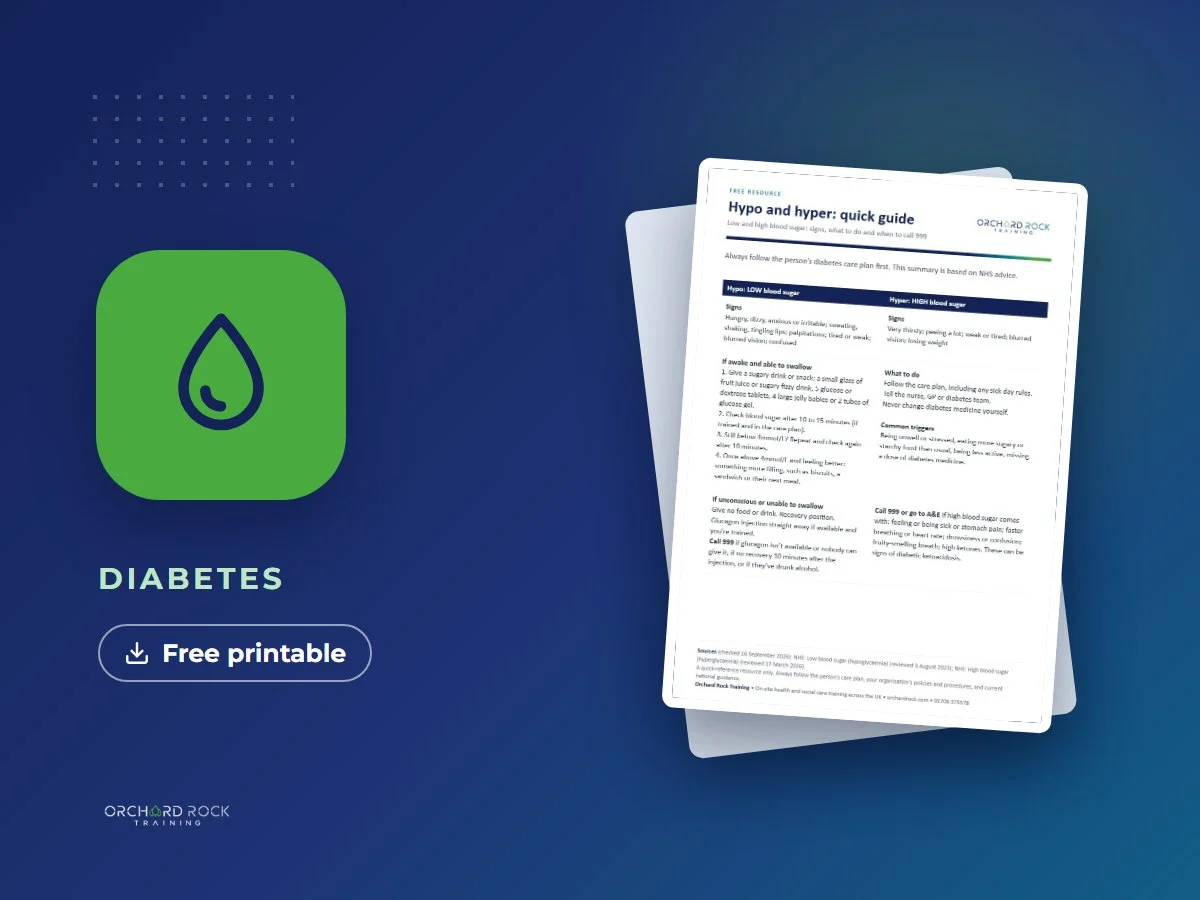 Free resourceHypo and hyper quick guideThe signs of low and high blood sugar, what to do, and when to call 999, based on NHS advice.Read and download →
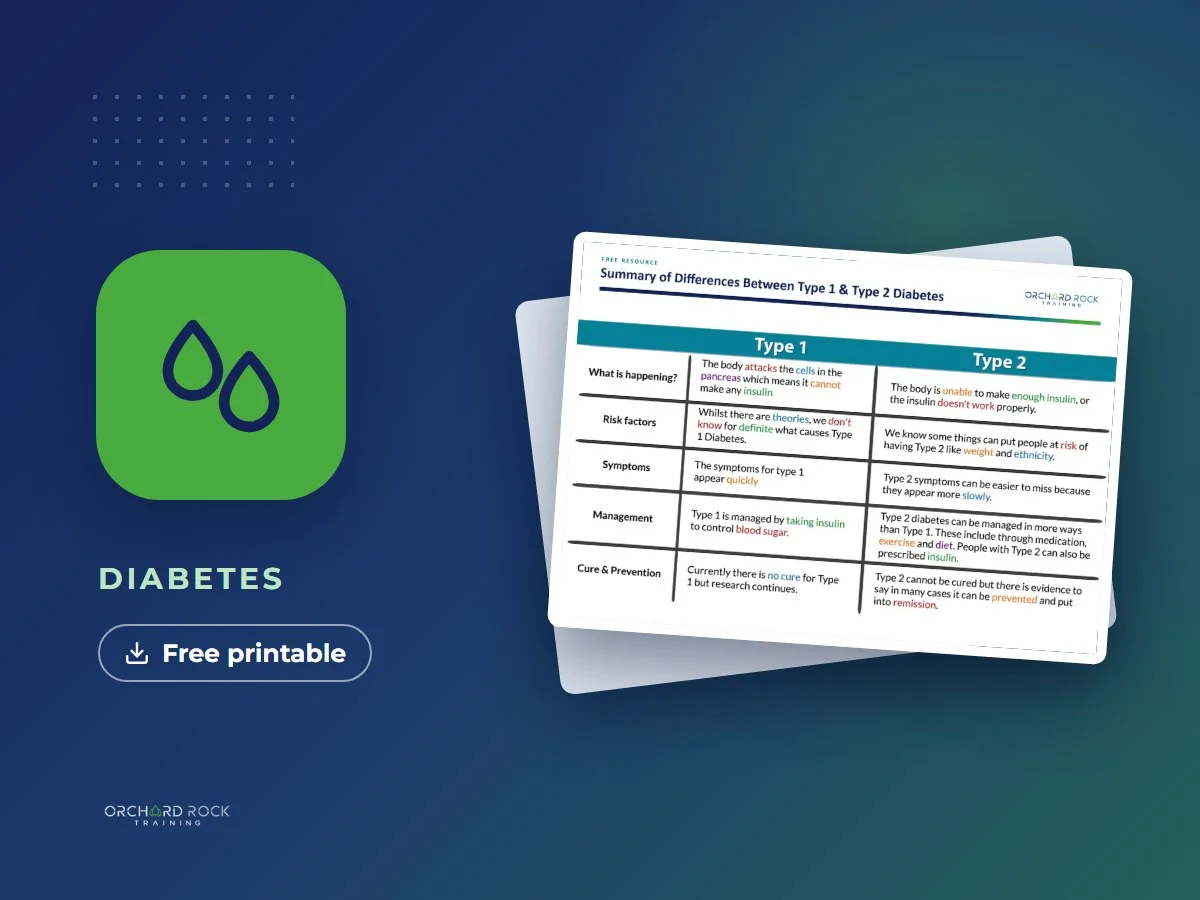 Free resourceType 1 and Type 2 comparedA clear side by side of how the two types of diabetes differ, from causes and risk factors to management.Read and download →
Keep exploring
Related specialist courses
These subjects sit naturally alongside this course, and we can combine courses into one visit.
Good to know
Frequently asked questions
Where is the training delivered?
All of our training is delivered on-site at your service, anywhere in the UK. We come to you, so there are no travel costs or venue hire for your team.
How long is the Medical Conditions course?
It runs as a 2-day (12 hours) course, delivered in one visit unless stated otherwise.
How many delegates can attend?
Up to 15 delegates per session.
Do delegates receive a certificate?
Yes, every delegate receives a certificate on completion. We recommend refreshing every two years.
How much does the course cost?
We price every course on application, based on your dates, location and delegate numbers. Use the contact buttons below. We reply quickly with a quote.
Can we combine courses into one visit?
Yes. Many clients build a full training day from shorter courses, and we can deliver several subjects in one visit. Just tell us what your team needs.
Do you only train care providers?
No. This course suits care & nursing homes, home care & domiciliary, supported living, day services, hospices. If your sector isn’t listed, ask and we’ll tailor the course to your setting.
Book this course
We bring Medical Conditions training to your service
Delivered on-site at your service, nationwide, with pricing on application. Tell us your dates and delegate numbers and we’ll reply quickly with a quote.
Part of our specialist training range. Also explore behaviour management training and mental health training.