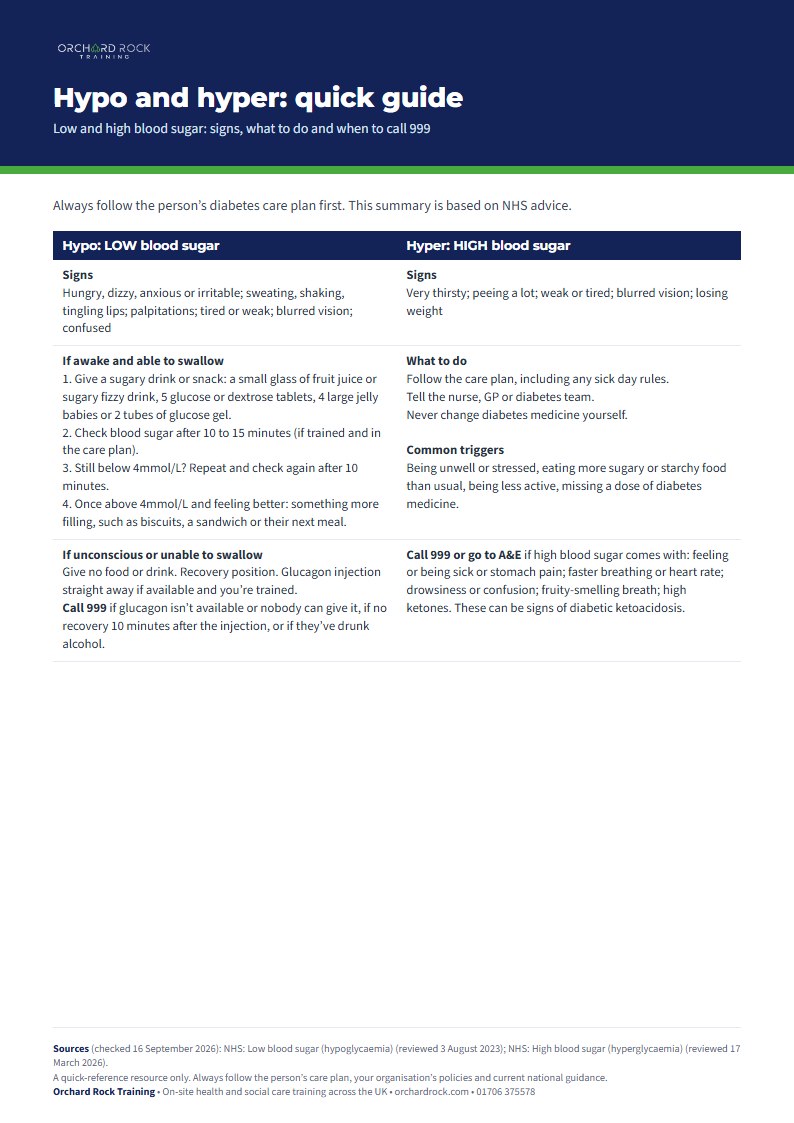
Always follow the person’s diabetes care plan first. The steps below are general NHS advice.
Hypo: low blood sugar
A hypo (hypoglycaemia) is when blood sugar is too low. The NHS lists these symptoms:
- feeling hungry, dizzy, anxious or irritable
- sweating, shaking or tingling lips
- heart palpitations
- feeling tired or weak
- changes in vision, such as blurred vision
- feeling confused
What to do if someone is awake and can swallow
- Give a sugary drink or snack, such as a small glass of fruit juice or sugary fizzy drink, 5 glucose or dextrose tablets, 4 large jelly babies or 2 tubes of glucose gel.
- Check their blood sugar after 10 to 15 minutes, if you’re trained to and it’s in their care plan.
- If it’s still below 4mmol/L, give another sugary drink or snack and check again after 10 minutes.
- Once they feel better and their blood sugar is above 4mmol/L, they should eat something more filling, such as biscuits, a sandwich or their next meal.
If someone is unconscious or can’t swallow
- Don’t give them any food or drink, as they can’t swallow safely.
- Put them in the recovery position.
- Give a glucagon injection straight away if one is available and you’re trained to use it.
Call 999 if they’re unconscious and glucagon isn’t available or nobody knows how to use it, if they haven’t recovered 10 minutes after the injection, or if they’ve drunk alcohol.
Hyper: high blood sugar
A hyper (hyperglycaemia) is when blood sugar is too high. The NHS lists these symptoms: feeling very thirsty, peeing a lot, feeling weak or tired, blurred vision and losing weight.
It can happen when someone is unwell or stressed, eats more sugary or starchy food than usual, is less active, or misses a dose of their diabetes medicine. Follow the person’s care plan, including any sick day rules, and tell the nurse, GP or diabetes team. Never change someone’s diabetes medicine yourself.
Call 999 or go to A&E if someone has high blood sugar and is feeling or being sick or has stomach pain, is breathing faster or has a faster heart rate, is drowsy or confused, has breath that smells fruity (like pear drop sweets), or has high ketone levels. These can be signs of diabetic ketoacidosis, which is an emergency.
Download and printQuick guide (PDF, 1 page). Free to use in your service.
Download the PDFThis is a quick-reference resource. Always follow the person’s care plan, your organisation’s policies and procedures, and current national guidance.
Sources (checked 16 September 2026): NHS: Low blood sugar (hypoglycaemia) (reviewed 3 August 2023); NHS: High blood sugar (hyperglycaemia) (reviewed 17 March 2026).