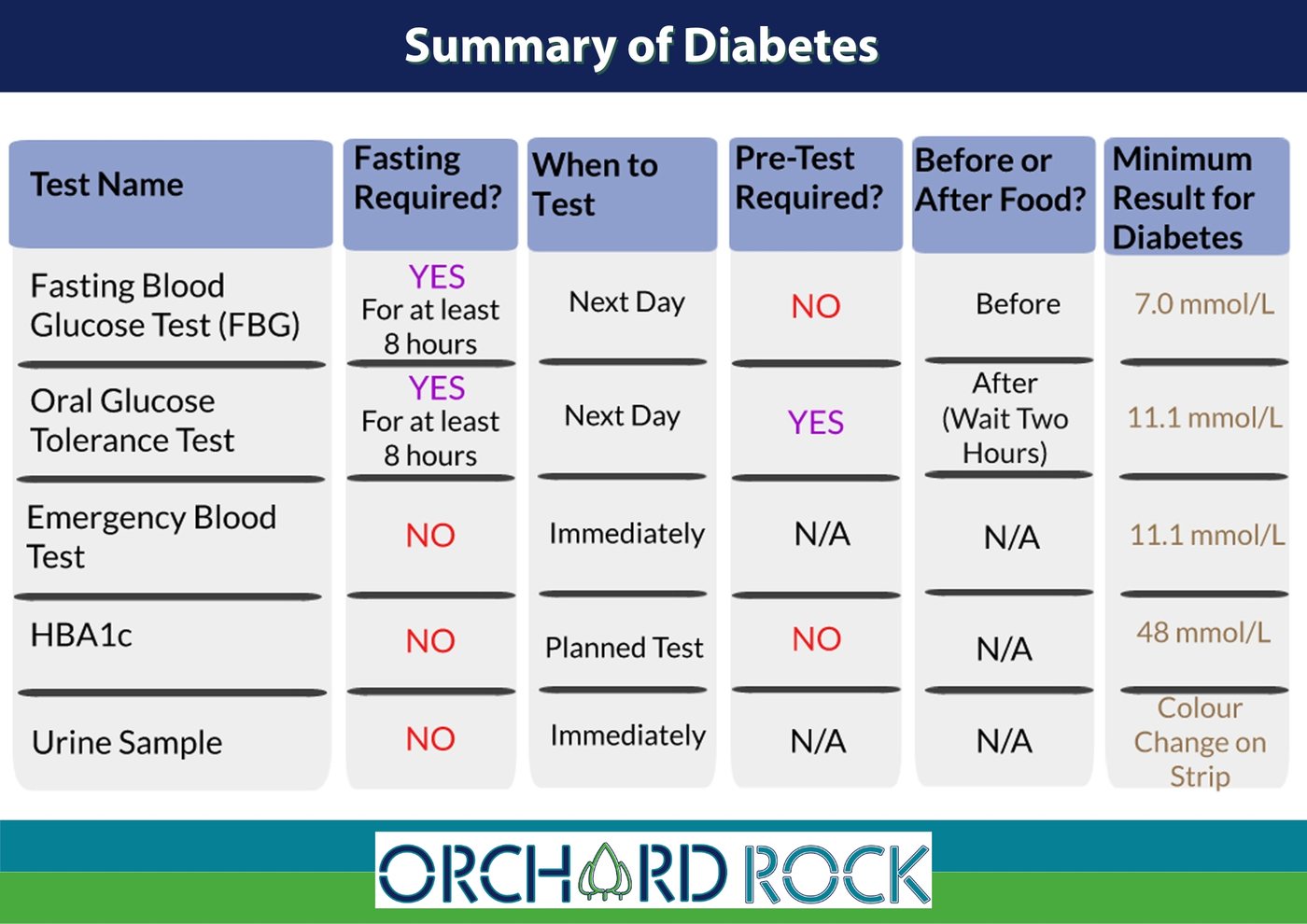
Please note: our poster shows the HbA1c result as 48 mmol/L. The correct unit is mmol/mol, so the figure is 48 mmol/mol.
The main tests
Diabetes is diagnosed with blood tests arranged by a GP or other healthcare professional. Diabetes UK gives these diagnostic levels:
| Test | What it involves | Diabetes is diagnosed at |
|---|---|---|
| HbA1c | A blood test. No fasting needed. | 48 mmol/mol or above. 42 to 47 mmol/mol means a higher risk of type 2 diabetes (often called prediabetes). |
| Fasting blood glucose | A blood test after not eating. | 7.0 mmol/l or above: one reading if the person has symptoms, or two readings if they don’t. |
| Oral glucose tolerance test (OGTT) | A blood test after fasting, then again after a sugary drink. | 11.1 mmol/l or above. |
Our poster also covers emergency blood tests and urine testing, and when each test is usually done.
Symptoms to look out for
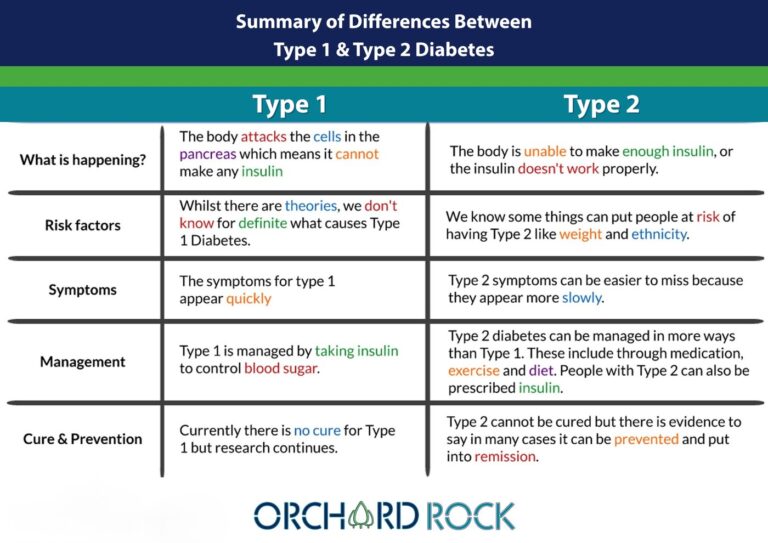
The NHS lists common symptoms of diabetes as feeling very tired, peeing more than usual, feeling thirsty all the time and losing weight without trying. Other signs include blurred vision, cuts or wounds taking longer to heal, and itching around the genitals or repeated thrush. Type 2 symptoms can develop slowly, and not everyone has them. Type 1 symptoms usually develop quickly, over a few days or weeks.
If you notice these signs in someone you support, report them so they can see their GP. Care staff don’t diagnose diabetes; results are always interpreted by a doctor or nurse.
Download and printPoster (PDF). Free to use in your service.
Download the PDFThis is a quick-reference resource. Always follow the person’s care plan, your organisation’s policies and procedures, and current national guidance.
Sources (checked 16 September 2026): Diabetes UK: diagnostic criteria for diabetes; NHS: Type 2 diabetes symptoms (reviewed 10 February 2025); NHS: Type 1 diabetes symptoms (reviewed 31 October 2024).