Who is at higher risk?
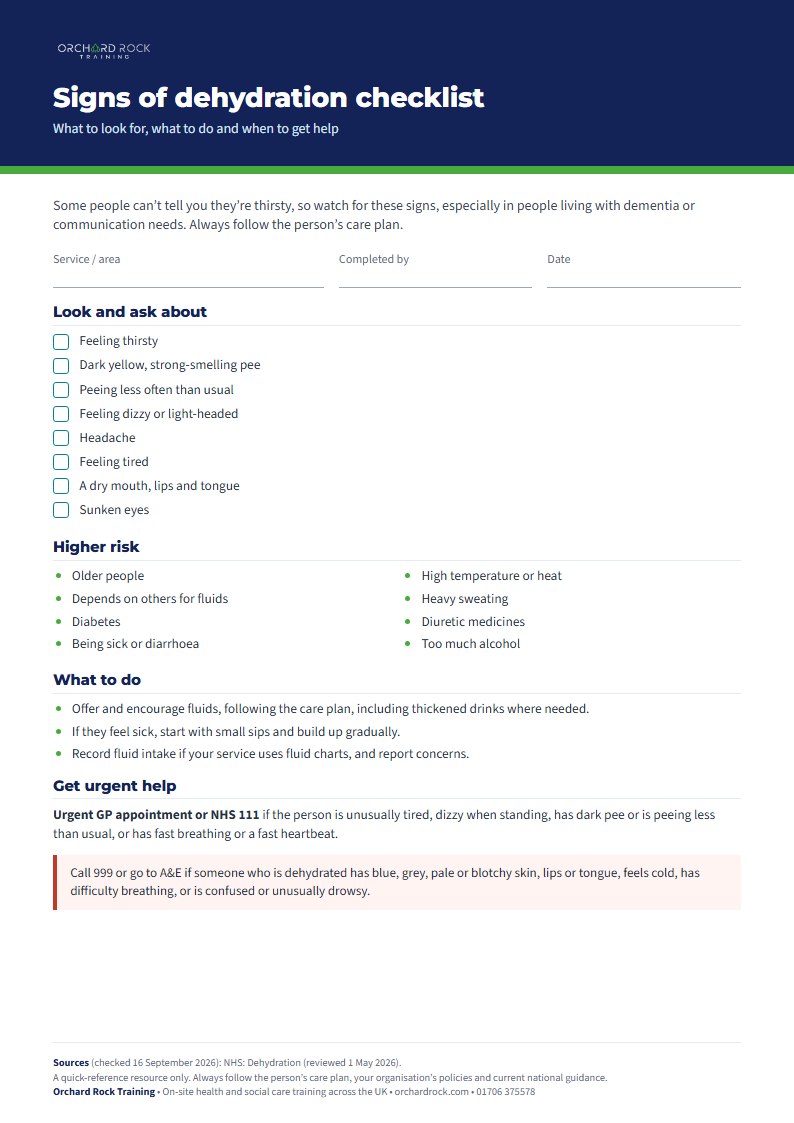
Anyone can become dehydrated, but the NHS says babies, children and older people are more at risk. The risk is also higher for people who:
- depend on other people to give them fluids
- have diabetes
- are being sick or have diarrhoea
- have a high temperature, or have been in the sun too long
- have been sweating heavily
- take medicines that make them pee more (diuretics)
- have drunk too much alcohol
Signs of dehydration
Look and ask about
- Feeling thirsty
- Dark yellow, strong-smelling pee
- Peeing less often than usual
- Feeling dizzy or light-headed
- Headache
- Feeling tired
- A dry mouth, lips and tongue
- Sunken eyes
Some people can’t tell you they’re thirsty, so watch for these signs, especially in people living with dementia or communication needs.
What to do
- Offer and encourage fluids, following the person’s care plan, including anyone who needs thickened drinks.
- If they feel sick, start with small sips and build up gradually.
- Record what they drink if your service uses fluid charts, and report any concerns to the nurse or your manager.
- A pharmacist can advise on oral rehydration solutions.
When to get help
Ask for an urgent GP appointment or call NHS 111 if someone is unusually tired, feels dizzy when standing up, has dark pee or is peeing less than usual, or has fast breathing or a fast heartbeat.
Call 999 or go to A&E if someone who is dehydrated has blue, grey, pale or blotchy skin, lips or tongue, feels cold, has difficulty breathing, is confused or unusually drowsy. These can be signs of shock.
Download and printChecklist (PDF, 1 page). Free to use in your service.
Download the PDFThis is a quick-reference resource. Always follow the person’s care plan, your organisation’s policies and procedures, and current national guidance.
Sources (checked 16 September 2026): NHS: Dehydration (reviewed 1 May 2026).