A sign is a reason to act, not proof
The statutory guidance for the Care Act 2014 lists ten types of abuse and neglect. None of the signs below proves that abuse is happening, and many have other causes. What they give you is a reason to notice, record what you saw and pass it on. You do not need to be certain before you raise a concern.
The ten types, and the signs to look for
1. Physical abuse
Includes assault, hitting, slapping, pushing, misuse of medication, restraint and inappropriate physical sanctions.
Signs: injuries with no explanation, or that do not fit the explanation given; bruises, cuts or burns; frequent injuries or falls; being subdued or wary around one particular person.
2. Domestic violence
Psychological, physical, sexual, financial or emotional abuse, and so-called ‘honour’-based violence, by a partner or family member.
Signs: low self-esteem or blaming themselves; being put down in front of others; being cut off from friends and family; little access to money; fear of anyone outside getting involved.
3. Sexual abuse
Includes rape, sexual assault, indecent exposure, sexual harassment, inappropriate looking or touching, and sexual acts the person has not consented to or was pressured into.
Signs: bruising, bleeding, pain or infections with no explanation; a sudden change in behaviour or sexualised language; fear of personal care or of one particular person; self-harm or withdrawal.
4. Psychological abuse
Includes emotional abuse, threats of harm or abandonment, humiliation, blaming, controlling, intimidation, coercion, harassment, verbal abuse, cyber bullying and isolation.
Signs: going quiet or withdrawn when one particular person is around; low self-esteem; changes in sleep, appetite or weight; tearfulness or anger; behaviour that is unusually uncooperative or aggressive.
5. Financial or material abuse
Includes theft, fraud, internet scamming, pressure over wills, property, inheritance or money, and the misuse of someone’s property, possessions or benefits.
Signs: missing money or belongings; withdrawals nobody can explain; unpaid bills or no money for essentials; sudden changes to a will, property deeds or a power of attorney; someone taking an unusual interest in the person’s money.
6. Modern slavery
Covers slavery, human trafficking, forced labour and domestic servitude.
Signs: looking malnourished, unkempt or withdrawn; seeming to be under someone else’s control; no identity documents and few belongings; living and working at the same address; fear of the police or other authorities.
7. Discriminatory abuse
Harassment, slurs or similar treatment because of race, gender and gender identity, age, disability, sexual orientation or religion.
Signs: withdrawal and isolation; anger, frustration, fear or anxiety; support that ignores the person’s needs linked to who they are.
8. Organisational abuse
Neglect and poor care practice within an institution or a specific care setting, such as a hospital or care home, or in care provided in a person’s own home. It can be a one-off incident or ongoing ill-treatment.
Signs: see the next section.
9. Neglect and acts of omission
Includes ignoring medical, emotional or physical care needs, failing to provide access to health, care and support, and withholding necessities such as medication, adequate nutrition and heating.
Signs: poor hygiene or dirty surroundings; pressure ulcers; weight loss or dehydration; injuries or health problems left untreated; medication building up untaken; clothing that does not suit the weather or the person.
10. Self-neglect
Covers a wide range of behaviour: neglecting to care for your own hygiene, health or surroundings, and includes hoarding.
Signs: very poor personal hygiene; not enough food, clothing or heating; living conditions that are unsafe or unsanitary; hoarding; refusing health or care services, or not taking medication.
Signs of organisational abuse
Organisational abuse, sometimes called institutional abuse, is the hardest type to see from the inside, because it can look like “the way we do things here”. The guidance says it can come from the structure, policies, processes and practices within an organisation, and that repeated instances of poor care may point to more serious problems.
- Rigid routines that suit the service rather than the person, with little choice over bedtimes, mealtimes or baths.
- Too few staff, a high turnover of staff, or little leadership and supervision.
- People left hungry or thirsty, or without the help they need to eat and drink.
- Personal matters talked about in public, or people left exposed while washing or using the toilet.
- Shared or missing clothing and belongings, and dentures, glasses or hearing aids not looked after.
- No individual care plans, poor records or missing documents.
- Few visitors, visits discouraged, and little to do.
- Restraint used when it should not be, or medication misused.
- Complaints and concerns that are not acted on.
Look for patterns, not just single incidents
Abuse can be a one-off or happen many times, and it can affect one person or several. The guidance asks everyone to look beyond single incidents and spot patterns of harm. That only works when what staff notice is written down and shared with the right people, so small concerns from different shifts can be put together.
If you notice a sign
- Write down what you saw or heard, with the date and time, in plain factual words.
- Tell your manager or safeguarding lead straight away, and follow your organisation’s safeguarding policy.
- Do not investigate or confront anyone yourself. It could put the person at greater risk and affect any enquiry later.
- If you cannot raise it inside your organisation, contact your local authority’s safeguarding team.
- If someone is in immediate danger, call 999.
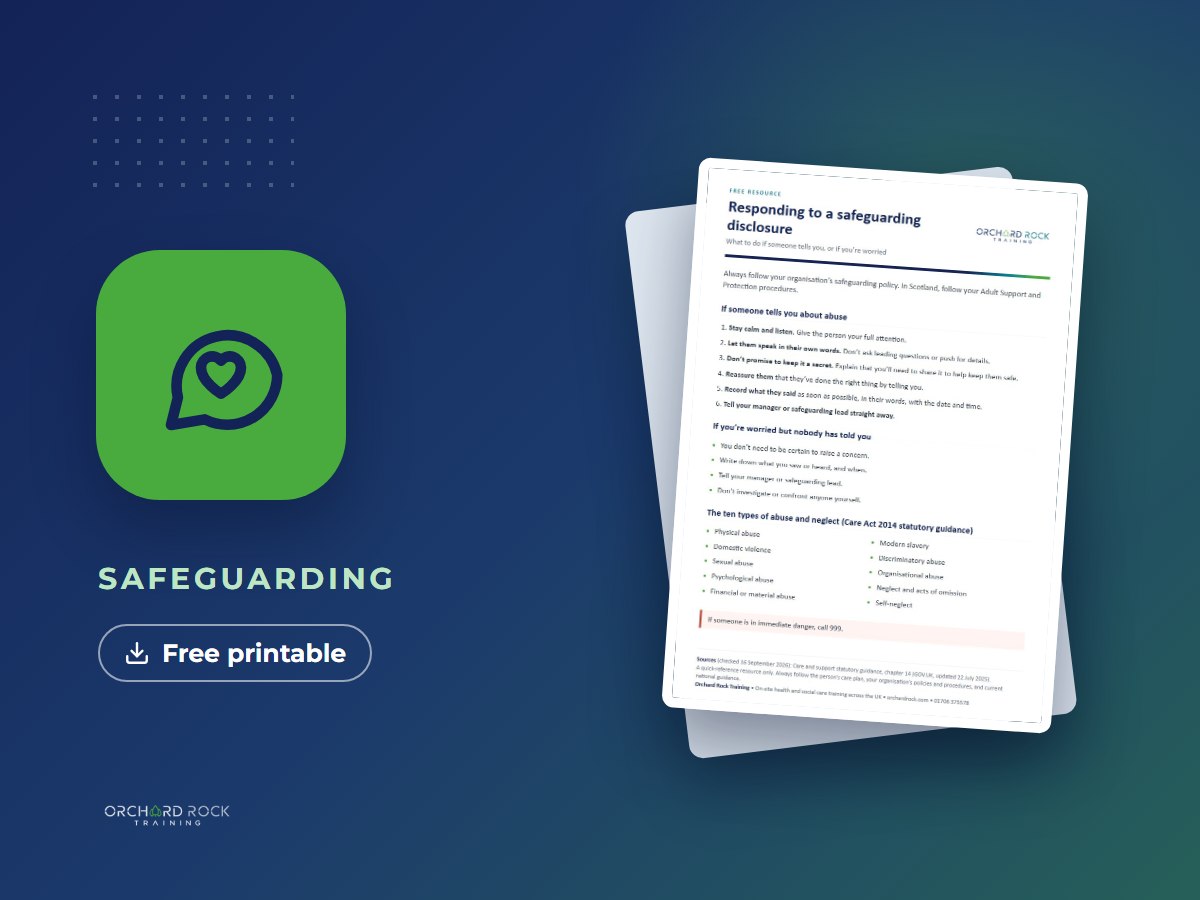
For what to say and do when a person tells you about abuse, read our guide to responding to a safeguarding disclosure. The ten types above come from the guidance for England. In Scotland, follow your Adult Support and Protection procedures.
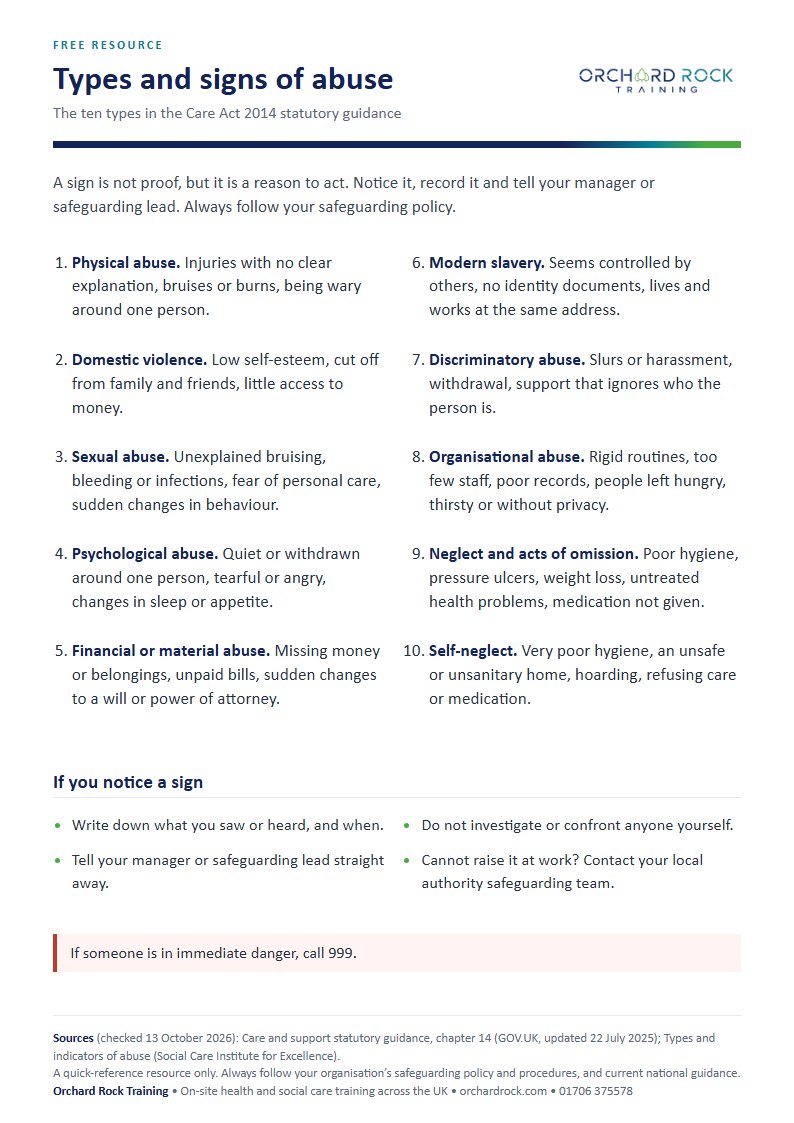
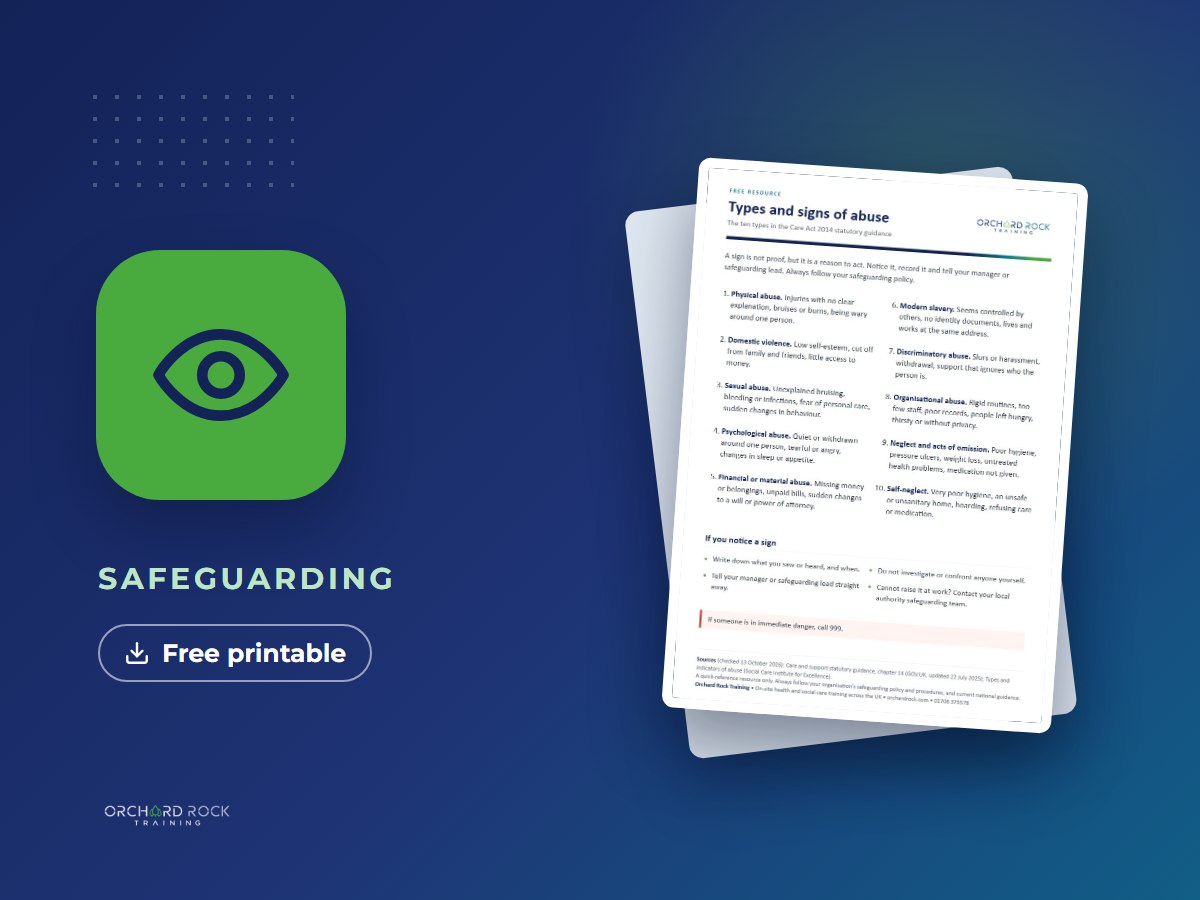
Download and printPoster (PDF, 1 page). Free to use in your service.
This is a quick-reference resource. Always follow your organisation’s safeguarding policy and procedures, and current national guidance.
Sources (checked 13 October 2026): Care and support statutory guidance, chapter 14 (GOV.UK, updated 22 July 2025); Types and indicators of abuse (Social Care Institute for Excellence).