

The short version
- Autism is a difference in how the brain develops. It is not an illness.
- The signs are not always obvious, and masking hides them.
- Break instructions down, allow processing time, and accept every form of communication.
- A meltdown is not bad behaviour.
Every person communicates differently, and every person deserves to be understood.
April is World Autism Acceptance Month, led in the UK by the National Autistic Society. It’s a good reminder to move beyond awareness and into meaningful, person-centred support. For care teams, supporting autistic people well starts with understanding what autism is, noticing what each person needs and adapting the way we work.
What is autism?
The NHS describes autism as a difference in how the brain develops that affects how a person sees and experiences the world. It’s something you’re born with. It’s not an illness, and there’s no treatment or cure, but the right support makes a real difference.
Being autistic can affect how someone communicates and understands other people, how they think, learn and pay attention, and how they respond to light, sounds, smells, tastes and touch. Some autistic people have a learning disability, while others have average or above average intelligence. Above all, every autistic person is different.
Autism isn’t always obvious
According to the NHS, common signs of autism in adults include:
Common signs in adults, from the NHS
- Finding it hard to talk to other people, or to understand facial expressions, gestures and tone of voice
- Taking language literally
- Having fixed ways of doing things and getting upset by change
- Repetitive movements, such as rocking or hand flapping
- A very strong focus on particular interests
- Being more or less sensitive to noise, light, smells or touch
However, some autistic people “mask”, copying how others behave and hiding how they feel. The NHS explains that this can make everyday activities and social situations exhausting. It also notes that autism can be harder to spot in women. So someone who seems to be coping may still need support.
The NHS adds that anxiety, depression and ADHD are more common in autistic people, and these can hide the signs too.
Communication: less is more
The National Autistic Society says many autistic people find it helpful when others break spoken instructions down, allow extra time to process, accept every form of communication as valid (not just speech) and recognise that behaviour is a form of communication. In practice, that could mean you:
Five things that help
Keep it short
Ask one question or give one instruction at a time.
Wait
Give the person time to answer before you repeat yourself, and don’t fill the silence.
Say what you mean
Avoid sarcasm and phrases that could be taken literally.
Show as well as tell
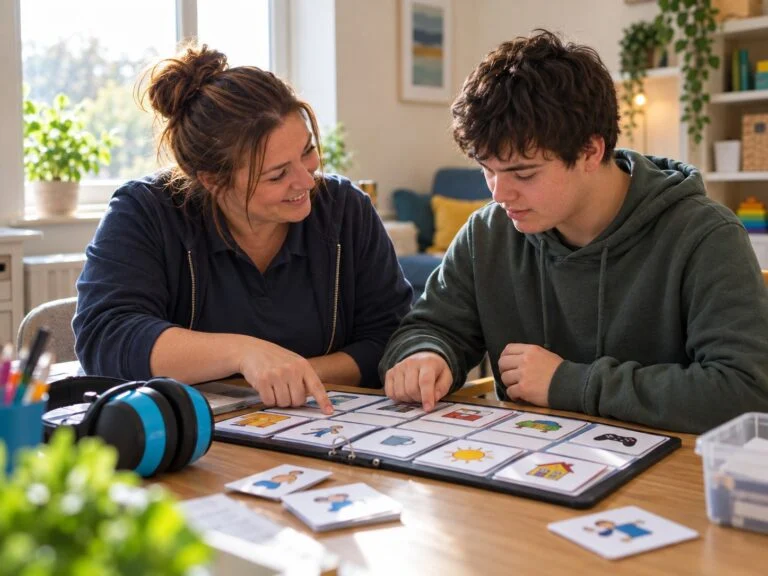
Pictures, symbols, objects or written words can make information easier to follow.
Value every way of communicating
Speech, signs, pictures, devices and behaviour all tell you something.
Sensory needs and routines
A busy lounge, a strong smell or a scratchy label can feel overwhelming for some autistic people, while others may seek out sensory input. Small changes can help:
- find out what the person likes and dislikes, and record it in their care plan
- reduce noise and bright light where you can, and offer a quiet space
- explain changes in advance, and say what will happen next
- keep routines consistent across the team
You may also see stimming, such as rocking, flapping or repeating sounds. The National Autistic Society explains that stimming helps people stay calm, manage sensory input or express emotion. If it’s harmless, there’s no reason to stop it.
A meltdown is not bad behaviour
The National Autistic Society describes a meltdown as an intense response to an overwhelming situation, when someone temporarily loses control of their behaviour.
A meltdown is not a temper tantrum, and it’s not “bad” or “naughty” behaviour.
National Autistic Society
Triggers can include sensory overload, a change in routine, anxiety and difficulty getting needs across. To help:
Notice the early signs
Rising anxiety is a cue to reduce demands or remove a trigger.
Lower the input
Move to, or create, a quiet and safe space.
Stay calm and give time
Keep your words to a minimum and don’t judge.
Learn from it
Afterwards, record what happened so the team can spot patterns.
Acceptance in everyday care
Person-centred support means seeing the whole person. Get to know their interests, strengths and routines, and what helps them feel calm. Involve the person, and the people who know them well, in planning their care. Then share that knowledge across the team, so everyone offers the same consistent support.
How training helps
The right training gives your team the confidence and skills to truly make a difference. Courses that help include:
- Autism Awareness (half day): autistic traits, social communication, sensory processing and alternative ways of communicating
- PECS (half day): using the Picture Exchange Communication System
- Pathological Demand Avoidance (half day): recognising and supporting the PDA profile
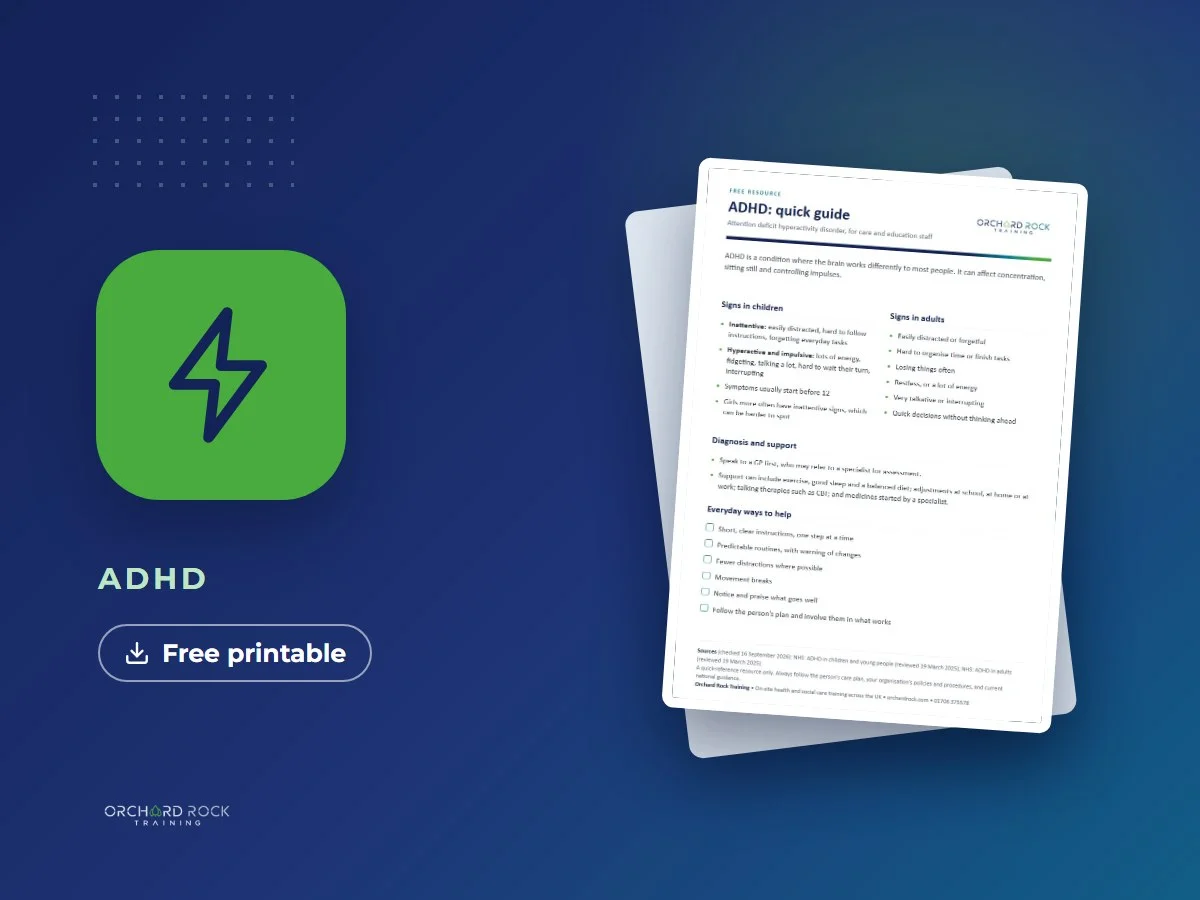
- ADHD Awareness (half day): understanding ADHD, which is more common in autistic people
Free resources
Download, print and share these with your team.
Sources: NHS, What is autism? and Signs of autism in adults; National Autistic Society, World Autism Acceptance Month, Autism and communication, Stimming and Meltdowns. Correct as of 21 September 2026.