
Stop Pressure Ulcer Day is on Thursday 19 November 2026. It is held on the third Thursday of November each year by the European Pressure Ulcer Advisory Panel (EPUAP). In the UK, the Society of Tissue Viability runs STOP the Pressure from 16 to 20 November, with the theme “Every Move Matters”.
That theme fits care perfectly. Prevention isn’t only about repositioning. Every check, every conversation and every action counts.
What are pressure ulcers?
The NHS describes pressure ulcers (also called pressure sores or bed sores) as areas of damage to the skin and the tissue underneath. They often develop on bony areas such as the heels, elbows, hips and tailbone.
Who is most at risk?
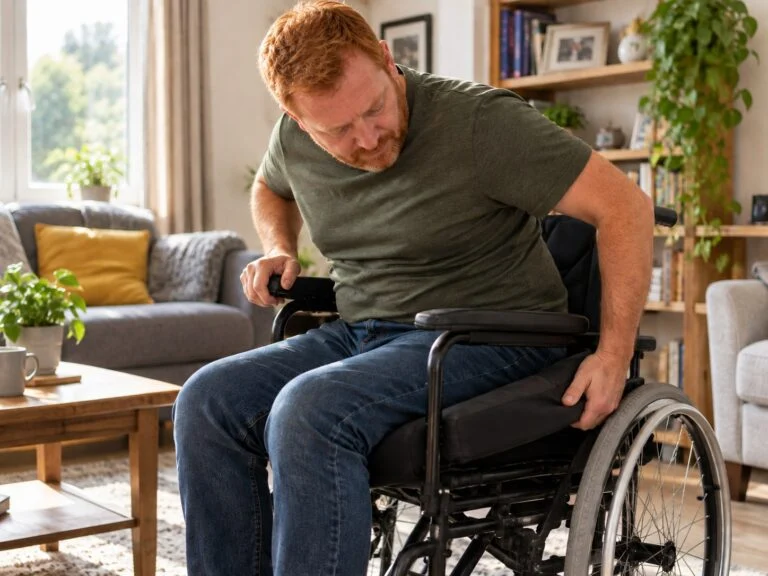
People who have difficulty moving are at higher risk, particularly if they spend long periods in bed or a chair. The risk is also higher for people who are underweight, have poor circulation or have reduced feeling in parts of their body.
Early signs to look for
- patches of discoloured skin that don’t turn white when pressed
- skin that feels warm, spongy or hard
- pain or itching in the area
If you notice any of these, record it and report it straight away, so the right action can be taken early.
Everyday actions that prevent them
- Keep people moving: support changes of position as set out in the care plan.
- Check skin: look at pressure areas during personal care, every time.
- Use the right equipment: make sure pressure-relieving mattresses and cushions are set up and working.
- Support eating and drinking: good nutrition and hydration help keep skin healthy.
- Keep good records: clear notes help the whole team see change quickly.
The NHS advises getting help quickly if there are signs of infection, such as pus, a high temperature or swelling, or if pain gets worse.
How training helps
Training helps your team prevent pressure ulcers and act early. Courses that help include:
- Pressure Ulcer Prevention (half day): spotting the early signs and preventing damage
- Tissue Viability (half day): caring for skin and wounds
- Postural Care (half day): supporting good positioning
- Nutrition & Hydration (half day): supporting people to eat and drink well
Free resources
Download, print and share these with your team.
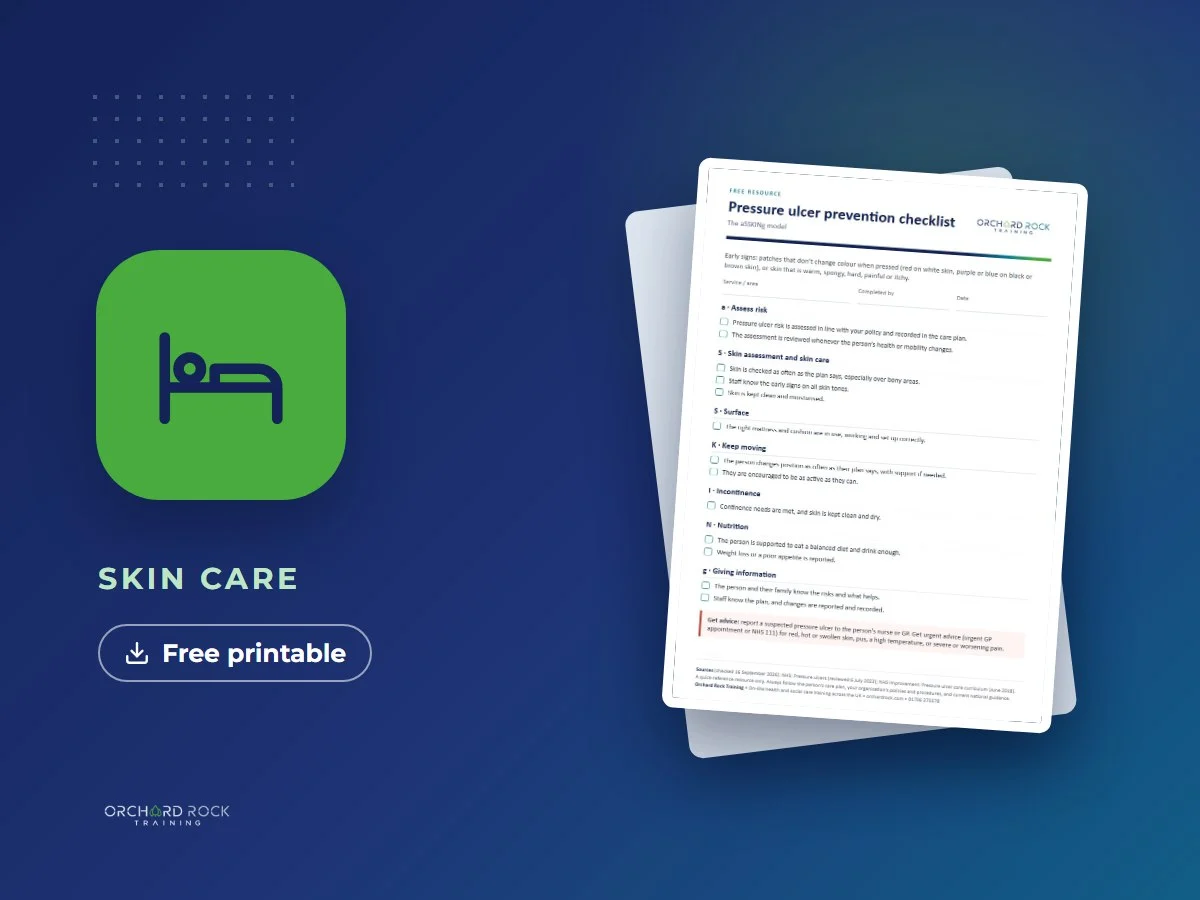 Free resourcePressure ulcer prevention checklistThe aSSKINg model as a printable checklist, with the early signs of pressure ulcers on all skin tones.
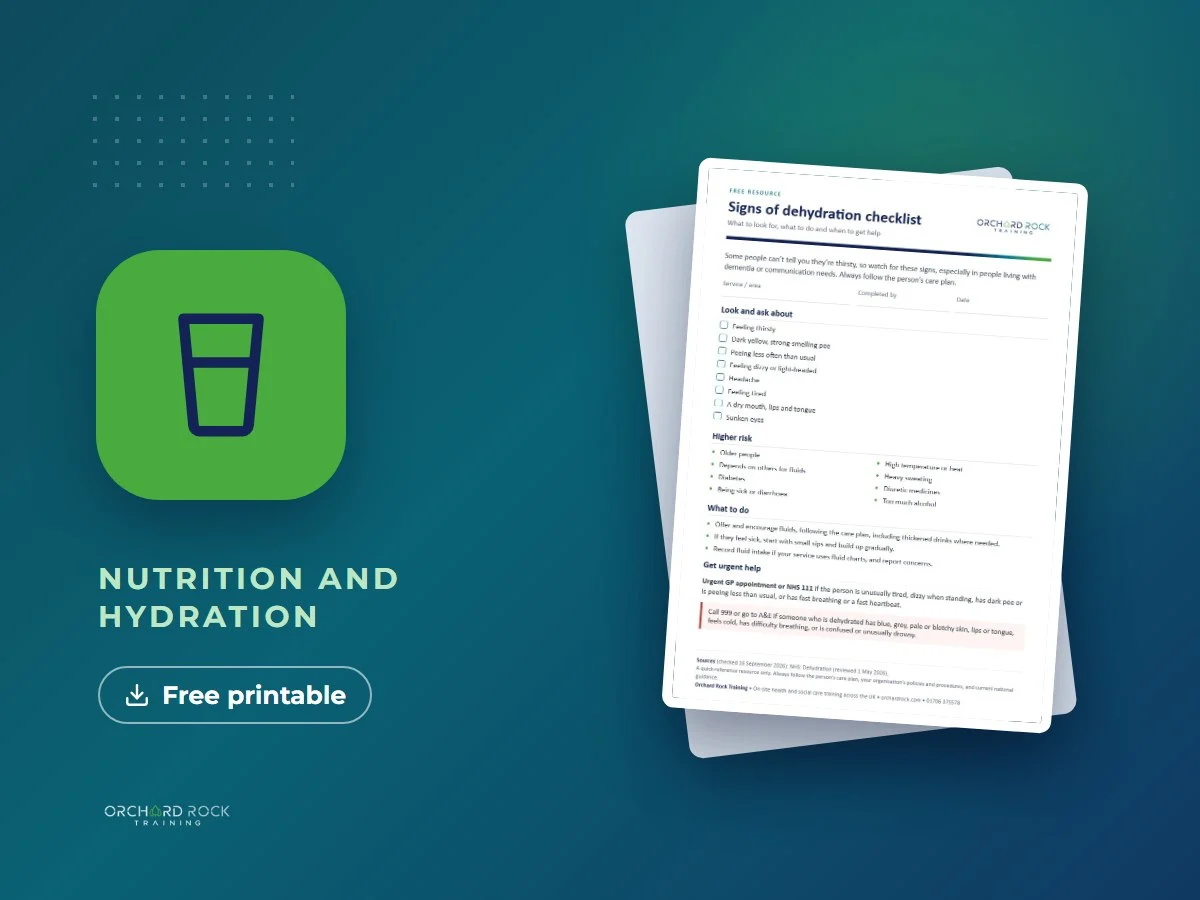 Free resourceSigns of dehydration checklistThe signs of dehydration, who is at higher risk, what to do and when to get urgent help, based on NHS advice.
Sources: EPUAP, Stop Pressure Ulcer Day; Society of Tissue Viability, STOP the Pressure 2026; NHS, Pressure ulcers. Correct as of 21 September 2026.