Early signs of a pressure ulcer
The NHS says early signs include discoloured patches of skin that don’t change colour when pressed. These are usually red on white skin, or purple or blue on black or brown skin. The skin may also feel warm, spongy or hard, and the area may be painful or itchy.
Pressure ulcers usually form on bony parts of the body, such as the heels, elbows, hips and tailbone. People with mobility difficulties are at higher risk, especially if they are underweight or have poor circulation, fragile skin, reduced sensation, or have recently had surgery.
The aSSKINg model
aSSKINg is a framework from NHS Improvement’s pressure ulcer core curriculum (2018). It builds on the well-known SSKIN care bundle with two extra elements, and each letter is a reminder of part of good pressure area care:
| a | Assess risk |
| S | Skin assessment and skin care |
| S | Surface |
| K | Keep moving |
| I | Incontinence |
| N | Nutrition |
| g | Giving information |
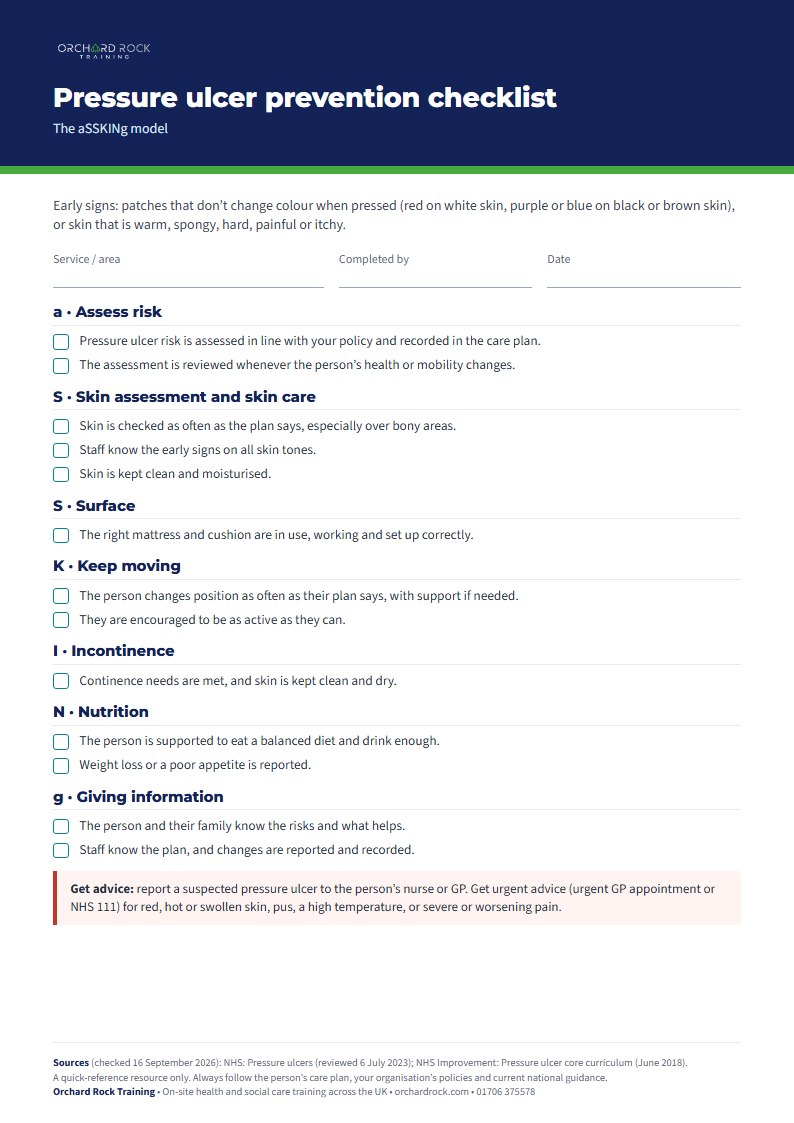
The checklist
a · Assess risk
- Pressure ulcer risk is assessed in line with your policy and recorded in the care plan.
- The assessment is reviewed whenever the person’s health or mobility changes.
S · Skin assessment and skin care
- Skin is checked as often as the plan says, especially over bony areas.
- Staff know the early signs on all skin tones.
- Skin is kept clean and moisturised.
S · Surface
- The right mattress and cushion are in use, working and set up correctly.
K · Keep moving
- The person changes position as often as their plan says, with support if needed.
- They are encouraged to be as active as they can.
I · Incontinence
- Continence needs are met, and skin is kept clean and dry.
N · Nutrition
- The person is supported to eat a balanced diet and drink enough.
- Weight loss or a poor appetite is reported.
g · Giving information
- The person and their family know the risks and what helps.
- Staff know the plan, and changes are reported and recorded.
When to get advice
If you think someone has a pressure ulcer, report it and contact their nurse or GP in line with your policy. The NHS advises getting urgent advice (an urgent GP appointment or NHS 111) if there is red, hot or swollen skin, pus, a high temperature, or pain that is severe or getting worse.
Download and printChecklist (PDF, 1 page). Free to use in your service.
Download the PDFThis is a quick-reference resource. Always follow the person’s care plan, your organisation’s policies and procedures, and current national guidance.
Sources (checked 16 September 2026): NHS: Pressure ulcers (reviewed 6 July 2023); NHS Improvement: Pressure ulcer core curriculum (June 2018).