Fire Door Safety Week runs from Monday 21 to Friday 25 September 2026. It is run by the British Woodworking Federation to raise awareness of the vital job fire doors do.
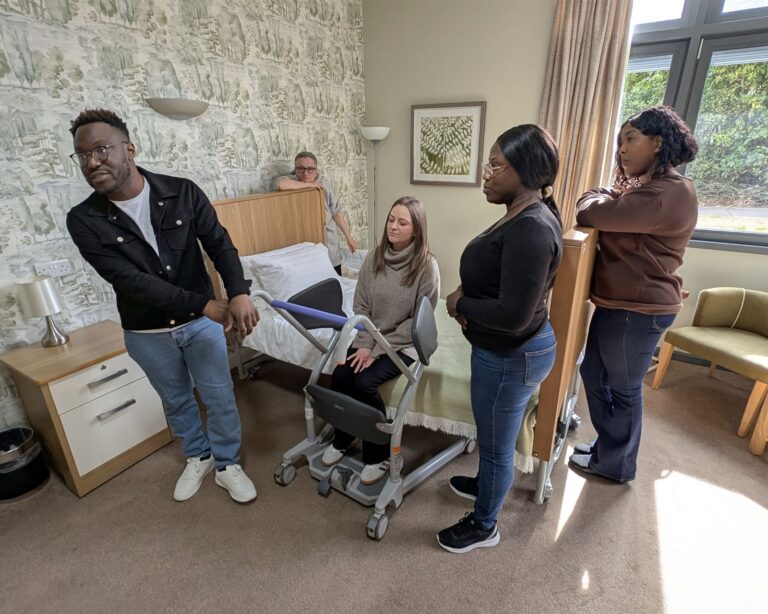
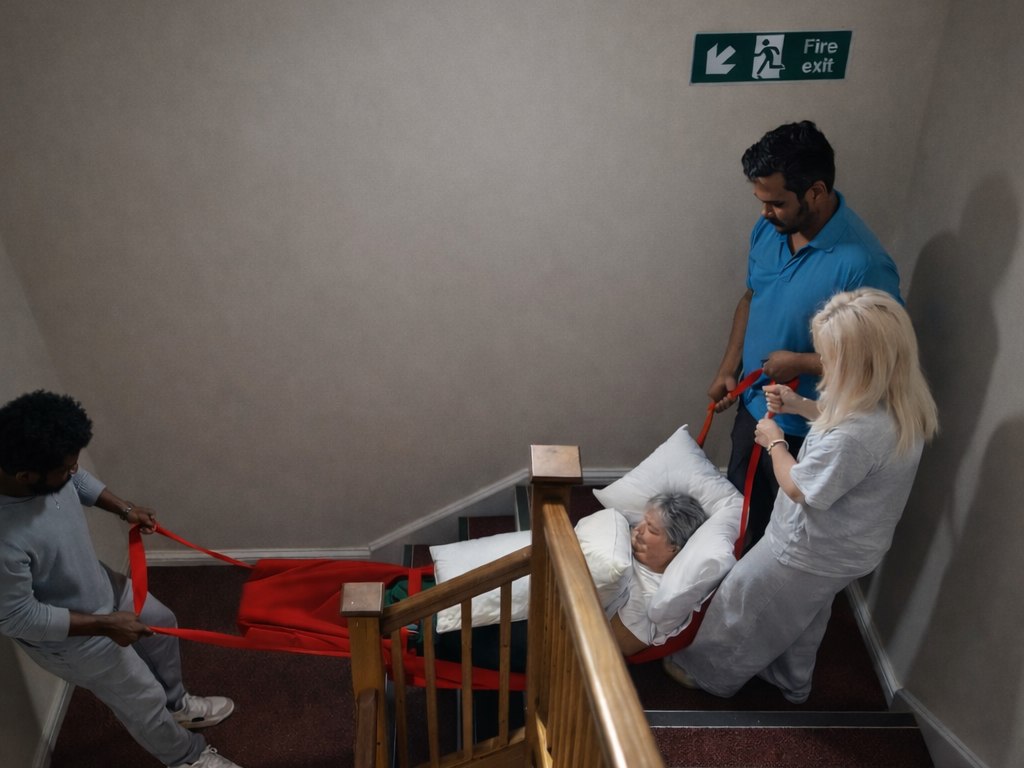
In a care setting, that job matters even more. Many people need help to leave a building, so fire doors that hold back fire and smoke give your team time to move people to safety.
A fire door only works when it is closed
Dorset & Wiltshire Fire and Rescue Service puts it plainly: a fire door is completely useless if it is wedged open or can’t close fully. So never prop a fire door open with a wedge, a chair or a bin, however busy the shift is.
Some doors in care homes are held open by devices linked to the fire alarm, so they close by themselves when the alarm sounds. Buckinghamshire Fire & Rescue Service says fire doors must be closed unless they are on hold-open devices linked to the fire alarm system. If a door needs to stay open for residents, talk to whoever manages fire safety, rather than wedging it.
The five-step fire door check
Fire and rescue services are sharing this simple check for Fire Door Safety Week:
- Certification: is there a label or plug on the top, or occasionally the side, of the door showing it is a certificated fire door?
- Gaps: are the gaps around the top and sides consistently less than 4mm when the door is closed?
- Seals: are the intumescent and smoke seals around the door or frame present, intact and undamaged?
- Hinges: are there three or more hinges, fitted securely, with no missing or broken screws?
- Closing: open the door halfway and let it close by itself. Does it shut fully onto the latch without sticking?
If a door fails any of these checks, report it straight away so it can be repaired.
Everyday habits that help
- keep fire doors clear, and never block them with furniture or equipment
- report doors that slam, stick, or don’t close properly
- don’t remove or disable door closers
- include fire doors in your regular fire safety checks, and record what you find
How training helps
Fire marshals play a key part in checking fire safety measures, including fire doors, and leading an evacuation. Courses that help include:
- Fire Marshal (full day): preventing fires, checking fire safety measures and leading an evacuation
- Fire Safety (half day): fire safety awareness for the whole team
- Health & Safety (half day): keeping your workplace safe
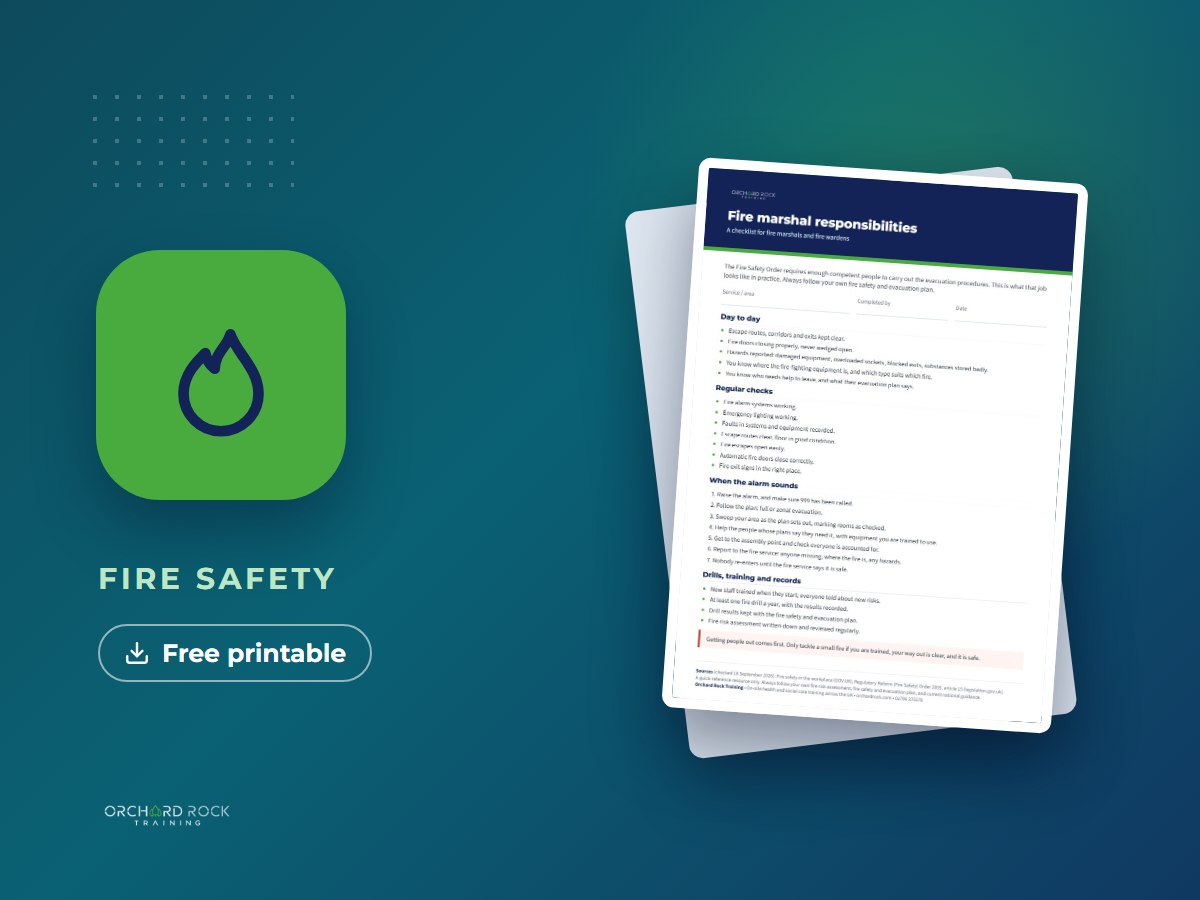
Our free fire marshal responsibilities checklist also covers the checks your fire marshals should carry out.
Free resources
Download, print and share these with your team.
Sources: Fire Door Safety Week (British Woodworking Federation), Fire Door Safety Week; Warwickshire County Council, Help slow the spread of fires and check your fire doors; Dorset & Wiltshire Fire and Rescue Service, Fire doors; Buckinghamshire Fire & Rescue Service, Maintaining good fire safety in care homes. Correct as of 21 September 2026.