8:30: loading up
Most trainers carry a laptop. I carry a laptop, a bag of slide sheets and a plastic spine called Colin.
Colin has been to more care homes than most agency staff. He travels in the front seat, and yes, he wears a seatbelt. We teach safe practice, after all.
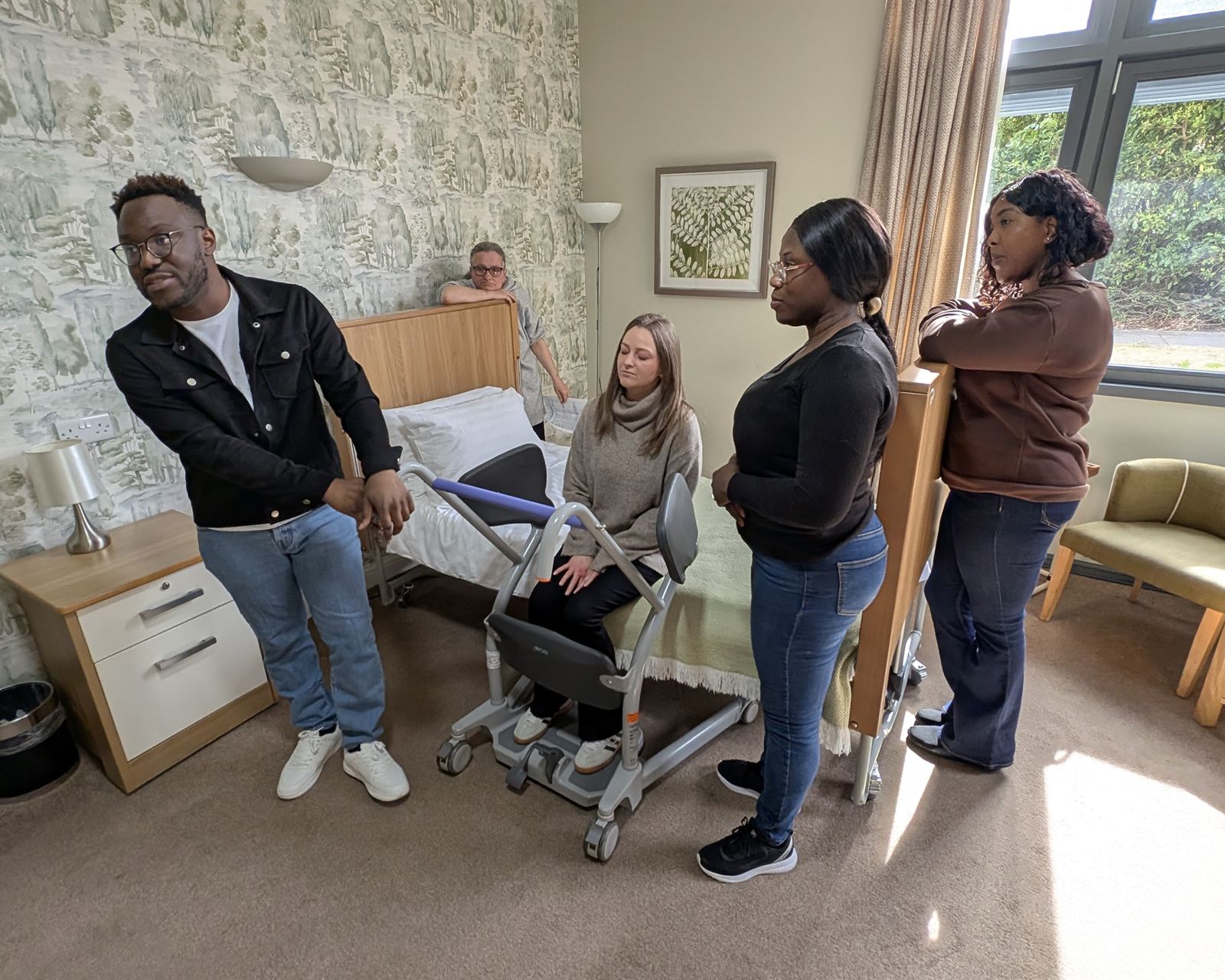
Today was a full day of Moving and Handling at a nursing home. The best part of training on-site is that we practise with the equipment the team uses every day. So after a quick hello at reception, I went off to find their hoist, their stand aid and their Sara Stedy.
9:15: the alphabet soup
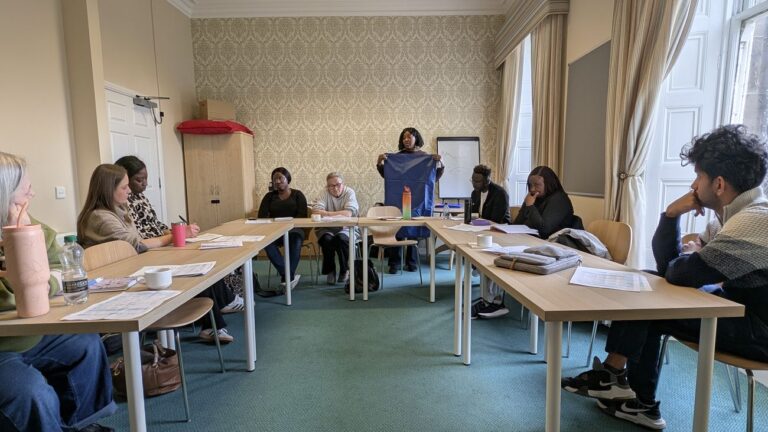
We started with the law. HASWA, MHOR, LOLER, PUWER and RIDDOR. One delegate said it sounded like a list of Gladiators. They’re not wrong, and I’d watch that show.
Behind the acronyms is a simple idea from the Manual Handling Operations Regulations: avoid hazardous handling if you can, assess what you can’t avoid, and reduce the risk as far as possible.
Meet Colin
Next, Colin took centre stage. We looked at how the spine works and how poor technique causes injury. Back problems are one of the most common injuries in social care, and many of them build up slowly, one awkward twist at a time.
By mid-morning, Colin had been passed round the room twice and someone had given him a name badge.
TILE, and not the bathroom kind
Then came TILE: Task, Individual, Load and Environment. It’s the quick check you run before every handling task.
One delegate thought TILE was about the bathroom floor. To be fair, a wet floor is exactly what the Environment part is there to spot, so I gave them the point.
Why good people take risks
This part always gets the room talking. Nobody comes to work planning to hurt their back. But time pressure, short-staffing and “we’ve always done it this way” all push people towards shortcuts.
We talked through the banned and unsafe techniques, including the drag lift, where you hook your arms under someone’s armpits. It can injure the person’s shoulders and the carer’s back. A few people admitted they’d seen it done. That honesty is exactly what makes the session work.
The afternoon: hands-on practice on a moving and handling training day
After lunch, the chairs went to the side of the room and the practical kit came out. We worked through:
- Sit to stand: helping someone out of a chair and back into it, at their own pace
- Slide sheets: which are very good at their job. One volunteer slid rather further up the bed than planned, and the room cheered
- The stand aid and the Sara Stedy: setting them up correctly and safely
- The hoist: including checking the sling and the hoist before every use, and knowing what LOLER expects
The hoist queue
Being hoisted turned out to be the most popular volunteer job of the day. Once people realised it meant a sit down, there was a queue.
Being in the sling themselves changed how the team thought about it. They noticed how much it helps when someone talks you through each step and tells you what’s coming next. That’s the dignity part, and it matters as much as the technique.
4:00: packing up
At the end, one delegate stretched, put a hand on their lower back and said: “I think my back already feels grateful.”
I packed Colin back into the front seat and loaded the slide sheets. The heaviest thing I lifted all day was the sign-in sheet, and I did a TILE assessment first. Obviously.