What current guidance says
NICE published its guideline on falls in April 2025 (NG249). It covers people aged 65 and over, and people aged 50 to 64 at higher risk of falls. It aims to reduce falls and the distress, pain, injury, loss of confidence and loss of independence that can follow.
- For people living in residential care, NICE recommends offering a comprehensive falls assessment and falls management, with actions tailored to the person.
- NICE recommends not using falls risk prediction tools to predict whether someone will fall. The focus is on each person’s own risk factors.
- Those risk factors include things like cognition and mood, delirium, diet and fluids, dizziness, footwear and feet, balance and mobility, fear of falling, hearing and vision, continence, long-term conditions and medicines.
- NICE also recommends a structured medication review and encouraging people to stay active.
Comprehensive assessments are carried out by trained professionals. Care staff play a vital part by noticing changes, following the plan and reporting concerns.
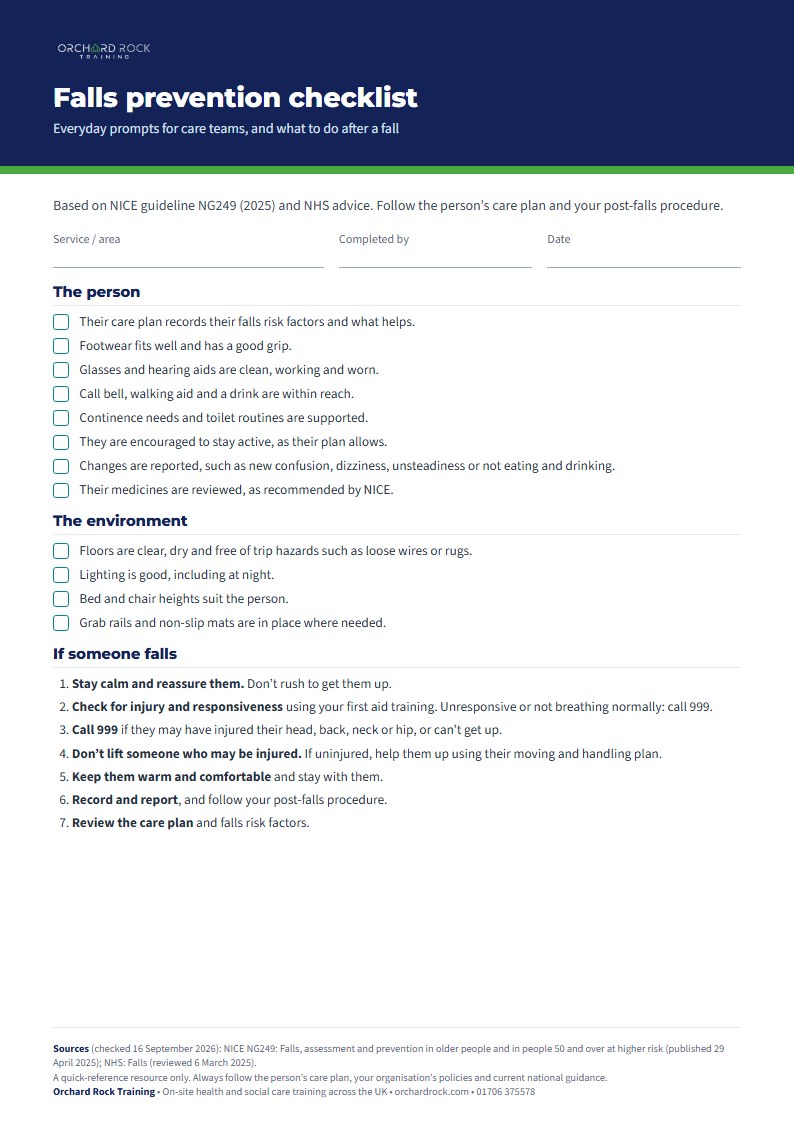
Everyday falls prevention checklist
The person
- Their care plan records their falls risk factors and what helps.
- Footwear fits well and has a good grip.
- Glasses and hearing aids are clean, working and worn.
- Call bell, walking aid and a drink are within reach.
- Continence needs and toilet routines are supported.
- They are encouraged to stay active, as their plan allows.
- Changes are reported, such as new confusion, dizziness, unsteadiness or not eating and drinking.
- Their medicines are reviewed, as recommended by NICE.
The environment
- Floors are clear, dry and free of trip hazards such as loose wires or rugs.
- Lighting is good, including at night.
- Bed and chair heights suit the person.
- Grab rails and non-slip mats are in place where needed.
What to do if someone falls
- Stay calm and reassure the person. Don’t rush to get them up.
- Check for injury and whether they are responsive, using your first aid training. If they are unresponsive or not breathing normally, call 999 and follow your training.
- Call 999 if they may have injured their head, back, neck or hip, or they can’t get up (NHS advice).
- Don’t lift someone who may be injured. If they aren’t hurt and can get up, help them using the method and equipment in their moving and handling plan.
- Keep them warm and comfortable and stay with them while you wait for help.
- Record and report the fall, and follow your service’s post-falls procedure for monitoring and seeking medical advice.
- Review their care plan and falls risk factors, and share what you’ve learned with the team.
Download and printChecklist (PDF, 1 page). Free to use in your service.
Download the PDFThis is a quick-reference resource. Always follow the person’s care plan, your organisation’s policies and procedures, and current national guidance.
Sources (checked 16 September 2026): NICE NG249: Falls, assessment and prevention in older people and in people 50 and over at higher risk (published 29 April 2025); NHS: Falls (reviewed 6 March 2025).