World Heart Day is on Tuesday 29 September 2026. It is led by the World Heart Federation, and this year’s campaign, “Don’t Miss a Beat”, highlights how the warning signs of heart disease can go unnoticed or be dismissed.
In care, you may be the first person to spot that something is wrong. Knowing the signs, and what to do, can save a life.
Heart attack or cardiac arrest?
People often use the two terms as if they mean the same thing, but they don’t. As a rule of thumb, someone having a heart attack is usually awake and may have chest pain. Someone in cardiac arrest is unconscious and not breathing normally. Each needs a different response.
Signs of a heart attack
According to the NHS, symptoms can include:
- chest pain, which may feel like crushing or squeezing, and may spread to the arm, neck and jaw
- feeling short of breath
- feeling or being sick
- feeling like indigestion
- sweating, or skin changing colour
The NHS says to call 999 straight away if someone has chest pain that feels tight or spreads to the arms, neck or jaw, is struggling to breathe, or their skin turns pale, blue or grey. It also advises taking aspirin (300mg) if available, unless the person is allergic to it. In care, follow your medication and first aid policies, help the person sit comfortably and stay with them until help arrives.
Signs of a cardiac arrest
The British Heart Foundation explains that someone in cardiac arrest will be unconscious, unresponsive and not breathing, or not breathing normally. They may make gasping noises, which are not normal breathing.
- Call 999 straight away.
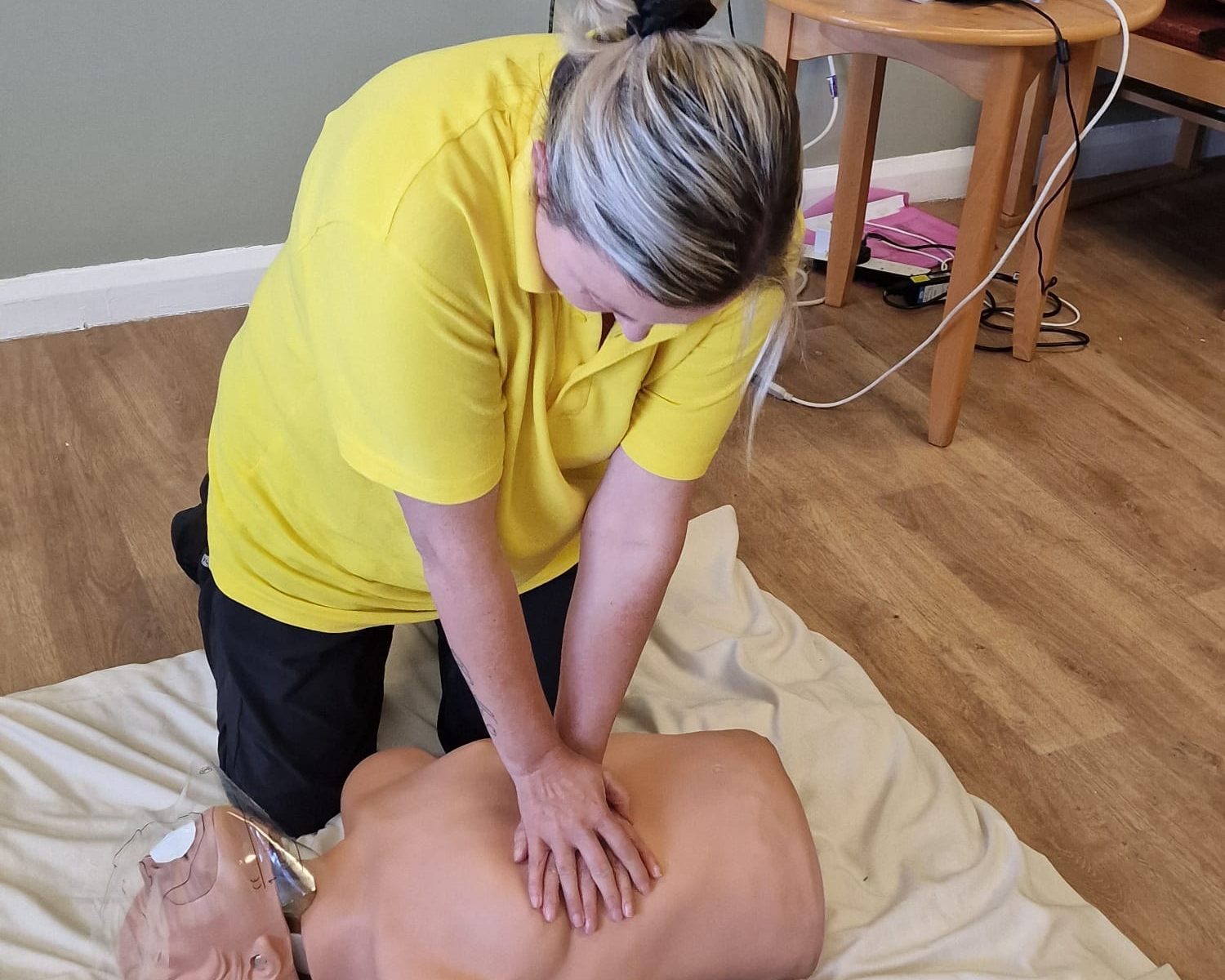
- Start CPR immediately, with hard, fast chest compressions.
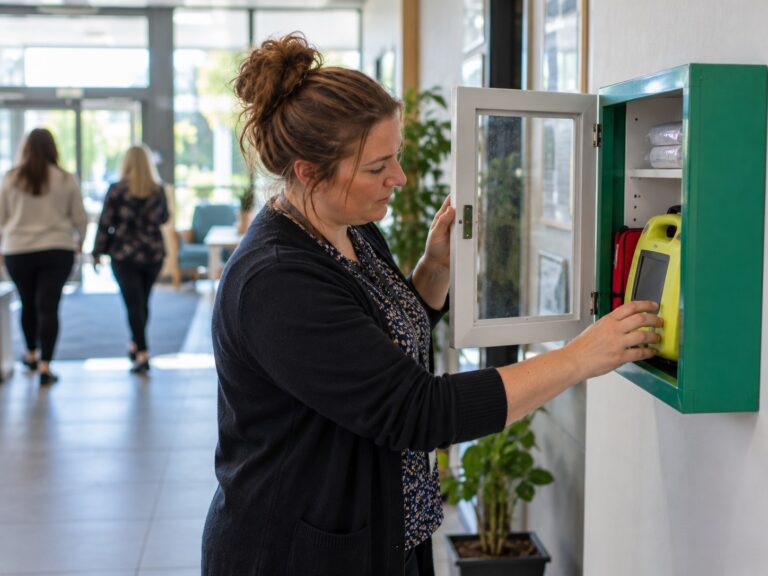
- Get a defibrillator. Ask someone to fetch it while you do CPR.
The British Heart Foundation points out that you don’t need training to use a defibrillator, because the machine talks you through the steps. Training still makes a big difference to how confident your team feels on the day.
Be ready before it happens
- know where your nearest defibrillator is, and check it regularly
- make sure every shift has someone trained in first aid and CPR
- check each person’s care plan, including any decisions about resuscitation
- practise, so everyone knows their role in an emergency
How training helps
Hands-on practice builds the confidence to act quickly. Courses that help include:
- Basic Life Support (half day): recognising a cardiac arrest, CPR and using a defibrillator
- Emergency First Aid at Work (full day): first aid for the most common workplace emergencies
- First Aid Awareness (half day): a grounding in first aid for the whole team
- Recognising Deterioration (half day): spotting when someone is becoming unwell
Free resources
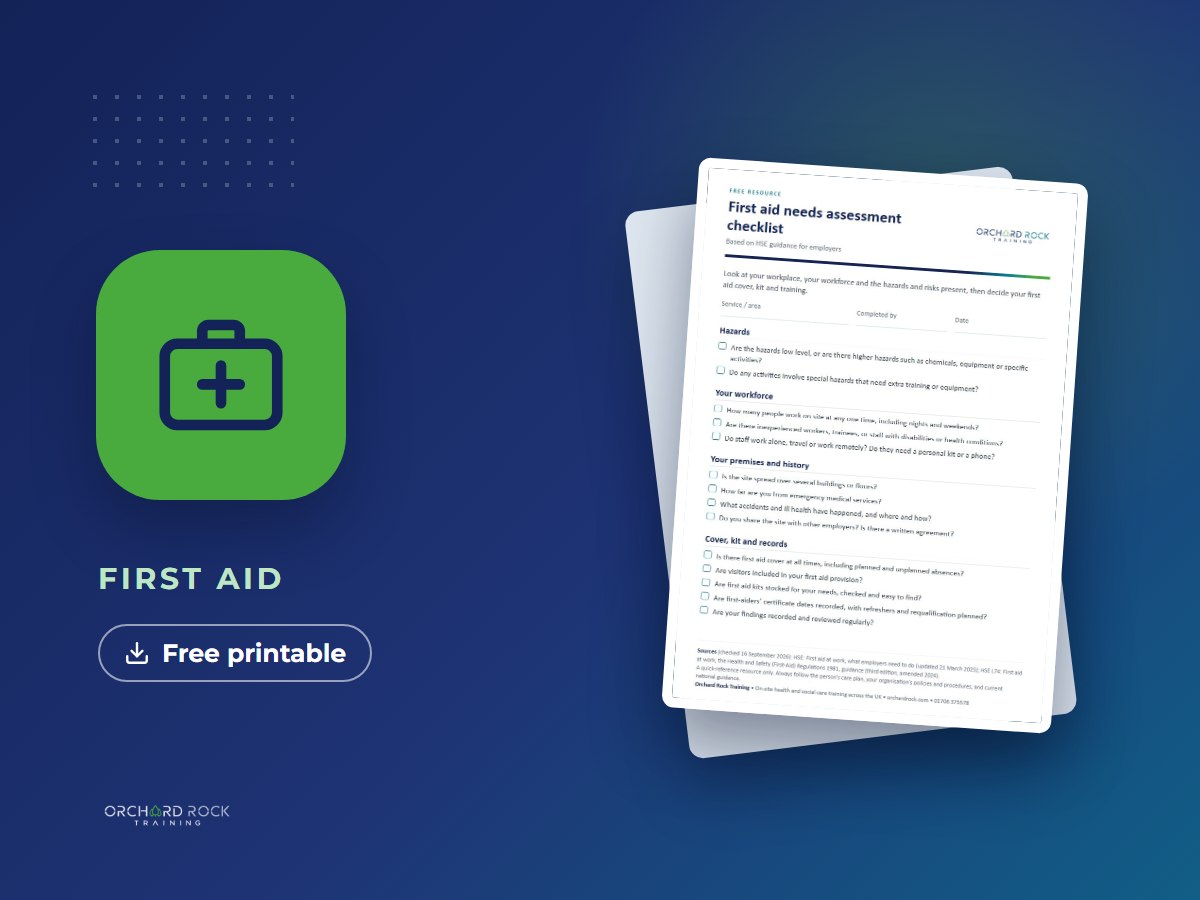
Download, print and share these with your team.
Sources: World Heart Federation, Don’t Miss a Beat 2026; NHS, Heart attack symptoms; British Heart Foundation, Cardiac arrest. Correct as of 22 September 2026.