The key difference
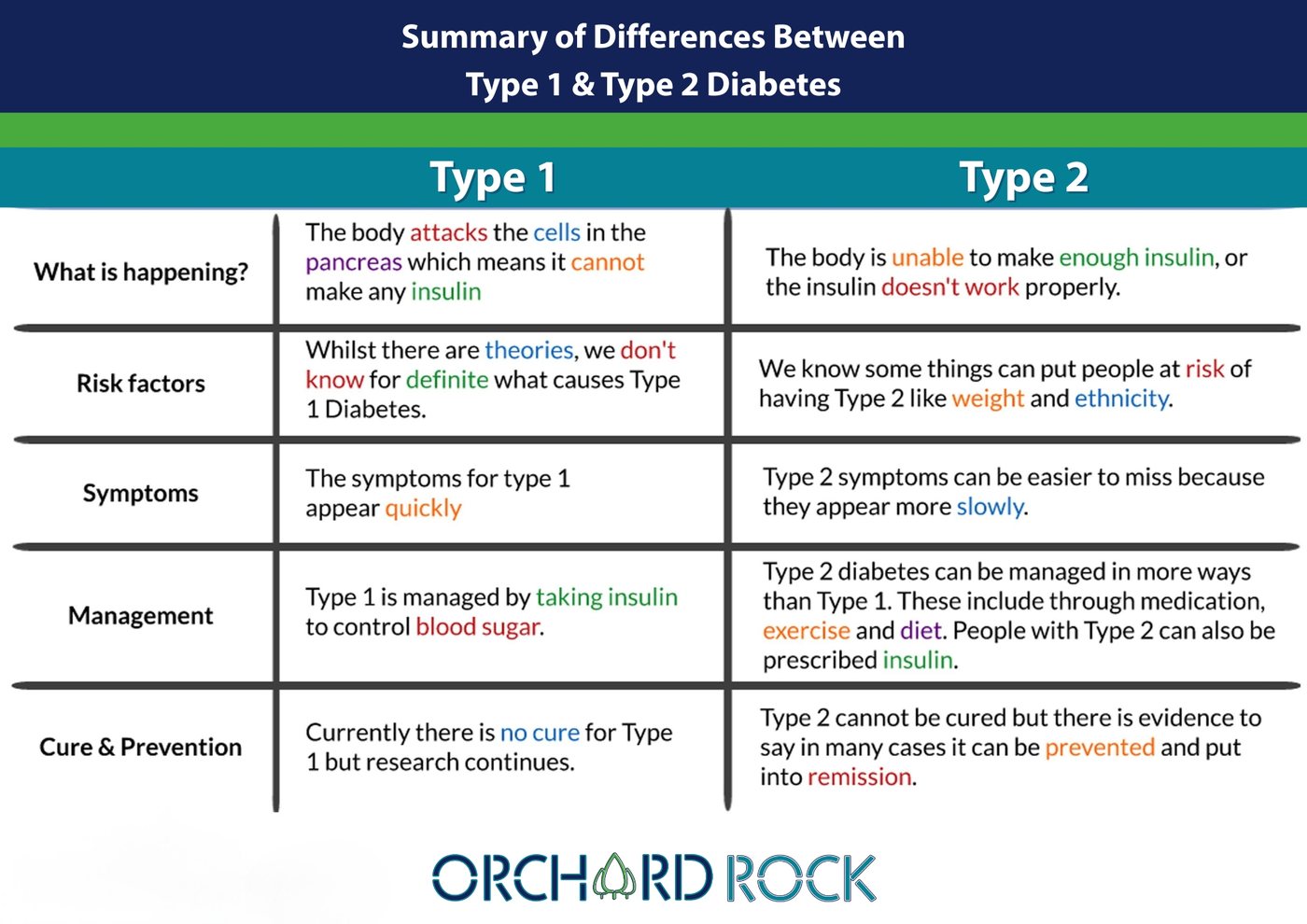
- Type 1 diabetes is a condition where the body can’t make a hormone called insulin. It is managed by taking insulin to control blood sugar.
- Type 2 diabetes is when insulin doesn’t work properly or there isn’t enough of it, so blood glucose (sugar) gets too high. It can be managed in several ways, including diet, exercise and medicines, and some people also take insulin.
What the poster compares
Our poster sets the two types side by side under five headings: what is happening in the body, risk factors, symptoms, management, and cure and prevention. It works well on a staff room wall or as a starting point in training.
How symptoms differ
Both types share common symptoms, such as feeling very thirsty, peeing more than usual, tiredness and weight loss. The NHS says type 1 symptoms develop quickly, over a few days or weeks, while type 2 symptoms can develop gradually and some people don’t notice any.
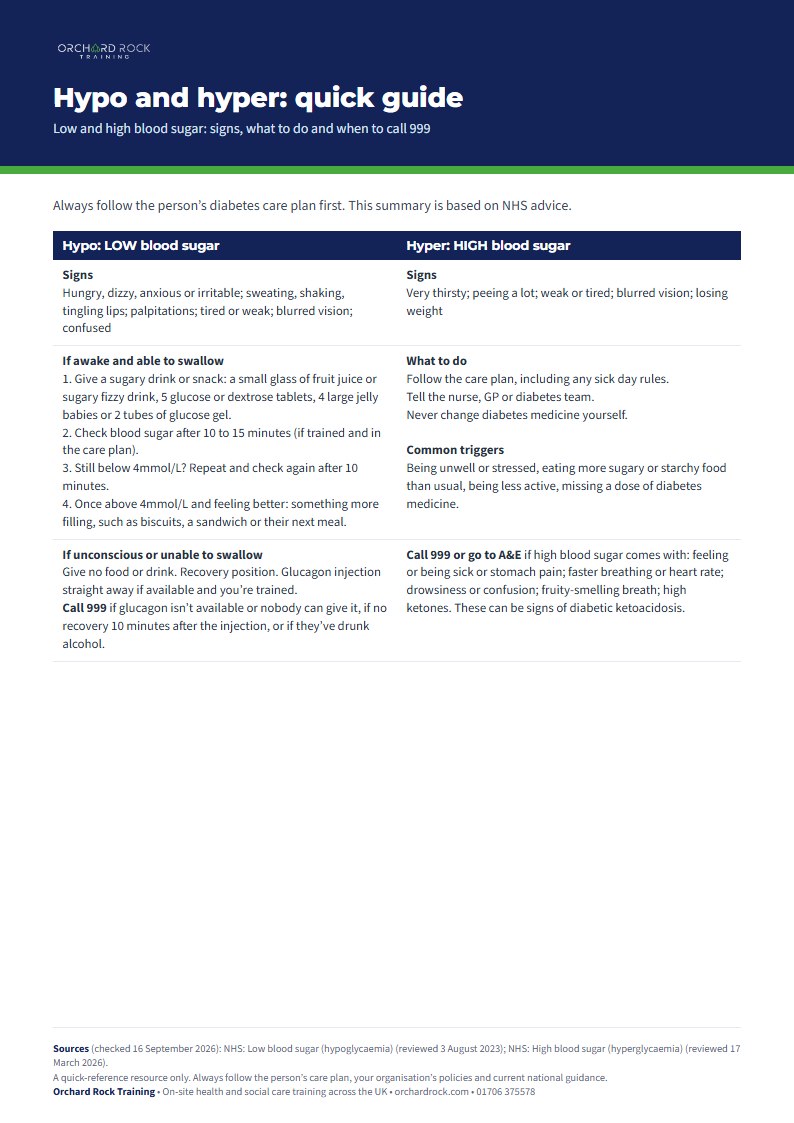
NHS advice is to call 999 or go to A&E if someone with these symptoms gets worse quickly, has stomach pain, diarrhoea or is being sick, is sleepy or confused, or is breathing faster and more deeply than usual. These can be signs of diabetic ketoacidosis, which is an emergency.
Download and printPoster (PDF). Free to use in your service.
Download the PDFThis is a quick-reference resource. Always follow the person’s care plan, your organisation’s policies and procedures, and current national guidance.
Sources (checked 16 September 2026): NHS: Type 1 diabetes; NHS: Type 1 diabetes symptoms (reviewed 31 October 2024); NHS: Type 2 diabetes.