
Care home and nursing home training
Care home training for every role in your home, from new care assistants to nurses and managers. We bring it to you, anywhere in the UK.
Training for care homes
What training does a care home team need?
Most homes plan their training in layers. Everyone needs the core subjects first. Then, as residents’ needs change, teams add more specialist skills. Nursing homes also need clinical training for their nurses.
Core training for every team member
These subjects are the foundation of safe, person-centred care.
Moving & Handling
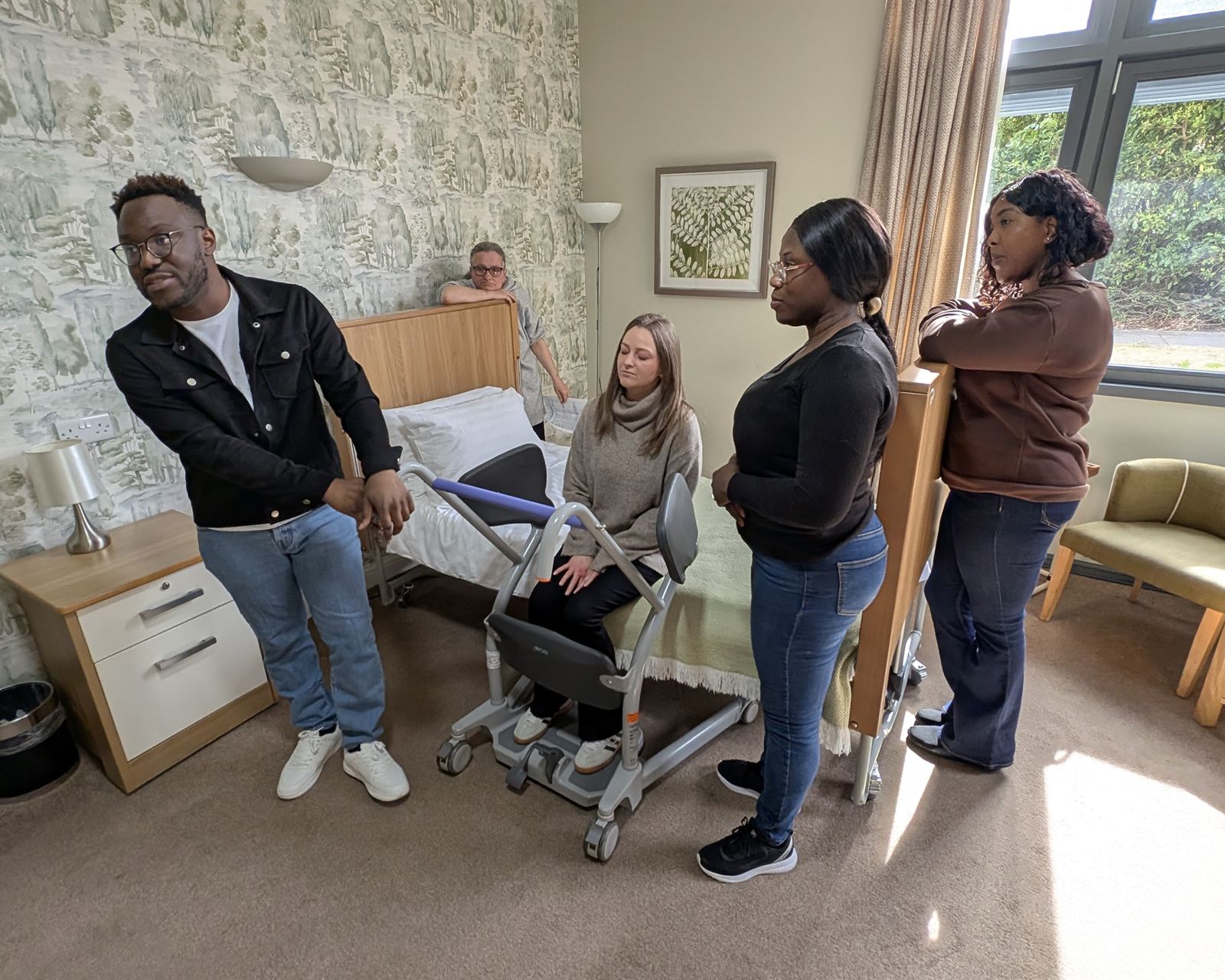
Hands-on practice with slide sheets, stand aids and hoists.
Full day — 6 hoursView courseSafeguarding Adults at Risk
Recognising the signs of abuse and reporting concerns properly.
Half day — 3 hoursView courseInfection Control
Hand hygiene, PPE and managing outbreaks in a care home.
Half day — 3 hoursView courseFire Safety
Preventing fires and knowing what to do when the alarm sounds.
Half day — 3 hoursView courseFood Safety
Food hygiene, allergies and safe storage at mealtimes.
Half day — 3 hoursView coursePerson-Centred Care
Seeing the person before the task, from care plans to wellbeing.
Half day — 3 hoursView courseResidents’ changing needs
Skills for supporting people as their health changes.
Dementia Awareness
Types and stages of dementia, and person-centred support.
Half day — 3 hoursView courseDementia and Behaviour of Concern
Supporting people with dementia and responding safely to distress.
Full day — 6 hoursView courseFalls Management
Why falls happen, how to prevent them and what to do after a fall.
Half day — 3 hoursView courseDysphagia & IDDSI Framework + Practical
Classroom learning plus hands-on IDDSI food and drink testing.
Full day — 6 hoursView courseNutrition & Hydration
Spotting malnutrition and dehydration, and helping residents eat and drink well.
Half day — 3 hoursView coursePressure Ulcer Prevention
Early warning signs and prevention with the SSKIN bundle.
Half day — 3 hoursView courseRESTORE2 Mini
Recognising deterioration early and escalating concerns with SBARD.
Half day — 3 hoursView courseMedication Administration
Administering, recording and storing medication safely.
Full day — 6 hoursView courseEnd of Life Care
Symptoms, advance care planning and care after death.
Half day — 3 hoursView courseNursing homes: clinical skills and nurse development
Clinical training for registered nurses, and programmes that develop your nursing team.
Catheterisation
Selecting, inserting and managing urinary catheters safely.
Full day — 6 hoursView coursePEG & PEJ Care and Feeding
Caring for people with a PEG or PEJ, including feeding regimes.
Half day — 3 hoursView courseSyringe Driver
Using syringe drivers safely for symptom control at the end of life.
Half day — 3 hoursView courseVerification of Death
Recognising and verifying a death confidently and compassionately.
Half day — 3 hoursView courseVenepuncture Training
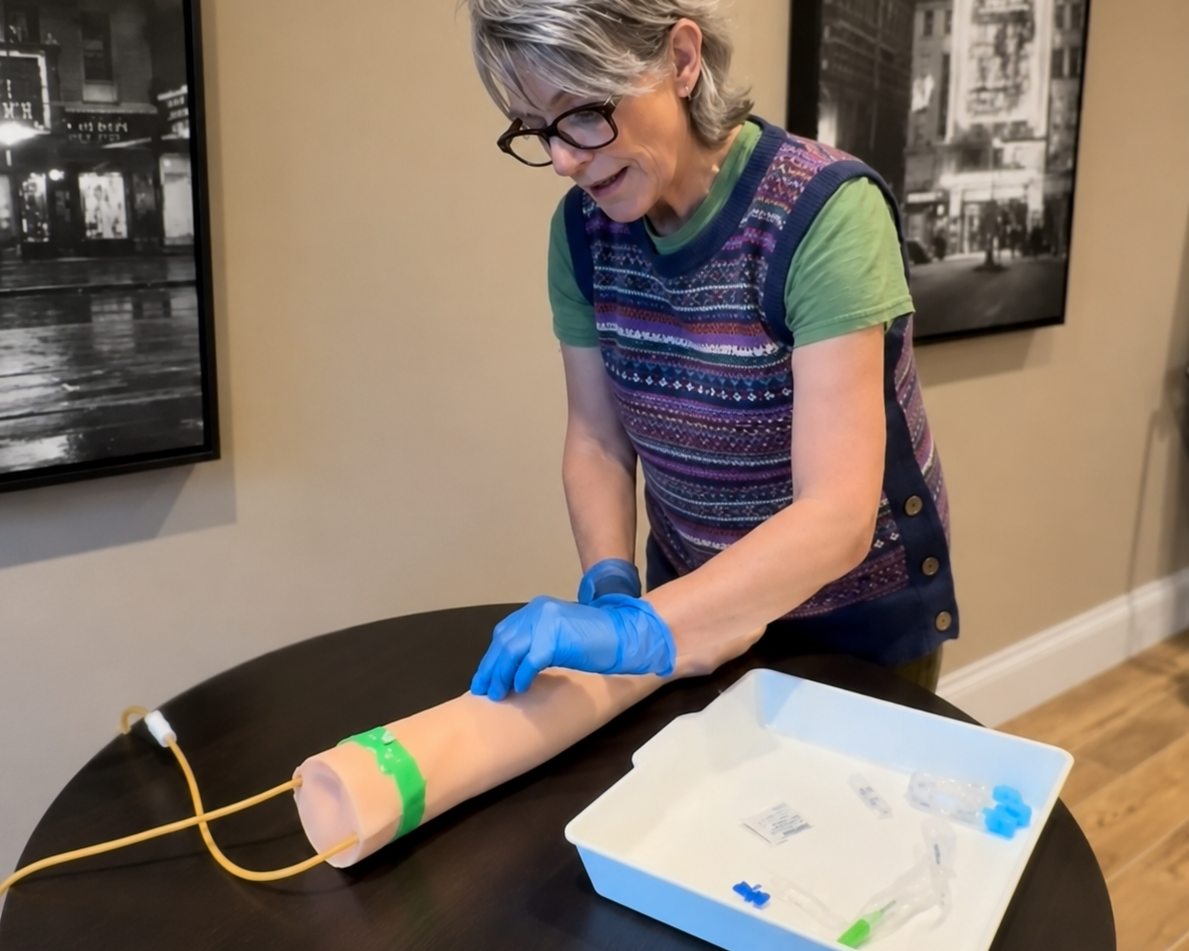
Taking blood safely, practised in a supportive training room.
Full day — 6 hoursView courseSepsis and NEWS2
Recognising the signs of sepsis and using NEWS2.
Half day — 3 hoursView courseClinical Supervision
What clinical supervision is and how to put it in place.
Half day — 3 hoursView courseNurse Practice Supervisor
Supporting, coaching and assessing nurses in practice.
3 daysView coursePre-Registered Nurses Programme
Structured development for nurses and senior clinical staff.
2 daysView courseChampions and leaders
Develop the people who keep standards high every day.
Dementia Champion
Preparing staff to champion good dementia care in your home.
Full day — 6 hoursView courseDignity Champion
Role-modelling dignity and challenging poor practice.
Full day — 6 hoursView courseInfection Control Champion
Championing infection control policies and good practice.
Full day — 6 hoursView courseSenior Care Assistant
The skills and confidence to be an effective senior care assistant.
Full day — 6 hoursView courseLeadership & Management
Leading a team, giving feedback and supporting staff wellbeing.
Full day — 6 hoursView courseAudit Management
Completing care audits that improve practice.
Half day — 3 hoursView courseCare homes and nursing homes
Training that keeps up with your residents
Care and nursing homes share the same core, but their training plans soon differ.
Care homes
Your team supports residents with personal care, mobility, eating and drinking. Core training usually comes first, followed by dementia care and falls prevention.
Nursing homes
Nurses need clinical skills that match their residents’ care plans. For example, catheter care, PEG feeding, syringe drivers and verification of death.
New starters and refreshers
Every delegate receives a certificate, and each course page shows how long it stays valid. As a result, refresher training is easy to plan.
How we deliver
We bring the training to you
- On-site, anywhere in the UKOur trainers come to your premises, so your team doesn’t travel.
- Up to 15 delegatesPer session, or up to 12 on practical courses.
- Several subjects, one visitShorter courses can be combined into a full training day.
- A certificate for every delegateEach course page shows how long it stays valid.
Theory-based courses can also run live over Zoom. For example, Diabetes Awareness, Falls Management and Pressure Ulcer Prevention have all been delivered this way.
Pricing is on application, based on your dates, location and delegate numbers.
Free guides
Free resources for your team
Practical guides and printable resources you can use straight away.
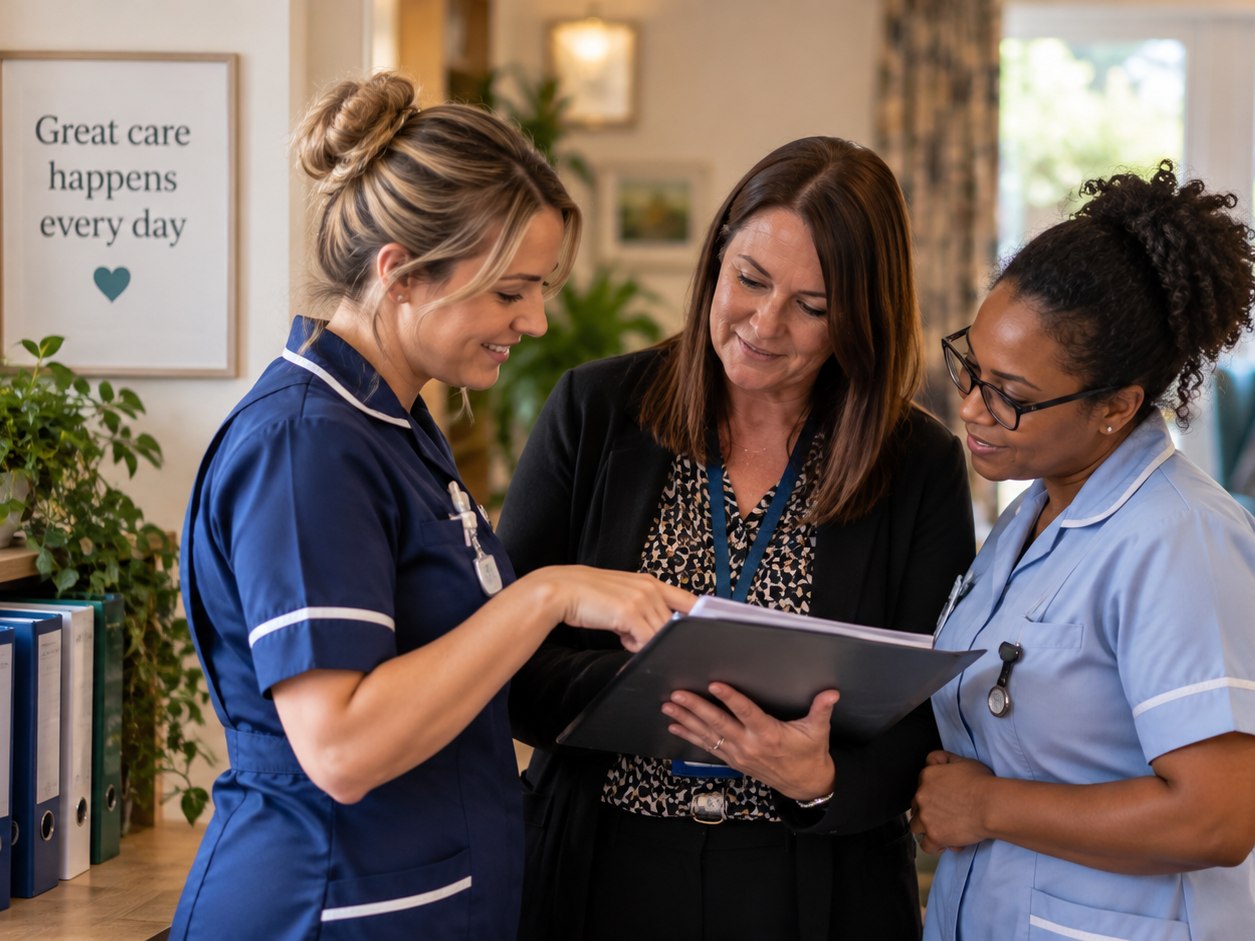
Stop preparing for CQC inspections: how to be ready every day
How everyday practice, not last-minute preparation, keeps a service ready.
GuideRead the guide →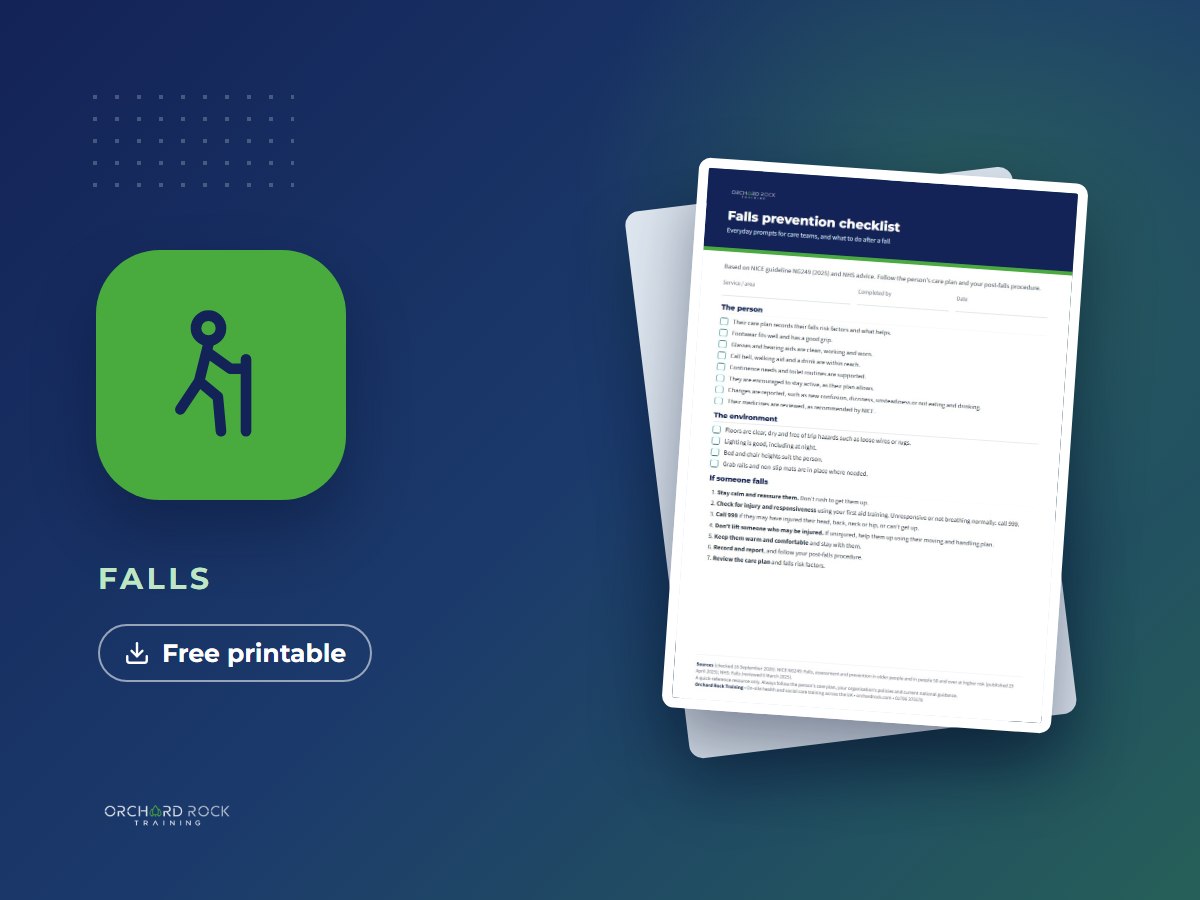
Falls prevention checklist
Everyday falls prevention prompts for care teams, and clear steps for what to do if someone has a fall.
FallsRead the guide →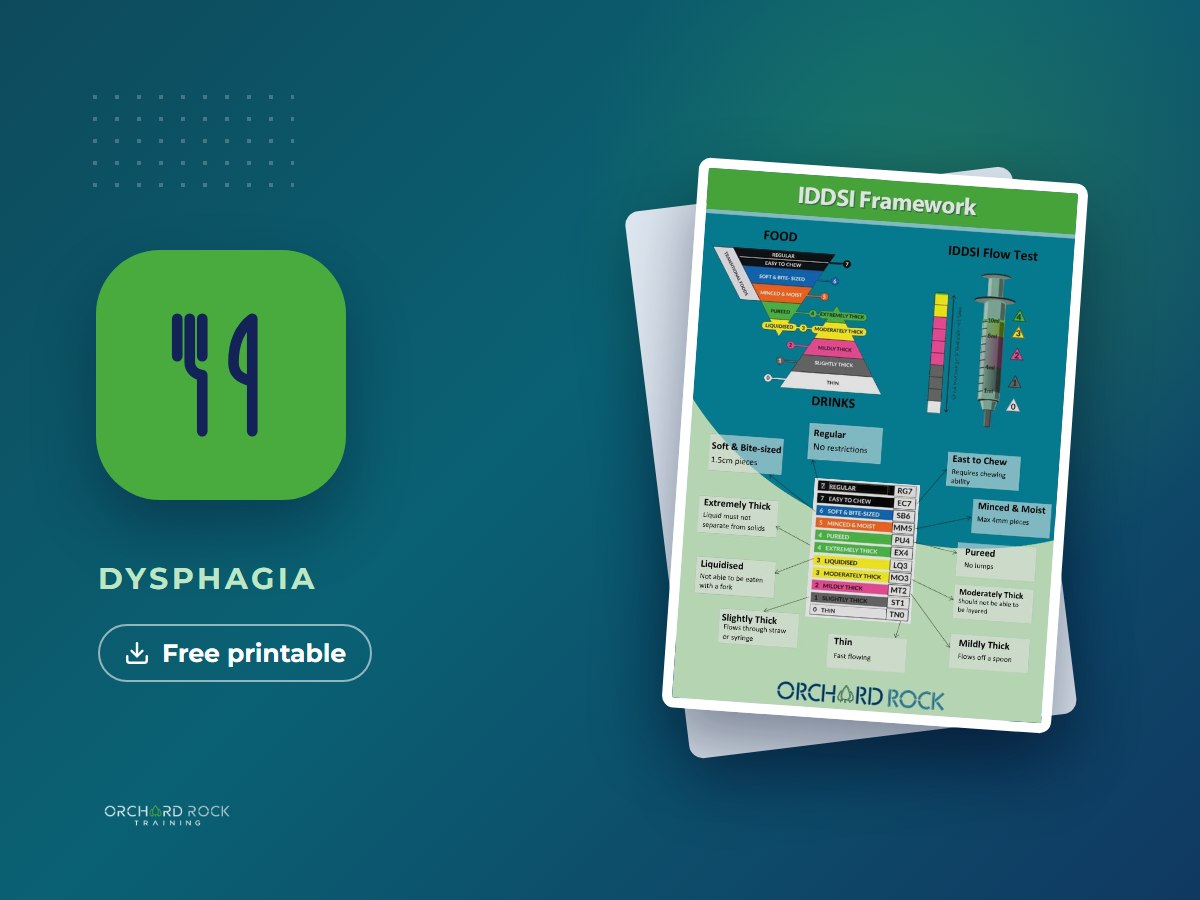
IDDSI Framework poster
The full IDDSI food and drink levels with the flow test on one page. Handy for kitchens and mealtime support.
DysphagiaRead the guide →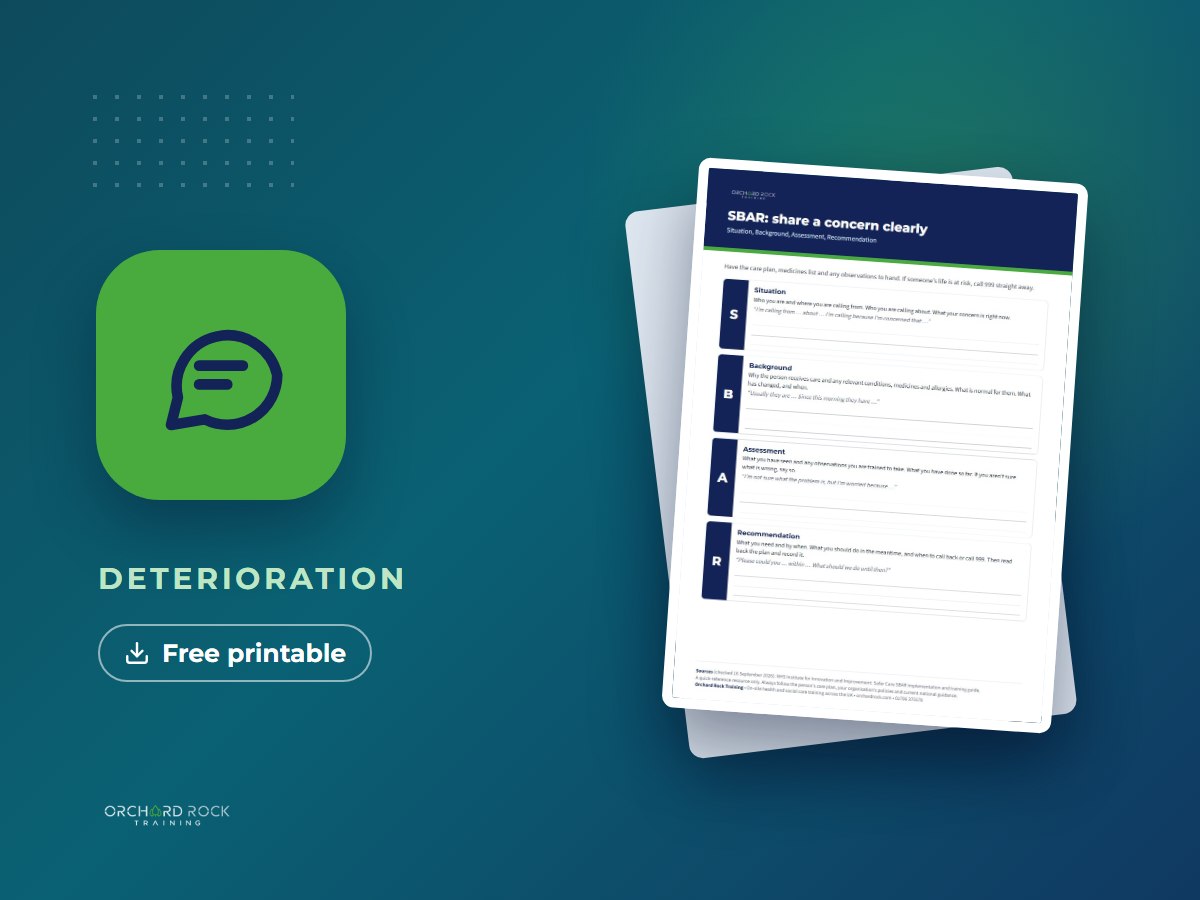
SBAR communication template
A printable SBAR template with prompts, so staff can pass on a concern quickly and clearly when someone’s health changes.
DeteriorationRead the guide →Good to know
Frequently asked questions
What training do care home staff need?
Most homes start with core subjects such as moving and handling, safeguarding, infection control and fire safety. After that, they add training that matches their residents, such as dementia care, falls prevention or dysphagia. Tell us about your home and we’ll suggest a plan.
Do you offer clinical training for nursing homes?
Yes. Our clinical courses cover skills such as catheterisation, PEG care, syringe drivers, venepuncture and verification of death. We also run development programmes for nurses, including Nurse Practice Supervisor and Clinical Supervision.
Can you train several staff in one visit?
We can deliver several shorter subjects in one visit. Each session takes up to 15 delegates, or up to 12 on practical courses.
Do staff receive certificates?
Yes. Every delegate receives a certificate on completion. Each course page shows how long the certificate stays valid.
Can you train staff at more than one home?
We deliver on-site anywhere in the UK, so we can bring training to each of your homes.
Plan your care home’s training
Tell us about your home, your residents and your team. We’ll suggest the right courses and send you a free quote.
Looking for a different setting? Domiciliary and home care · Supported living · All organisation types